
Feature
Does Sativa Give You Energy? Why the Answer Varies
Petra Halloran · · 8 min
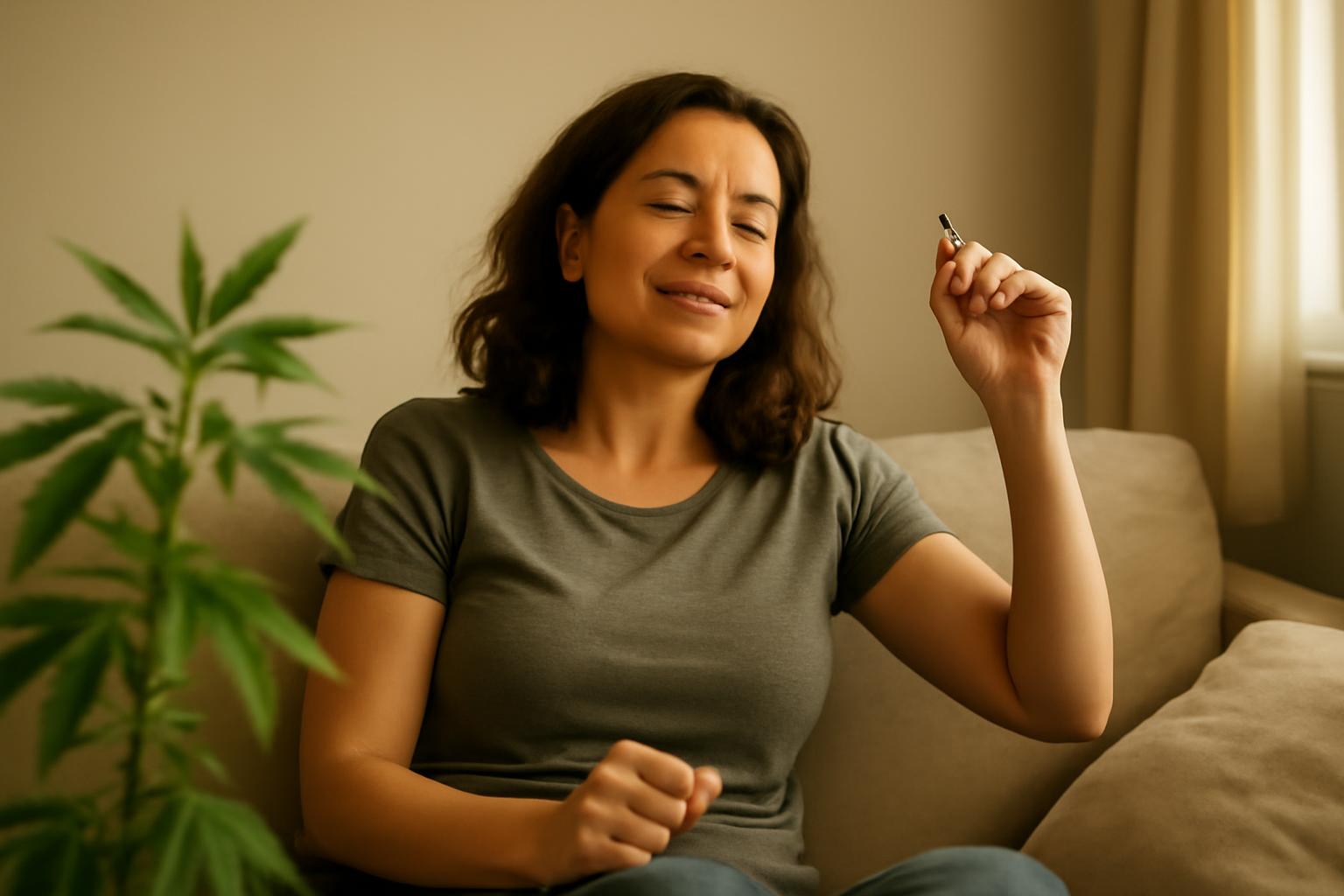
Overview
Sativa may feel energizing to some people, usually as mental stimulation, uplift, or euphoria. It has not been shown here to add physical energy or improve performance, and the label alone cannot predict the result. Product chemistry, dose, tolerance, and consumption method may all shape the experience.
The familiar rule says sativa is stimulating while indica is relaxing. Healthline describes this as a rule of thumb rather than a dependable distinction, because plants within the same category can have different chemical compositions and effects. Some people may therefore feel focused or creative after using a sativa-labeled product, while others may feel anxious, tired, dizzy, or otherwise uncomfortable.
The most defensible answer is conditional: “sativa energy” is a commonly reported psychoactive experience, not a guaranteed or objectively demonstrated energy benefit. Evaluating the measured THC and CBD content, available batch chemistry, intended amount, personal tolerance, and route of consumption offers more context than relying on the category name.
What “energy” from sativa usually means
When people describe sativa as energizing, they generally mean that the experience feels mentally activating. Common descriptions include feeling stimulated, euphoric, uplifted, focused, or creative. WebMD reports that sativa is typically associated with euphoria and stimulation, while also cautioning that a plant’s appearance or broad classification cannot predict how it will affect a person.
This “energy” can be understood as a change in subjective state. A person might feel more interested in an activity, experience faster-moving thoughts, or perceive a task as more engaging. That is why sativa-labeled products are often discussed in relation to daytime use, focus, and creativity. These are reported associations, however, not effects that every product or consumer will share.
The language can also obscure less desirable forms of stimulation. A mentally active experience might feel productive to one person but scattered or uncomfortable to another. CannaVine notes that the stimulating experience can become racing thoughts or an on-edge feeling. The same broad sensation may therefore be described as focus, excitement, jitters, or anxiety depending on its intensity and the person experiencing it.
Mental stimulation is not the same as physical energy
Feeling stimulated does not establish that the body has gained energy, that fatigue has been reduced, or that alertness and performance have objectively improved. Euphoria can change how effort or tiredness feels without demonstrating a corresponding improvement in physical capacity or cognitive accuracy.
This distinction matters because the evidence supplied for this article is much stronger on commercial labels and product chemistry than on controlled human outcomes. One medical-center explainer explicitly states that there is no scientific evidence that sativas give people energy, despite their reputation for uplifting or euphoric effects. The available research on commercial cannabis classification also does not establish that sativa-labeled products improve alertness, relieve fatigue, or enhance performance.
Accordingly, a person’s feeling of being energized should be treated as a subjective psychoactive response. It is not evidence that the person has become less impaired, can sustain more physical work, or will perform a demanding task more accurately.
Why the sativa label cannot predict your experience
The sativa label is a weak predictor because commercial category names do not consistently correspond to the chemistry that consumers actually receive. A 2022 analysis of commercial cannabis from six US states identified distinct cannabinoid and terpene profiles, but found that Indica, Hybrid, and Sativa labels were poorly or inconsistently aligned with those profiles. The researchers concluded that the terminology does not reliably distinguish products by chemical content.
Genetic evidence points in the same direction. A Nature Plants study of more than 100 samples found that Sativa- and Indica-labeled samples were genetically indistinct at the genome-wide level. The labels were associated with variation in a small number of terpenes, but poorly represented overall genomic and metabolomic variation. In other words, limited associations can exist without making the category a reliable summary of the product.
That does not mean every label is random or that product information is useless. It means “sativa” cannot support a promise such as “this will give you energy.” Products carrying the same broad label may differ in cannabinoid concentration, terpene profile, or other chemical characteristics. Consumers can also respond differently to the same product.
Dispensary descriptions and strain recommendations are therefore best understood as reported tendencies. They may describe how some consumers commonly characterize a product, but they cannot establish how a particular person will feel. Even strain names are imperfect: the 2022 chemical analysis found that they may reflect chemistry better than the three broad categories, but remain far from ideal markers.
What to consider instead of the category label
A more useful evaluation starts with product-specific information and the circumstances of use. None of the following factors can guarantee stimulation, but they provide more relevant context than the word “sativa” alone.
| Information to consider | What it can tell you | Important limitation |
|---|---|---|
| Sativa, Indica, or Hybrid label | The broad effect convention used to market or describe the product | Research shows poor alignment with overall chemical and genetic variation |
| Measured THC and CBD content | Which major cannabinoids are reported and their relative amounts | Cannabinoid content alone does not predict one person’s complete experience |
| Available terpene or batch results | More detail about the measured chemistry of the specific product or batch | Individual terpene-to-effect predictions are not established well enough here to promise energy |
| Amount consumed | The level of exposure, which can change the character and intensity of the experience | No universal amount separates stimulation from anxiety, fatigue, or overstimulation |
| Personal tolerance and prior response | How sensitive the consumer may be to a product or amount | Tolerance varies, and a previous response does not guarantee the next one |
| Consumption method | How quickly effects may arrive, how long they may persist, and how easy they are to interpret while dosing | Different methods still produce variable effects across people and products |
The case for checking chemistry comes from direct product research. The PLOS One analysis compared cannabinoid and terpene composition with commercial labels and found that the categories did not consistently capture chemical diversity. WebMD likewise identifies cannabinoids and terpenes as properties that can affect how cannabis feels.
This does not justify assigning a guaranteed psychological effect to a particular terpene. The safer interpretation is narrower: measured chemistry provides a more specific description of what is in the product, while dose, tolerance, and consumption method help explain how exposure may differ. These inputs inform expectations rather than predict an outcome with certainty.
Why dose can change the experience
The amount consumed may alter both the intensity and the character of the response. One consumer explainer reports that smaller amounts may feel stimulating while larger amounts can lead to overstimulation. Other supplied sources identify anxiety, jitters, tiredness, and racing thoughts as possible outcomes, showing why “more” should not be assumed to mean “more energy.”
This pattern can explain apparently contradictory experiences with the same product. At one exposure, the mental activation may be perceived as a modest lift. At a larger exposure, it may become distracting, anxious, or exhausting. A person may also experience fatigue or a later dip rather than sustained stimulation. Aunt Mary’s notes that even sativa may feel tiring depending on the product’s mixture and the individual response to THC.
The supplied evidence does not establish a universal threshold at which this reversal occurs. Product strength, tolerance, method, and individual sensitivity differ, so a dose that feels manageable to one person cannot be treated as a general benchmark.
How consumption method changes the experience
Consumption method changes how the effects arrive and can therefore change how a person interprets or adjusts exposure. According to Healthline’s comparison, smoking or vaping produces effects more quickly than ingestion. That quicker feedback may make changes easier to notice while use is occurring, although the same source also notes that inhalation can irritate the lungs and airways.
Edible cannabis has a slower onset. Healthline explains that ingested THC is converted to 11-hydroxy-THC and may produce stronger psychoactive effects that last for hours, or in some people longer. A delayed effect can complicate interpretation because the full response may not be apparent when someone is deciding whether the initial amount had an effect.
Sublingual products are placed under the tongue rather than swallowed immediately. CannaVine reports an onset of approximately 15 to 45 minutes for this method, describing it as faster than edibles because it bypasses the digestive route.
These method differences do not make one route inherently energizing. They affect onset, persistence, and the timing of feedback. The product’s chemistry, amount consumed, tolerance, and individual response remain relevant regardless of route.
Possible adverse effects of a stimulating experience
A desired lift can become uncomfortable stimulation. The supplied sources identify anxiety, jitters, racing thoughts, dry mouth, dizziness, headache, increased heart rate, and sleep disruption as possible effects. These reactions are not universal, but they matter when evaluating a product marketed for energy or daytime use.
The reported possibilities include:
- Anxiety, jitters, or feeling on edge
- Racing or difficult-to-direct thoughts
- Dry mouth
- Dizziness or headache
- Increased heart rate
- Difficulty sleeping when use occurs near bedtime
- Tiredness instead of stimulation
Aunt Mary’s lists anxiety, dry mouth, increased heart rate, dizziness, headache, and difficulty sleeping among possible experiences. CannaVine separately identifies racing thoughts and uncomfortable overstimulation, while Mello Cannabis notes that anxiety or jitters may be more likely among people who are sensitive to high-THC products.
These effects also show why “energizing” is not automatically a positive or useful outcome. Faster thoughts may interfere with concentration. Increased arousal may disrupt sleep rather than extend productive alertness. Dizziness or headache may make an activity harder even when the person does not feel sleepy. Product labels cannot determine where stimulation will fall on that spectrum.
Feeling alert does not settle task safety
Subjective alertness is not a complete test of whether driving, work, study, or exercise is safe. A person can feel awake or mentally active without having evidence that attention, coordination, judgment, or performance is unaffected.
The supplied evidence does not include authoritative impairment timelines, activity-specific safety thresholds, or legal rules. It therefore cannot establish how long someone should wait before a particular task, nor can it support the conclusion that a demanding activity is safe whenever the person feels energized.
The practical boundary is narrower but important: do not treat the sativa label, a stimulating sensation, or the absence of sleepiness as proof of unimpaired performance. Sativa may produce a subjective lift for some people, but neither that feeling nor the category name demonstrates physical energy, reliable focus, or task readiness.