
6 min read ·
Energy Drinks Fail When Sleep Debt Outweighs Caffeine
Caffeine ranges from 54-328 mg per 16 ounces. Sleep debt, tolerance and timing can blunt the boost. Feeling sleepy does not diagnose ADHD.
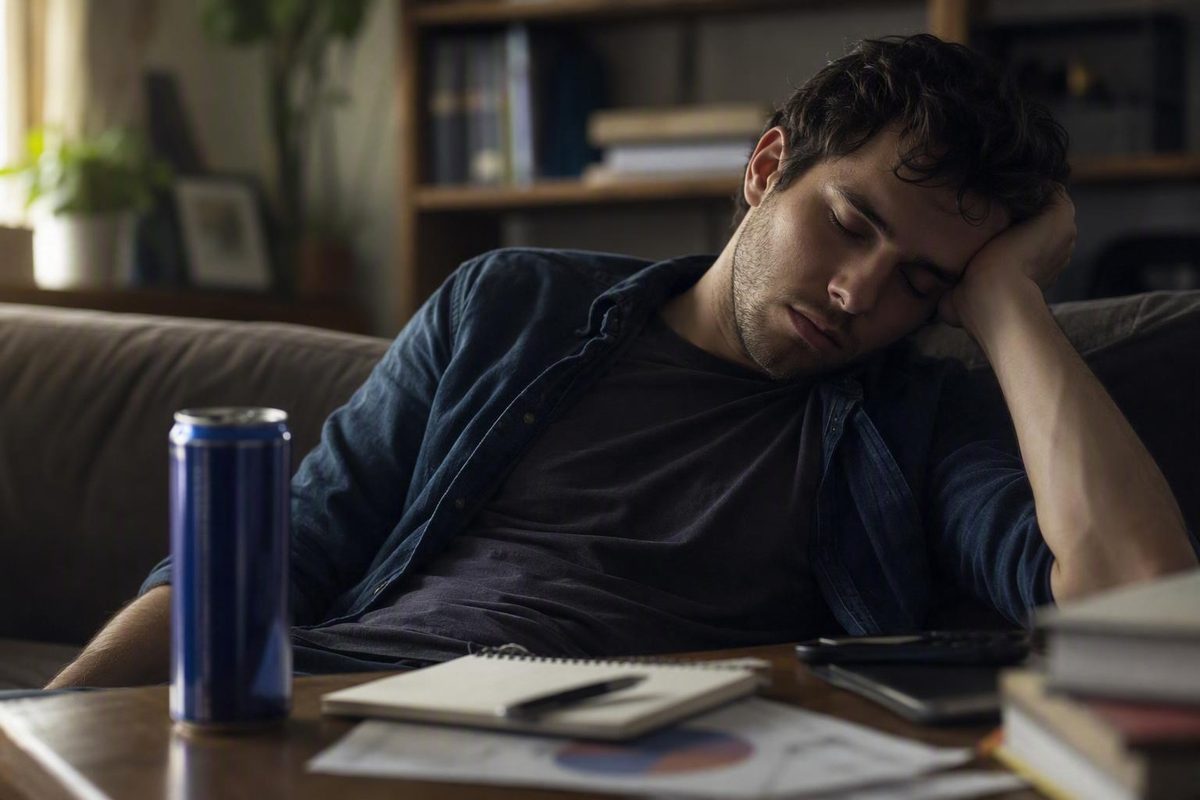
An energy drink can leave you feeling sleepy when the stimulant effect is too small, too late, or too brief to overcome the sleepiness already present. Caffeine can improve alertness for a time, but it does not replace sleep or erase sleep debt. Regular caffeine use can also make the same amount feel less effective. And while sugar may affect fatigue for some people, a dramatic “sugar crash” is not a universal explanation.
The useful question is not simply “Why did caffeine make me tired?” It is: How much caffeine did I actually have, when did I have it, how well have I been sleeping, and does this happen repeatedly? Those details help separate a one-off mismatch from a pattern worth discussing with a healthcare professional.
The most likely explanations
You were already short on sleep
An energy drink can briefly cover up sleepiness without fixing its cause. If you have been sleeping too little, sleeping at irregular times, or getting poor-quality sleep, that underlying pressure to sleep remains.
The National Heart, Lung, and Blood Institute notes that sleep deficiency can cause daytime tiredness, slower reactions, concentration problems, and brief involuntary “microsleeps.” A stimulant is not a safe workaround for those effects. If you are fighting to keep your eyes open, do not drive or do hazardous work just because you have consumed caffeine.
This also explains why the drink may seem to “cause” a crash. The boost fades, and the tiredness that was there before becomes noticeable again. That is different from the drink creating a new sleep deficit in the moment.
Your usual caffeine intake has blunted the effect
People who use caffeine regularly can develop tolerance to some of its effects. A scientific review of caffeine dependence found evidence of tolerance in humans, including to subjective effects and sleep disruption. The same review also identifies fatigue and drowsiness as possible withdrawal symptoms when a habitual user abruptly cuts back (Meredith and colleagues, 2013).
That does not mean you should keep increasing the dose. More caffeine can bring more side effects while doing little to address the real reason for fatigue. If you want to reduce a high daily intake, the U.S. Food and Drug Administration recommends cutting back gradually because withdrawal can be unpleasant.
The serving contained less—or more—caffeine than you assumed
“One can” is not a standard dose. Container sizes and formulas vary, and some cans contain more than one serving. The FDA reports a broad range of 54 to 328 milligrams of caffeine per 16 fluid ounces among energy drinks. Guarana and other ingredients can add to the total caffeine.
Check four things on the label:
- The serving size.
- Servings per container.
- Milligrams of caffeine per serving or container.
- Other caffeine sources, including guarana, coffee, tea, supplements, and some medicines.
A low-caffeine product may not create the effect you expect. A high-caffeine product may make you feel jittery or unwell without making you productively alert. For most adults, the FDA cites 400 milligrams per day as an amount not generally associated with negative effects, but it is not a target and it is not safe for everyone. Sensitivity varies with body weight, medications, health conditions, pregnancy, and individual metabolism.
Timing can create a caffeine-and-fatigue loop
Late caffeine may help you feel more awake now but make the next sleep period worse, setting up more tiredness the following day. In a small controlled study, a 400-milligram dose taken at bedtime, three hours before bed, or six hours before bed disrupted sleep compared with placebo (Drake and colleagues, 2013). That study used a substantial fixed dose, so it does not prove that every lower dose affects every person for six hours. It does show why dose and timing both matter.
If energy drinks are part of a repeating cycle—tired during the day, caffeine late, poor sleep, then more caffeine—move the drink earlier or reduce it rather than adding another can. A simple test is to record your caffeine amount and time, bedtime, wake time, nighttime awakenings, and next-day sleepiness for a week.
Is it a sugar crash?
Maybe sugar contributes to how you feel, but “all energy drinks cause a sugar crash” is too simple. Some energy drinks are sugar-free, and people respond differently to meals and sweet drinks.
A 2019 meta-analysis covering 31 studies found no overall mood benefit from acute carbohydrate intake. Compared with placebo, carbohydrate intake was associated with more fatigue and less alertness within the first hour (Mantantzis and colleagues). That evidence concerns carbohydrates broadly; it does not establish that every sugary energy drink causes the same reaction or that sugar is the reason for any one person’s sleepiness.
If you want to test the pattern, compare like with like: note the caffeine amount, serving size, sugar content, time of day, food eaten around the same time, and prior night’s sleep. Do not change several variables at once. Persistent symptoms after eating or drinking deserve medical advice rather than a self-diagnosis based on “sugar crash.”
Why the response differs from person to person
The label cannot predict your exact response. The FDA emphasizes wide variation in caffeine sensitivity and how quickly people eliminate it. Medications and some health conditions can change the appropriate amount. The National Center for Complementary and Integrative Health also notes that energy drinks may include ingredients beyond caffeine and sugar, while caffeine amounts vary widely.
Other reasons you may feel tired at the same time as drinking one include:
- a normal circadian dip, especially combined with insufficient sleep;
- a large meal or dehydration occurring around the same time;
- tolerance from frequent caffeine use;
- a medication that causes drowsiness or interacts with caffeine;
- an illness, anemia, thyroid problem, mood disorder, sleep disorder, or another health issue that caffeine cannot correct.
This reaction is not a reliable way to diagnose ADHD. Feeling calm or sleepy after caffeine can happen for many reasons, and a beverage response is not a diagnostic test. If attention problems, impulsivity, or daytime sleepiness are affecting daily life, discuss the full pattern with a qualified clinician.
What to do the next time it happens
Start with the least complicated explanation and avoid “chasing” sleepiness with additional cans.
- Stop and assess safety. If you are drowsy enough that driving or operating equipment feels difficult, do not continue.
- Read the full label. Calculate caffeine for the entire container, not just one serving, and include caffeine consumed elsewhere that day.
- Have water and regular food as appropriate. An energy drink should not substitute for sleep, hydration, or a meal.
- Note the timing. Write down when the sleepiness started relative to the drink and your last sleep period.
- Avoid another late dose. More caffeine may interfere with the coming night and continue the cycle.
- Look for a pattern. Track several days before concluding that one ingredient is responsible.
Energy drinks are not recommended for children and teens, according to medical guidance summarized by the FDA. People who are pregnant, trying to become pregnant, breastfeeding, taking medication, or managing a medical condition should ask a healthcare professional what caffeine limit is appropriate for them.
When sleepiness needs medical attention
Talk with a healthcare professional if daytime sleepiness is frequent, worsening, or present despite enough time in bed. Mention loud snoring, breathing pauses, gasping during sleep, morning headaches, or difficulty staying awake. Those symptoms can occur with sleep apnea; the NHLBI’s sleep apnea guidance recommends discussing them with a provider, who may consider a sleep study.
Also seek advice if caffeine brings palpitations, marked anxiety, nausea, persistent headaches, or sleep disruption. If you think you consumed a dangerous amount or you feel seriously unwell, seek urgent medical help rather than trying to counteract it yourself.
Bottom line
Energy drinks do not usually act as sedatives. Feeling sleepy after one more often means the caffeine did not overcome existing sleep pressure, tolerance reduced the noticeable effect, the serving differed from what you expected, or the timing is feeding a poor-sleep cycle. Sugar can be part of the picture, but it is not a universal answer. Check the dose, protect your next sleep period, and take repeated daytime sleepiness seriously instead of treating it with more caffeine.