
16 min read ·
Why the Same Hybrid Can Feel Relaxing, Energizing, or Sedating
Cannabinoid content, amount, delivery method, timing, tolerance and individual biology are more useful than the hybrid label for interpreting sleepiness.
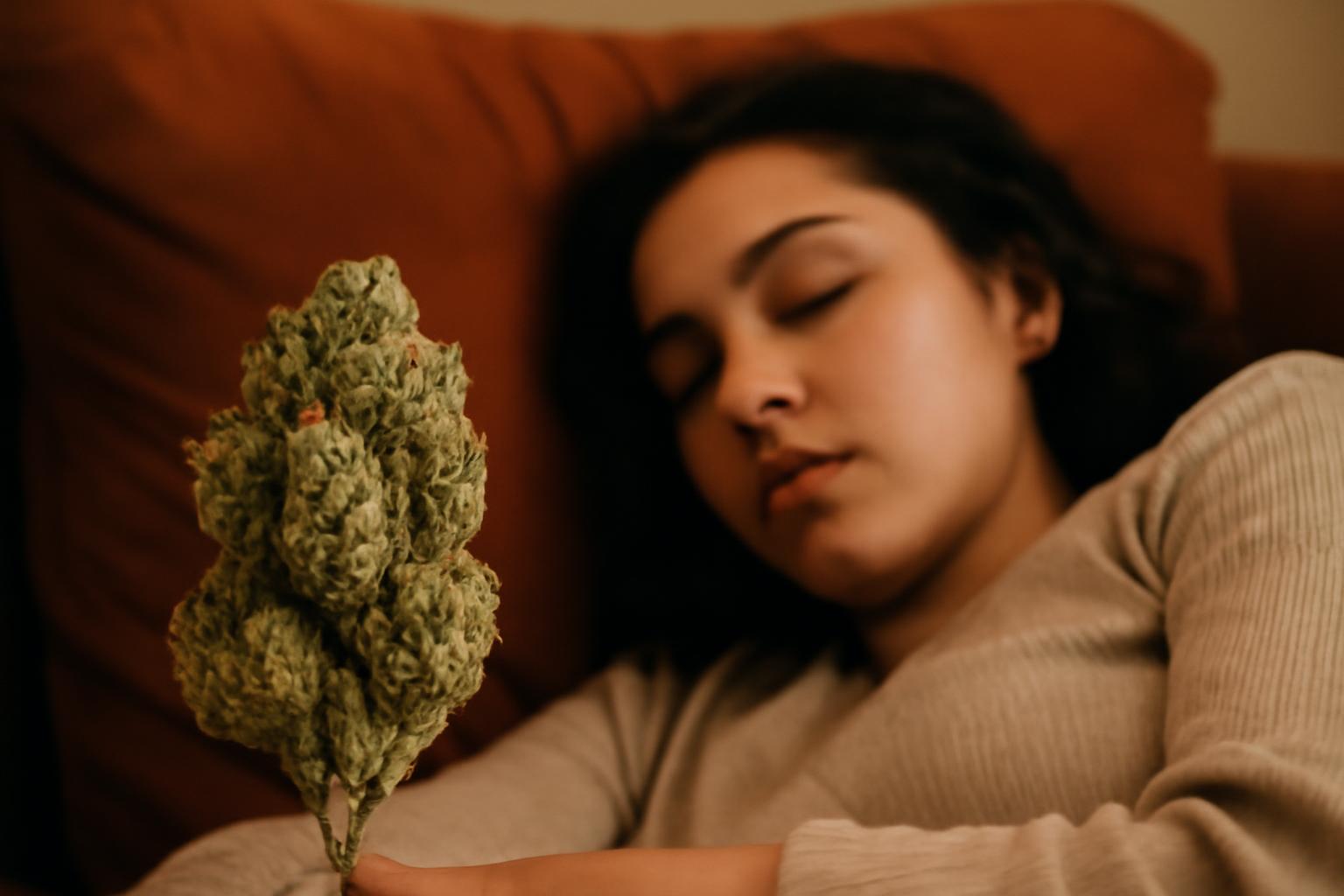
The short answer: a hybrid can make you sleepy, but it may not
Yes, hybrid cannabis can make some people sleepy. It can also feel relaxing without causing sleep, neutral, stimulating, or anxiety-provoking. Here, “hybrid” means hybrid cannabis—not a hybrid vehicle or hybrid work arrangement.
Hybrid cannabis generally refers to products derived from mixed cannabis lineages. Products may be marketed as indica-dominant, balanced, or sativa-dominant. Indica-leaning hybrids are conventionally associated with greater physical relaxation or sedation, while sativa-leaning hybrids are associated with more energizing or cerebral effects. These are broad consumer tendencies, not dependable predictions. Extensive breeding has blurred traditional distinctions, and product chemistry and individual response may be more informative than the category on the package, as WebMD’s medically reviewed overview of indica, sativa, and hybrid labels explains.
It also helps to define what “makes you sleepy” means. Several different outcomes can be confused:
- Relaxation: Feeling calmer or less tense while remaining awake.
- Subjective drowsiness: Feeling heavy-eyed, slowed down, mentally tired, or ready to sleep.
- Faster sleep onset: Falling asleep sooner after going to bed.
- Sleep maintenance: Staying asleep with fewer or shorter awakenings.
- Sleep quality: How restorative sleep feels and what occurs across different sleep stages.
- Next-day functioning: Alertness, coordination, judgment, memory, and energy after waking.
A product might make you feel heavy and drowsy without helping you stay asleep. It might shorten perceived sleep onset but leave you groggy the next morning. Another hybrid might relax your body while keeping your mind active. These outcomes are related, but they are not interchangeable.
At-a-glance verdict
A hybrid can make you sleepy, but “hybrid” alone cannot tell you whether it will. Cannabinoid composition, amount consumed, delivery method, timing, tolerance, and your previous response matter more than the word on the label.
The most accurate answer to “does hybrid make you sleepy?” is therefore conditional: it can, but not reliably and not for everyone.
Why “hybrid” is a weak predictor of drowsiness
The hybrid label primarily describes broad ancestry or a marketing classification. It does not function like a standardized measure of sedating strength.
Many marketed cannabis products have mixed genetics because plants have been selectively bred across generations. Consequently, the boundaries between indica, sativa, and hybrid have become less distinct. A product sold as an indica-dominant hybrid may not be chemically similar to another product in the same category—or even to a product carrying the same strain name from a different producer or batch.
Traditional labels remain common because they provide familiar shorthand:
- Indica is commonly associated with bodily relaxation, heaviness, and sedation.
- Sativa is commonly associated with alertness, energy, or mental stimulation.
- Hybrid suggests mixed characteristics, sometimes with stated indica or sativa dominance.
These descriptions are consumer conventions and reported tendencies rather than dependable botanical or clinical categories. People do not consistently experience the effects conventionally assigned to these labels, and research on cannabis for sleep remains limited and often low quality, according to Healthline’s medically reviewed discussion of cannabis product selection for sleep.
| Hybrid label | Commonly reported tendency | Possible alternative response | Confidence of prediction |
|---|---|---|---|
| Indica-dominant | Calming, physically relaxing, heavy, or sleepy | Relaxed but alert; mentally active, anxious, dizzy, or uncomfortable | Low |
| Balanced | Mixed relaxation and stimulation, sometimes described as moderate | Strongly sedating, noticeably stimulating, anxious, or otherwise impairing | Low |
| Sativa-dominant | Uplifting, focused, cerebral, or energizing | Sleepy, dizzy, anxious, restless, confused, or impaired | Low |
“Balanced hybrid” is especially easy to misinterpret. Neither description guarantees an exact midpoint between sedation and stimulation, moderate intensity, equal cannabinoid quantities, or a predictable personal response.
The strain name is not a precise chemical specification either.
This uncertainty runs in both directions. A sativa-dominant hybrid can make a sensitive or inexperienced person sleepy. It might instead cause dizziness, anxiety, confusion, or other impairment rather than the expected “energizing” effect. Similarly, indica dominance is not proof that a product will cause sleep or that it is appropriate for treating insomnia.
The category can provide context, but it should not be treated as a pharmacological promise.
What actually influences whether a hybrid feels sedating
Six variables are more useful than the broad strain category when interpreting cannabis-related sleepiness: cannabinoid content, amount consumed, delivery method, timing, tolerance, and individual biology.
1. Cannabinoid content
THC can contribute to intoxication, relaxation, altered perception, and sedation. Greater exposure, however, does not produce a simple progression from “a little relaxed” to “better sleep.” It may instead be accompanied by anxiety, panic, dizziness, confusion, impaired balance, paranoia, or sleep disruption.
CBD’s sleep-related effects are also unsettled and may depend on amount, formulation, accompanying cannabinoids, and the individual. It should not be assumed that CBD reliably cancels THC-related tiredness, intoxication, or impairment. A product containing both THC and CBD can still cause substantial drowsiness or impaired judgment.
When reading a label, look for the amount of each cannabinoid per serving, not only the package total or a prominent percentage on the front. Products containing multiple servings can be easy to misread.
2. Amount consumed
The amount actually consumed is often more informative than whether the product is called indica, sativa, or hybrid. A larger exposure can intensify desired effects, unwanted effects, or both.
More THC is not necessarily better for sleep. A person may move from relaxed to excessively sedated, anxious, dizzy, confused, or unsteady.
3. Delivery method
Inhaled and edible products differ in how quickly their effects appear and how long those effects may persist. The format can also affect the risk of consuming more before the initial amount has become fully apparent.
The relevant label-reading question is therefore not just “Which hybrid is this?” It is also “In what format, and how much does one serving contain?”
4. Timing
A product used earlier in the evening may affect the night and following morning differently from the same product used later. Timing also interacts with delivery method. An edible taken near bedtime may still be developing in effect after the person lies down, while an inhaled product generally becomes noticeable sooner.
Timing cannot eliminate uncertainty or guarantee that morning grogginess will be avoided. It must be considered alongside the formulation, amount, delivery route, and previous response.
5. Tolerance and prior experience
A frequent consumer may perceive less sedation from an amount that would substantially affect an inexperienced person. Tolerance can also change over time, prompting some people to use more in pursuit of an earlier response.
Prior experience can provide context, but it is not a perfect forecast. A different batch, formulation, amount, food intake, medication, health condition, or accompanying substance can alter the outcome.
6. Individual biology and circumstances
Metabolism, sensitivity to THC, prior cannabis exposure, food intake, health, mood, fatigue, and expectations may all contribute to why the same product sedates one person but stimulates or distresses another. A commercially operated cannabis-health service similarly describes sleepiness as only one possible response and emphasizes the importance of product composition, consumption method, and individual body chemistry in its medically reviewed discussion of cannabis-related tiredness.
Terpenes are frequently used in product descriptions. Myrcene and linalool, for example, are commonly associated with calming or relaxing profiles in cannabis literature. That association does not establish that either terpene independently causes clinically meaningful sedation in humans. Terpene information may help describe a product, but it is not a validated sleep prescription or dependable prediction.
A neutral label-reading framework is:
- Identify the listed THC, CBD, and other cannabinoid amounts.
- Confirm whether those amounts are per serving or per package.
- Check the stated serving size.
- Identify the delivery format.
- Compare the formulation with products previously used.
- Record the experienced effects rather than relying on the strain name alone.
This framework cannot guarantee an outcome. Its purpose is to interpret an experience more precisely, not to create a protocol for experimenting with cannabis.
Edibles versus inhaled cannabis: onset, duration, and grogginess
Delivery method changes when cannabis effects appear and how long they may remain noticeable. That difference can influence the chance of excessive drowsiness or lingering effects.
Edibles generally have a slower onset and longer-lasting effects than inhaled cannabis. Some people also experience them as stronger or less predictable. Because the initial effects may not be immediately apparent, a person may take more before the first serving has fully taken effect. This delayed-redosing pattern can increase exposure beyond what the person intended.
Excessive exposure does not always produce simple sleepiness. It may be accompanied by fatigue, dizziness, anxiety, panic, nausea, confusion, impaired balance, or paranoia. Late or excessive edible use may also contribute to grogginess the next morning.
Inhaled cannabis generally becomes noticeable faster and has a shorter overall duration than an edible. That comparison does not make smoking a safe sleep strategy. Faster onset is not equivalent to lower risk, and inhalation introduces concerns separate from sleepiness. These broad route differences are also described by a commercial cannabis-health publisher in its comparison of cannabis formats and effects.
| Feature | Edible hybrid cannabis | Inhaled hybrid cannabis |
|---|---|---|
| Relative onset | Slower | Faster |
| Relative duration | Generally longer-lasting | Generally shorter |
| Delayed-redosing risk | Higher because the first serving may not yet feel fully active | Lower than with edibles, although repeated use can still increase exposure |
| Potential for next-day grogginess | May be greater with late or excessive use | Still possible, depending on amount, timing, sensitivity, and accompanying substances |
The supplied evidence does not support a reliable hour-by-hour estimate of when drowsiness or impairment will begin or end for an individual. Product strength, serving size, route, metabolism, tolerance, food intake, timing, and concurrent substances all complicate the timeline.
Feeling sedated is not the same as sleeping better
Cannabis-related drowsiness may make it easier for some people to fall asleep in the short term. That does not establish that sleep is deeper, less fragmented, more restorative, or better for next-day functioning.
Sleep has several dimensions:
- Sleep-onset latency: How long it takes to fall asleep.
- Sleep maintenance: Whether sleep continues or is interrupted.
- Total sleep time: How much time is actually spent asleep.
- Sleep architecture: How sleep is distributed across NREM and REM stages.
- Subjective quality: Whether sleep feels restful.
- Morning alertness: How well a person functions after waking.
A product can improve one outcome while worsening another. Feeling heavily sedated might shorten perceived sleep onset but leave the user cognitively slowed, groggy, or unsteady the next morning. That would not demonstrate restorative sleep.
The overall evidence for cannabis in insomnia and sleep improvement remains preliminary and mixed. A small 2022 retrospective chart review illustrates both the possible benefit and the uncertainty: 27 of 38 assessed patients reported subjective improvement in sleep or a related condition. The study was exploratory, retrospective, conducted through one community pharmacy, and lacked objective sleep measurements. It did not compare hybrid, indica, or sativa products, so it cannot establish that hybrid cannabis treats insomnia. These findings and limitations are reported in the peer-reviewed chart review.
THC has also been associated with reduced REM sleep and short-term changes in NREM sleep. The clinical significance of those changes remains uncertain. A measurable change in a sleep stage is not automatically beneficial and does not prove that sleep has become healthier, according to an evidence-qualified review of cannabis and sleep.
Subjective descriptions require similar caution. Someone may say a product “knocked me out” while still experiencing fragmented sleep, altered sleep stages, or poor morning functioning. Another person may feel relaxed without falling asleep sooner. Both responses are compatible with the variability of cannabis effects.
Next-day sedation is particularly important to separate from sleep quality. Grogginess may indicate residual effects or impairment rather than deeper or more restorative sleep.
Cannabis therefore should not be described as curing insomnia, restoring normal sleep architecture, or functioning as a reliable long-term sleep aid. The evidence gap is even wider for products specifically marketed as hybrids.
Occasional drowsiness and regular nighttime use are different questions
One episode of feeling sleepy after a hybrid does not answer what will happen with frequent or prolonged nighttime use.
With repeated exposure, tolerance may change how THC feels. An amount that once caused obvious drowsiness may later feel weaker, which can prompt some people to increase the amount in pursuit of the previous response.
Heavy or prolonged cannabis use has been associated with poorer sleep, disrupted sleep cycles, and greater difficulty falling or staying asleep. Regular use may therefore have a different relationship with sleep than occasional use. Stopping frequent use may also be followed by insomnia, unusual dreams, or changes in deep sleep as withdrawal-related symptoms, as summarized in Healthline’s discussion of cannabis, tolerance, sleep, and withdrawal.
Dependence is a possible risk of frequent use, although it does not develop in everyone. Patterns that warrant attention include:
- Needing progressively more to obtain the same perceived response.
- Feeling unable to sleep without cannabis.
- Continuing to use despite recurring morning impairment.
- Experiencing insomnia or unusual dreams when attempting to stop.
- Increasing the frequency or amount of nighttime use.
- Continuing to self-treat while the underlying sleep problem remains unexplained.
Nightly sedation is not proof of sustained effectiveness. A product can continue to make someone feel tired even while tolerance, sleep quality, or daytime functioning worsens.
Escalating use, increasing tolerance, withdrawal-related sleep problems, or persistent insomnia are reasonable grounds to speak with a qualified healthcare professional. Assessment is especially important when cannabis may be masking another cause of poor sleep or excessive daytime sleepiness.
Side effects, interactions, and safer decision-making
Possible adverse effects of cannabis include drowsiness, fatigue, dizziness, anxiety, panic, confusion, increased heart rate, impaired balance, nausea, paranoia, and, less commonly, hallucinations. The likelihood and intensity may vary with the product, amount, route, prior experience, health, and individual sensitivity. Smoking also carries respiratory risks separate from whether a product causes drowsiness, while pregnancy, breastfeeding, childhood, and adolescence involve additional concerns described in the Sleep Foundation’s cannabis-and-sleep safety overview.
A hybrid that causes unexpected or excessive sedation illustrates why the label cannot be used as a safety prediction. “Sativa-dominant” does not guarantee alertness, and “balanced” does not guarantee mild effects.
Combining cannabis with alcohol, sleep medications, or other sedating substances may intensify drowsiness and impairment. The exact interaction depends on the substances, amounts, timing, and individual. A commercially operated cannabis-care service specifically notes that alcohol can amplify cannabis-related fatigue in its medically reviewed review of cannabis sleepiness.
People taking prescription or nonprescription medications—or managing chronic health conditions—should consult a clinician or pharmacist rather than relying on a general interaction list. Do not independently stop or change prescribed medication based on a cannabis response.
Drowsiness, dizziness, confusion, slowed reactions, and impaired balance are incompatible with driving, operating machinery, working at heights, or performing other safety-sensitive tasks. Do not undertake those activities while affected. The supplied evidence does not provide a universal waiting period or a validated self-test that can prove impairment has ended, so feeling subjectively normal should not be treated as sufficient evidence of driving readiness.
If a product causes more sedation than expected, the useful conclusion is not necessarily that it was “more indica than advertised.” The response may instead reflect the exact formulation, amount, route, timing, concurrent substances, tolerance, or personal sensitivity.
A practical framework for interpreting your response
If a particular hybrid made you sleepy, review the episode retrospectively rather than relying on the strain category.
1. Identify the exact product
Record the producer, product name, formulation, and batch information if available. Note whether it was flower, a vape, concentrate, edible, beverage, tincture, or another format. “A hybrid gummy” is not enough information for a meaningful comparison.
2. Record the cannabinoid amount per serving
Note the labeled THC, CBD, and other cannabinoid amounts per serving, as well as the number of servings consumed. Distinguish serving amounts from package totals.
For inhaled products, record the available label information without assuming that a cannabinoid percentage translates directly into a predictable personal effect.
3. Note the delivery method
Record whether the product was swallowed, inhaled, or used another way. Route can help explain why one experience appeared quickly while another developed slowly or continued into the next morning.
4. Record timing and amount
Write down when the first amount was used, whether more was taken later, and when drowsiness, anxiety, dizziness, or other effects appeared. For an edible, note whether additional cannabis was consumed before the first serving seemed fully active.
5. Note other substances and medications
Include alcohol, sleep medications, sedating antihistamines, and other substances or medicines taken around the same time. This information can help a clinician or pharmacist evaluate possible interactions.
6. Document the actual effects
Separate desired relaxation from problematic symptoms. Useful observations include:
- Relaxed but alert.
- Drowsy enough to fall asleep.
- Physically heavy but mentally active.
- Anxious, panicky, or paranoid.
- Dizzy, nauseated, confused, or unsteady.
- Awake repeatedly during the night.
- Groggy or impaired the next morning.
- Sleepy during the following day.
This record may help distinguish among a larger-than-intended exposure, delayed edible onset, late timing, an interaction, or personal sensitivity. It also prevents a vague impression—“hybrids make me tired”—from replacing more useful details.
A previous response can offer context, but it does not guarantee the same result next time. Batch and formulation differences, changing tolerance, food intake, health, mood, and accompanying substances may alter the experience.
Do not assume that increasing THC will improve sleep. More may increase sedation, but it may also increase anxiety, dizziness, confusion, sleep disruption, or next-day impairment. Switching to an indica-labeled product likewise does not guarantee sedation or better sleep.
Persistent insomnia deserves assessment rather than indefinite self-treatment, particularly when:
- Cannabis use is becoming more frequent or the amount is increasing.
- Sleep becomes worse when use stops.
- Drowsiness continues during the day.
- Morning grogginess affects work, caregiving, judgment, or other responsibilities.
- Medications or chronic health conditions may be involved.
- Cannabis seems necessary every night but sleep remains unrefreshing.
NapHelp provides general educational information, not individualized medical advice. People with persistent insomnia, excessive daytime sleepiness, a suspected sleep disorder, medication concerns, or other health problems should consult a qualified healthcare provider, consistent with NapHelp’s medical-information notice.
The bottom line
A hybrid can make you sleepy, but “hybrid” describes broad ancestry or marketing classification rather than a dependable sedating effect. Composition, amount, delivery method, timing, tolerance, and individual response matter more.
Immediate drowsiness is not proof of better sleep, and next-day grogginess is not evidence that sleep was restorative. Persistent insomnia, escalating use, withdrawal-related sleep problems, ongoing daytime impairment, or medication concerns deserve professional review.
Frequently asked questions
Can a sativa-dominant or balanced hybrid still make you sleepy?
Yes. A sativa-dominant or balanced hybrid can make a sensitive, inexperienced, or more heavily exposed consumer sleepy. It may also cause dizziness, anxiety, confusion, or other impairment. “Sativa-dominant” describes a broad tendency or lineage; it does not guarantee alertness. Product composition, amount, format, timing, tolerance, and individual sensitivity are more informative, according to a commercial cannabis-health article discussing variability in cannabis effects.
Are indica-dominant hybrids guaranteed to be sedating?
No. Indica-dominant hybrids are conventionally associated with relaxation or sedation, but they may also feel relaxing without causing sleep, mentally stimulating, anxiety-provoking, or uncomfortable. The label does not prove that a product is suitable for sleep or that two indica-dominant products will have comparable effects. Even retailer guidance presents these categories as simplified tendencies rather than rules in its comparison of indica, sativa, and hybrid cannabis.
How long does sleepiness from a hybrid last?
There is no reliable universal duration. Edibles generally begin more slowly and last longer than inhaled cannabis, so late or excessive use may be more likely to contribute to morning grogginess. Inhaled products usually act faster and have a shorter overall duration, but lingering drowsiness or impairment remains possible. Individual timelines vary with amount, formulation, tolerance, metabolism, food intake, and other substances, as discussed by a commercial cannabis dispensary’s format overview.
Does feeling sleepy after cannabis mean you will get better sleep?
No. Feeling sedated or falling asleep faster does not establish better sleep maintenance, healthier sleep stages, restorative sleep, or improved morning alertness. Evidence for overall or long-term sleep improvement remains limited and mixed. In the small retrospective study discussed above, reported improvements were subjective, and the researchers did not objectively measure sleep or compare hybrid, indica, and sativa products in the peer-reviewed chart review.
Can you combine a hybrid with alcohol or sleep medication?
The combination should not be presumed safe. Alcohol, sleep medications, and other sedating substances may intensify cannabis-related drowsiness or impairment. Risks depend on the specific substance, amount, timing, health conditions, and individual response. A clinician or pharmacist can assess a personal medication list; the hybrid label cannot determine whether a combination is safe, and alcohol-related amplification of fatigue is noted in a medically reviewed cannabis-health discussion.