
17 min read ·
Understanding does ejaculating make you tired
A brief desire to rest is different from persistent fatigue, repeated daytime sleepiness, weakness, dizziness, or feeling unwell.
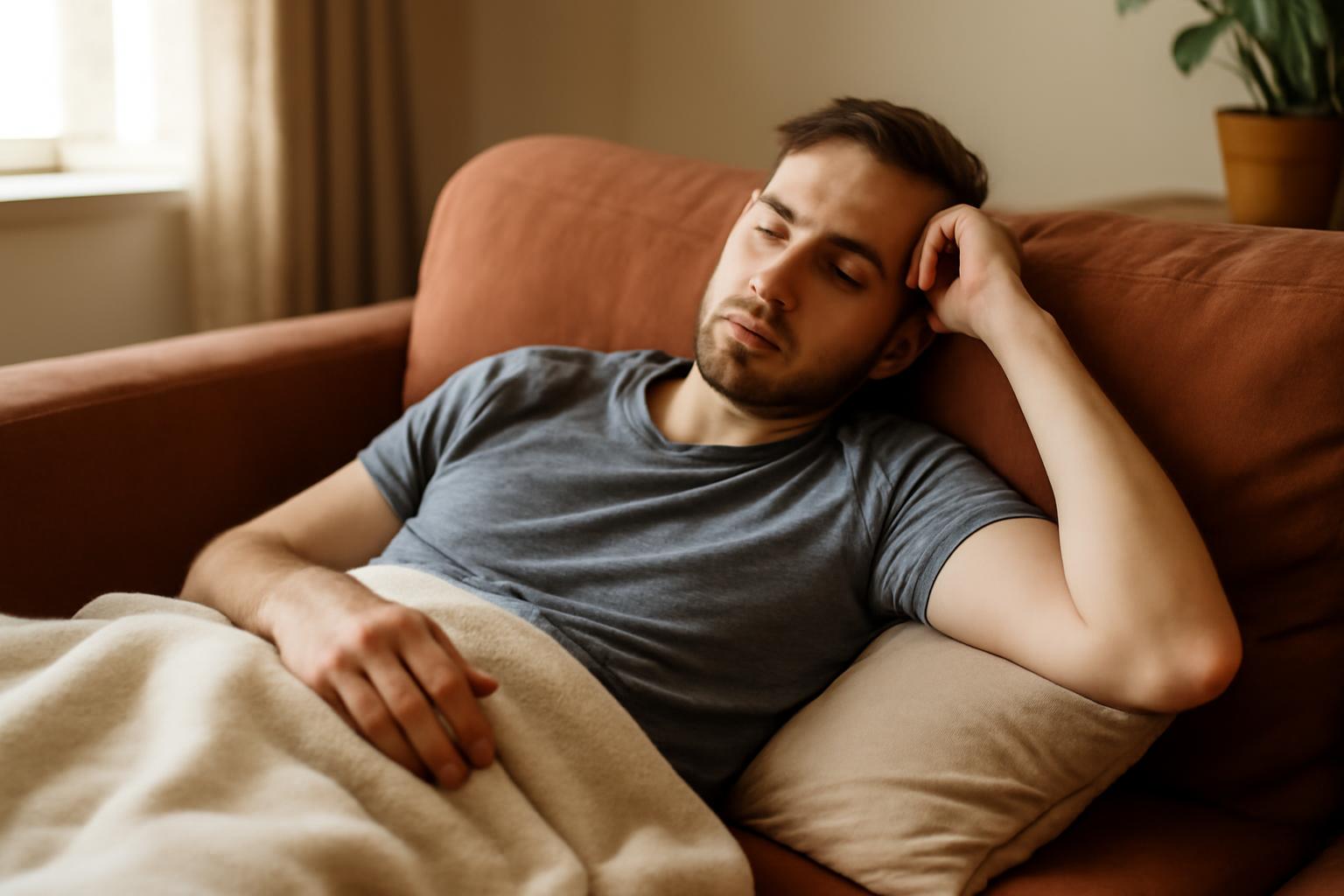
The short answer is: it can, but the experience varies. Some people feel relaxed, sleepy, or temporarily low in energy after ejaculating. Others notice little change or feel alert instead. The practical question is not simply whether ejaculation can precede tiredness, but what kind of tiredness you experience, how long it lasts, and whether something else better explains it.
Ejaculation often occurs alongside orgasm, physical activity, emotional release, and a change from stimulation to rest. It may also happen late at night, in bed, or after an already tiring day. That makes it difficult to isolate ejaculation as the sole cause of sleepiness based on one experience.
A brief desire to rest is different from persistent fatigue, repeated daytime sleepiness, weakness, dizziness, or feeling unwell. The first may be an ordinary short-term response to the whole sexual experience. The latter deserves a broader look at sleep, health, medication, mood, and other possible contributors.
This guide offers a practical way to interpret the pattern without assuming either that ejaculation must cause tiredness or that the symptom should always be ignored.
What does ejaculating make you tired means
When someone asks, “Does ejaculating make you tired?” the word tired can refer to several different experiences:
- Feeling calm enough to fall asleep
- Wanting to lie down briefly
- Experiencing a short drop in motivation or alertness
- Feeling physically worn out after sexual activity
- Having low energy for hours afterward
- Experiencing persistent fatigue that happens to be noticed after ejaculation
These experiences should not automatically be treated as equivalent. Relaxation at bedtime may be welcome and may not interfere with anything. Strong daytime sleepiness, by contrast, could affect concentration, driving, work, or study. Fatigue that persists beyond the immediate period raises different questions from a short-lived desire to rest.
It also helps to distinguish ejaculation from the surrounding event. A person may ejaculate during masturbation, partnered sex, or sleep. Those situations differ in physical exertion, duration, emotional context, time of day, and what happens afterward. If tiredness occurs only after physically demanding sex but not after masturbation, exertion may matter more than ejaculation itself. If it happens only at night, normal sleep pressure may be a large part of the explanation.
Similarly, ejaculation and orgasm are closely associated in many experiences, but “after ejaculation” does not necessarily identify which part of the event produced the perceived change. The transition from arousal to a resting state, the end of activity, emotional satisfaction, and the expectation of sleep may all contribute to what a person labels as tiredness.
Sleepiness is not always fatigue
Sleepiness means being inclined to fall asleep. Fatigue is a broader sense of low energy, exhaustion, or reduced capacity. You can be fatigued without being able to sleep, and you can be sleepy without feeling physically weak.
This distinction matters because the next step differs:
- Brief sleepiness: Consider timing and whether it causes any practical problem.
- Physical tiredness: Compare the intensity and duration of sexual activity with other exercise.
- Persistent low energy: Review sleep quantity, sleep quality, stress, illness, and medications rather than focusing only on ejaculation.
- Unusual or severe symptoms: Seek medical assessment instead of trying to explain everything through sexual activity.
The most useful question is therefore not “Did ejaculation happen before I felt tired?” It is “What exactly did I feel, when did it begin, how long did it last, and does the same thing happen under different conditions?”
How does ejaculating make you tired works
The wording of this question suggests a single mechanism: ejaculation occurs, and tiredness follows. In practice, the sequence contains several overlapping elements.
First, there is the person’s starting condition. Someone who is already sleep-deprived, stressed, ill, hungry, dehydrated, or approaching their usual bedtime may be likely to feel tired after almost any activity. Sexual activity may simply be the last noticeable event before that tiredness becomes obvious.
Second, there is the period of arousal and activity. This may involve sustained attention, muscle tension, movement, changes in breathing, and emotional intensity. How demanding it feels depends on the person and the circumstances. A short, low-effort experience and a long, physically active one should not be expected to have identical effects.
Third, stimulation ends. The contrast between an activated state and a quieter state can feel like a sudden drop in energy, even when the person has not developed meaningful fatigue. If the environment is dark, comfortable, and free from further demands, that contrast may be interpreted as sleepiness.
Fourth, behavior after ejaculation matters. A person who remains in bed is more likely to notice drowsiness than someone who gets up, turns on the lights, speaks with a partner, showers, or returns to an engaging task. This does not mean the sensation is imaginary. It means environment and expectation can shape whether a mild change develops into sleep.
Finally, there is individual variation. The same person may respond differently depending on time of day, sleep debt, activity level, mood, and context. Comparing yourself with someone else is usually less useful than comparing your own experiences under different conditions.
A practical cause-and-context model
You can think about post-ejaculation tiredness as the combination of five factors:
- Baseline: How tired were you before sexual activity?
- Activity: How long or physically demanding was the experience?
- Transition: Did you go quickly from stimulation to stillness?
- Setting: Were you already in a sleep-promoting environment?
- Recovery: Did the feeling pass after a short rest, or did it continue?
This model avoids an unnecessary either-or conclusion. Ejaculation may be part of the sequence without being the only reason you feel tired.
Why one episode tells you little
A single experience cannot show a reliable pattern. If you ejaculated late at night after sleeping poorly and then felt exhausted, there are several plausible explanations. If the same response occurs consistently during the day, after adequate sleep, and regardless of how physically active the event was, the pattern is more informative—but it still does not establish a medical cause by itself.
Frequency matters less than consistency and impact. A sensation that occasionally occurs under predictable conditions is different from one that repeatedly disrupts your day. The more persistent, intense, or unusual the response, the less useful it is to assume that ejaculation alone explains it.
The main approaches
There are several reasonable ways to respond, depending on the severity and practical effect of the tiredness.
Accept brief sleepiness when it is harmless
If the sensation is mild, short-lived, and occurs near bedtime, you may not need to change anything. Feeling ready to rest after sexual activity is not necessarily a problem. The key question is whether it interferes with responsibilities, safety, relationships, or your preferred sleep schedule.
This approach is appropriate when:
- You feel generally well.
- The sensation passes without special intervention.
- It occurs in an unsurprising context, such as late at night.
- You are not experiencing broader daytime fatigue.
- The pattern does not cause distress.
Acceptance does not require deciding that ejaculation is the sole biological cause. It simply recognizes that a predictable, harmless response does not always need correction.
Adjust the timing
If ejaculation reliably makes you want to rest, timing sexual activity before sleep may be more practical than trying to fight the sensation. Conversely, if you need to remain alert for work, study, exercise, caregiving, or travel, choose another time when possible.
Timing is a simple experiment because it changes the practical consequence without requiring a theory about the cause. It can also reveal whether the response is tied mainly to bedtime. If the tiredness largely disappears when sexual activity occurs earlier, normal nighttime sleepiness may have been a major contributor.
Do not use timing as a way to override safety. If you become too sleepy to drive or operate equipment, postpone those activities rather than assuming you can push through.
Reduce surrounding exertion
When the tiredness feels physical rather than sleepy, consider the total activity rather than ejaculation alone. Duration, intensity, muscle tension, room temperature, and how rested you were beforehand may all affect the experience.
You can compare lower- and higher-exertion situations. If fatigue tracks the level of effort, the broader activity may be more relevant than the final event. This does not require avoiding sex or masturbation; it means adjusting pace, position, duration, or timing according to your energy.
Improve the baseline conditions
Persistent tiredness is often best approached as a general energy or sleep issue first. Ask whether you are allowing enough time for sleep, waking repeatedly, keeping an inconsistent schedule, or relying on naps and caffeine to compensate for poor nights. Also consider whether stress, low mood, illness, pain, alcohol, or medication changes coincide with the fatigue.
This broader approach is particularly important if you are tired at other times too. An event can make an existing problem more noticeable without being its underlying cause.
Avoid trying to compensate automatically with a long nap. Napping may offer temporary relief, but poorly timed or extended daytime sleep can make nighttime sleep more difficult for some people. If you do nap, treat it as a deliberate sleep decision rather than proof that ejaculation has “drained” you.
Track the pattern
A brief record is often more useful than speculation. For one or two weeks, note:
- Time of sexual activity
- Whether ejaculation occurred
- Whether orgasm occurred
- Approximate level of physical effort
- Tiredness before the activity
- Tiredness afterward
- How long the change lasted
- Previous night’s sleep
- Alcohol, illness, unusual stress, or medication changes
- Whether the sensation interfered with anything
You do not need an elaborate scoring system. A simple description such as “none,” “mild,” “moderate,” or “strong” is enough. The purpose is to identify patterns, not to produce a diagnosis.
Ask a healthcare professional
Medical input is appropriate when the symptom is persistent, pronounced, worsening, difficult to explain, or accompanied by other concerning changes. It is also reasonable to seek help simply because the pattern worries you.
A clinician can consider the symptom in the context of your sleep, general health, medications, mood, sexual function, and other symptoms. That is more reliable than treating one event as the complete explanation.
A practical process
Use the following process to decide what to do without overreacting to a normal variation or overlooking a broader problem.
Step 1: Describe the sensation precisely
Replace “I get tired” with a more specific description:
- “I feel relaxed and can fall asleep.”
- “My muscles feel physically fatigued.”
- “I lose motivation for about half an hour.”
- “I struggle to stay awake for the rest of the day.”
- “I feel weak, dizzy, unwell, or mentally foggy.”
The more specific description gives you a better basis for comparison. It also makes it easier to explain the issue if you seek professional advice.
Step 2: Establish the timeline
Note when the sensation starts and ends. Immediate, brief relaxation presents a different pattern from fatigue that begins later or continues for many hours.
Avoid forcing the timing into exact numbers if you are unsure. The useful categories are immediate versus delayed, and brief versus persistent. Ask whether you return to your normal baseline after resting.
Step 3: Check your starting point
Before attributing tiredness to ejaculation, ask:
- How much sleep did I get?
- Was that sleep refreshing?
- Was I already drowsy?
- Had I eaten and had fluids as usual?
- Was I under unusual stress?
- Had I exercised or worked hard?
- Was I using alcohol or another substance?
- Had any medication or dose recently changed?
- Was I beginning to feel ill?
This is not an attempt to dismiss the sexual trigger. It is a way to avoid confusing sequence with cause.
Step 4: Separate ejaculation from the context
Compare occasions when possible:
- Masturbation versus partnered sex
- Daytime versus bedtime
- Lower versus higher physical effort
- Well-rested versus sleep-deprived days
- Ejaculation versus sexual activity without ejaculation
You do not need to manufacture situations that feel uncomfortable or unwanted. Use naturally occurring differences. The goal is to find out whether tiredness tracks ejaculation consistently or follows another feature more closely.
Step 5: Rate the impact
A mild symptom can matter if it occurs at a dangerous or disruptive time. Consider whether it affects:
- Driving or other safety-sensitive tasks
- Work or study
- Exercise
- Childcare or other responsibilities
- Relationships
- Your willingness to engage in wanted sexual activity
- Nighttime sleep
Impact is often more important than whether the sensation fits someone else’s definition of “normal.”
Step 6: Try one change at a time
Choose a low-risk adjustment based on the most plausible explanation:
- Move sexual activity closer to bedtime if it predictably relaxes you.
- Avoid scheduling it immediately before a task requiring sustained alertness.
- Reduce physical intensity if the fatigue feels exertional.
- Prioritize adequate nighttime sleep if you are tired throughout the day.
- Review the timing of alcohol or other substances.
- Discuss medication concerns with the prescribing clinician rather than changing treatment yourself.
Changing several factors at once makes the result difficult to interpret. One adjustment followed by observation provides clearer information.
Step 7: Reassess
After several occasions, ask:
- Is the pattern consistent?
- Did the adjustment help?
- Is tiredness present even without ejaculation?
- Is it becoming stronger or lasting longer?
- Are there other symptoms?
- Is the problem significant enough that I want professional help?
If the sensation is brief and manageable, your practical solution may be nothing more than choosing a convenient time. If it persists or affects daily life, move beyond self-experimentation.
Common mistakes and tradeoffs
Assuming that “after” means “because of”
Ejaculation may be followed by sleepiness without being its only cause. This is particularly easy to misread when sexual activity happens at bedtime. The tradeoff in focusing too narrowly is that you may miss ordinary explanations such as insufficient sleep or physical exertion.
The opposite mistake is also possible: dismissing a consistent pattern merely because several factors are involved. Context does not make the experience unreal. It simply means causation may be shared.
Treating every kind of tiredness as the same
Relaxation, sleepiness, muscular fatigue, weakness, and prolonged low energy require different interpretations. Using one label for all of them can lead to an unsuitable response—for example, taking a nap for physical soreness or using caffeine to cover persistent fatigue.
Describe first; respond second.
Believing a dramatic depletion explanation without evidence
People sometimes interpret tiredness as proof that ejaculation has depleted an essential resource or caused bodily damage. The feeling alone cannot establish that explanation. It may encourage unnecessary anxiety, restrictive rules, or purchases based on fear.
A more defensible approach is to observe duration, consistency, context, and functional effect. Do not assume that a strong sensation automatically confirms a dramatic mechanism.
Ignoring baseline sleep
If you regularly feel tired during the day, ejaculation may not be the central issue. Concentrating on sexual frequency while leaving poor sleep unaddressed can delay a more useful evaluation.
Consider your complete sleep pattern: time in bed, consistency, awakenings, perceived sleep quality, and daytime alertness. If fatigue occurs across many activities, use a broader lens.
Using stimulants automatically
Caffeine may temporarily change how alert you feel, but it does not explain the symptom. Using it late in the day can also complicate your attempt to understand nighttime sleep. The tradeoff is short-term alertness versus a less clear picture of the underlying pattern.
If you use caffeine, keep timing and amount reasonably consistent while observing the issue. Otherwise, differences in stimulation can obscure your comparisons.
Taking long or late naps without considering nighttime sleep
A nap can be useful when you genuinely need rest, but it is not always the best response to brief post-ejaculation sleepiness. If the nap delays your usual bedtime or leaves you less able to sleep at night, it may create a cycle in which daytime and nighttime sleep compete.
Before napping, ask whether you need recovery or are simply experiencing a short transition into relaxation. If the sensation is likely to pass and you need to protect nighttime sleep, quiet wakeful rest may be enough.
Changing medications independently
If fatigue began after a medication change, it is reasonable to wonder whether the two are connected. It is not reasonable to stop or alter prescribed treatment solely on that suspicion. Discuss the timing and symptoms with the prescribing clinician or pharmacist.
This is especially important because a medication may have been prescribed for a condition that itself affects energy or sleep.
Comparing yourself too closely with others
One person becoming sleepy does not mean everyone should. Another person remaining energetic does not prove your response is abnormal. Individual accounts can help you find language for the experience, but they cannot determine its cause or importance in your case.
Your own pattern, baseline, and level of impairment are more useful than an informal comparison.
Turning observation into anxiety
Tracking can clarify a pattern, but excessive monitoring may make every normal fluctuation feel significant. Keep the record brief and time-limited. If monitoring increases distress without producing useful information, stop and discuss the concern with a healthcare professional.
The purpose is to support a decision, not to inspect every sensation indefinitely.
How to choose the next step
Choose your next step according to duration, severity, consistency, and impact.
If the feeling is mild and brief
No intervention may be necessary. If the response is pleasant or neutral, let it pass. You can schedule sexual activity when relaxation is convenient, particularly if it tends to occur near bedtime.
Your concrete next step: notice the pattern on the next few occasions without trying to change it.
If it is predictable but inconvenient
Adjust timing or context. Avoid sexual activity immediately before something that requires your full alertness. If physical exertion seems relevant, reduce intensity and compare the result.
Your concrete next step: change one factor—preferably timing—and observe whether the practical problem improves.
If you are generally tired
Shift attention from ejaculation to your overall sleep and health pattern. Record when fatigue occurs throughout the day, not only after sexual activity. Look for insufficient or disrupted sleep, irregular schedules, stress, illness, substance use, or recent medication changes.
Your concrete next step: keep a short sleep-and-energy log that includes both sexual and nonsexual days.
If the response is persistent or concerning
Arrange a healthcare assessment. Bring a concise description of the sensation, its timing, duration, frequency, and any associated changes. Mention relevant sleep issues, medications, substances, and general health concerns.
Do not wait for perfect proof that ejaculation caused the problem. Medical assessment is intended to examine competing explanations, not merely confirm your first theory.
If symptoms are severe or sudden
Seek prompt medical help rather than relying on self-tracking. A marked departure from your usual state deserves more caution than familiar, short-lived sleepiness.
Ultimately, the most sound decision is usually modest: accept harmless relaxation, adjust timing for predictable inconvenience, investigate overall sleep when fatigue is widespread, and seek professional help when the pattern is persistent, severe, worsening, or otherwise concerning.
What should a beginner know about does ejaculating make you tired?
Start by knowing that there is no universal response. You may feel sleepy, relaxed, physically tired, unchanged, or occasionally more alert. What matters is the specific sensation and its effect on your day.
Do not evaluate the experience in isolation. Consider the time of day, your previous night’s sleep, the amount of physical activity involved, and whether you were already tired. Ejaculation may be one part of the sequence without being the only cause.
For a beginner, the simplest method is to observe rather than assume. Note whether the feeling is brief or persistent and whether it occurs under different conditions. If it is mild and causes no problem, no special action is required.
What are the main risks of does ejaculating make you tired?
The immediate practical risk is not necessarily ejaculation itself but what you do while sleepy. If your alertness is reduced, avoid driving, operating equipment, or starting another task where inattention could cause harm.
A second risk is misattribution. If you blame ejaculation for all fatigue, you may overlook inadequate sleep, illness, medication effects, stress, or another health issue. The reverse can also happen: you may dismiss a strong, recurring response because brief sleepiness is common in your own past experience.
Other potential problems include unnecessary anxiety, avoiding wanted sexual activity, using excessive caffeine, or disrupting nighttime sleep with poorly timed naps. These are best prevented by assessing duration, context, and impact rather than adopting a rigid rule.
If tiredness is severe, persistent, worsening, or accompanied by other unusual symptoms, seek professional assessment.
How do you evaluate does ejaculating make you tired options?
Compare options according to the problem you are actually trying to solve:
- No change: Best when tiredness is mild, brief, and harmless.
- Change the timing: Useful when sleepiness is predictable but inconvenient.
- Reduce exertion: Relevant when the sensation feels physically driven.
- Improve general sleep: Important when fatigue occurs throughout the day.
- Track the pattern: Helpful when the cause and consistency are unclear.
- Seek medical input: Appropriate when symptoms persist, worsen, cause impairment, or raise concern.
Begin with the least disruptive option that matches the severity of the problem. Change one factor at a time and reassess. If a simple timing adjustment solves the issue, you may not need a complex explanation. If it does not—or if the fatigue extends well beyond sexual activity—broaden the investigation rather than imposing stricter rules around ejaculation.