
12 min read ·
Why You Wake Up With Drool on Your Pillow—and When It Matters
Occasional mild drooling is usually harmless. Repeated pillow-soaking matters more with snoring, gasping, daytime sleepiness or trouble swallowing.
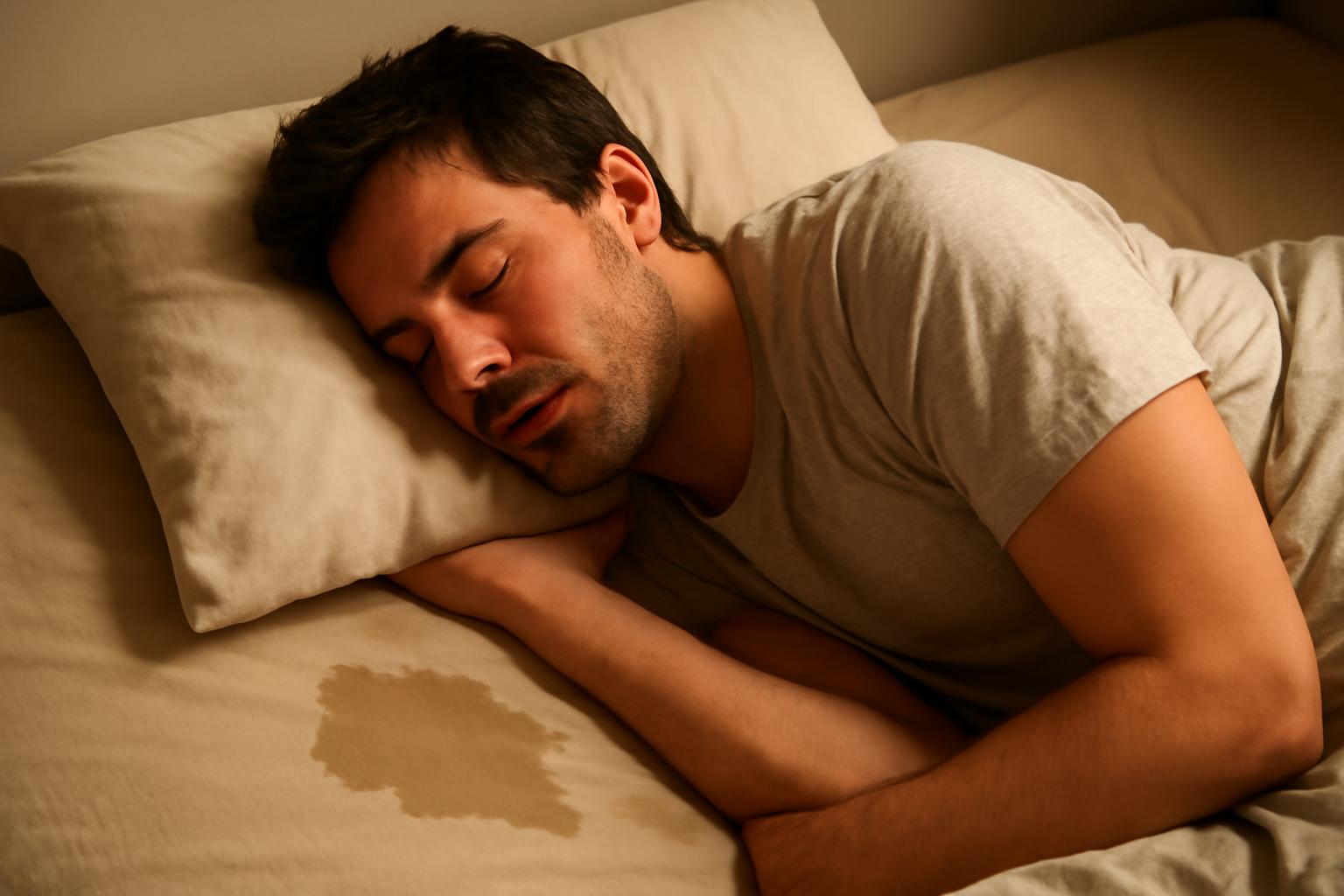
The short answer: sleep slobbering usually means saliva leaked from your mouth
If you “slob” in your sleep, you are probably describing slobbering or drooling—saliva flowing out of your mouth involuntarily. It may leave a small damp spot near your face or, in heavier cases, noticeably wet your pillow or bedding.
Occasional mild sleep drooling is common and usually harmless. Most often, saliva accumulated while you were asleep and escaped because your mouth opened, you swallowed less often, or your sleeping position allowed gravity to pull it outward. Cleveland Clinic defines drooling as the unintentional flow of saliva from the mouth and notes that it commonly occurs during sleep.
A wet pillow does not, by itself, mean that:
- You have sleep apnea.
- Your body is producing an abnormal amount of saliva.
- You slept especially deeply.
- You were in rapid eye movement, or REM, sleep.
- You have a neurological condition.
- You need medical treatment.
The more useful question is whether this was an isolated, mild episode with an apparent explanation or a new, persistent, heavy, or symptom-associated pattern.
A little drool after falling asleep on your side while you have a stuffy nose is generally easy to explain. Repeatedly soaking your pillow without an obvious reason is more important to investigate, particularly when it occurs with snoring, gasping, daytime sleepiness, choking, difficulty swallowing, weakness, or speech changes.
In short, the drool itself is usually less informative than the pattern around it.
Why saliva escapes while you are asleep
Your salivary glands do not shut down when you fall asleep. Saliva production continues and helps keep your mouth and throat lubricated. At the same time, you generally swallow less frequently, and the muscles controlling your lips, jaw, cheeks, and mouth relax. These ordinary changes can allow saliva to collect and leak out. The Sleep Foundation’s overview of nighttime drooling identifies continued saliva production, sleep position, mouth breathing, health conditions, and medication effects as relevant factors.
The basic sequence is straightforward:
- Saliva continues entering your mouth.
- You swallow it less frequently than you do while awake.
- Relaxed mouth and facial muscles may provide less containment.
- Your lips or jaw may fall open.
- Saliva pools, and gravity gives it a path to the pillow.
This mechanism also explains why drooling does not necessarily mean you are making too much saliva. Nighttime drooling can involve one or more of three broad processes:
- Increased production: More saliva is entering the mouth than usual.
- Reduced swallowing: Saliva stays in the mouth longer and accumulates.
- Reduced containment or control: An open mouth or impaired control of the lips and facial muscles allows saliva to escape.
For ordinary occasional drooling, reduced swallowing and an open or relaxed mouth may be enough to explain what happened. There is no need to assume that your salivary glands are overactive.
Visible drool is also not a reliable measure of sleep quality. You could drool during an otherwise ordinary night, while congested, or while experiencing disrupted breathing. The pillow cannot distinguish among those situations.
The most common explanations: position, an open mouth, and a blocked nose
The simplest explanations should generally come first: how you were lying, whether your mouth was open, and whether you could breathe comfortably through your nose.
Side and stomach sleeping make outward leakage mechanically easier. If saliva collects near the side or front of an open mouth, gravity can carry it directly onto the pillow. When you lie on your back, saliva may be less likely to flow out through the side of your mouth, although that does not make back sleeping appropriate for everyone.
An open mouth provides the exit. Some people naturally let their jaw fall open during sleep. Others open their mouths because nasal breathing is difficult. The combination of an open mouth and side or stomach sleeping creates a direct route from the mouth to the pillow.
Temporary nasal congestion is therefore a common explanation for a sudden change. A cold, seasonal allergies, or sinus inflammation can make nasal breathing harder and encourage mouth breathing. Throat infections or swollen tonsils may also make breathing or swallowing less comfortable and contribute to an open-mouth sleeping pattern. These illnesses and allergies are among the possible contributors to sleep drooling described in consumer sleep-health guidance.
Consider the timing:
- Did the drooling begin when your nose became stuffy?
- Is it worse during allergy season?
- Does it happen mainly when you sleep on one side?
- Do you wake with your mouth open?
- Did it improve when the illness or congestion resolved?
If the answers form a clear pattern, you may already have a plausible explanation. Drooling that appears during a short period of nasal congestion and disappears when normal breathing returns is less concerning than an unexplained change that continues night after night.
Persistent nasal or throat blockage may also promote mouth breathing. You do not need to determine the precise cause yourself. If blockage continues, is severe, or repeatedly disrupts sleep, a healthcare professional can decide whether further evaluation is appropriate.
A pattern that is new, persistent, unexplained, or accompanied by additional symptoms is much more informative.
Other possible contributors: reflux, medications, and swallowing problems
Position and mouth breathing account for many cases, but not every pattern. Gastroesophageal reflux, medication effects, and swallowing difficulty are other possibilities. These are associations to consider—not diagnoses that can be made from pillow wetness.
Gastroesophageal reflux occurs when stomach contents move back toward the esophagus. In some people, esophageal irritation may be associated with increased salivation or difficulty swallowing. Reflux becomes more relevant if nighttime drooling appears with recurring heartburn, regurgitation, sour-tasting fluid in the mouth, or a persistent sensation that swallowing is difficult. Drooling alone does not establish reflux disease.
Medication effects are another possibility. Some antibiotics, antipsychotic drugs, and medications used for Alzheimer’s disease have been reported to cause excessive salivation or drooling. If the problem began after a prescription was started or its dose was changed, record the medication and timing and discuss them with the prescriber or pharmacist. Do not stop, skip, or alter a prescription on your own; the Sleep Foundation advises consulting the prescribing clinician when a medication may be contributing.
Impaired swallowing can allow saliva to pool even when the salivary glands are producing a normal amount. This is different from simply sleeping with an open mouth. It becomes more concerning when drooling also occurs while awake or appears with:
- Recurrent coughing or choking while eating or drinking.
- Difficulty swallowing food, liquids, or saliva.
- Reduced control of saliva during the day.
- Changes in speech.
- New facial weakness.
- Tremor or other changes in movement or coordination.
Neurological conditions belong on the list of possible causes, but they should remain in proportion. Isolated mild pillow wetness is not a reason to conclude that you have Parkinson’s disease, a stroke, or another neurological disorder. Concern rises when drooling is severe, occurs during the day, or appears with swallowing difficulty, weakness, tremor, speech changes, or an existing neurological diagnosis.
Parkinson’s disease illustrates the reduced-swallowing mechanism. In people with Parkinson’s, drooling is usually related to slower or incomplete automatic swallowing rather than excess saliva production, according to the Parkinson’s Foundation. This does not mean an otherwise well person who occasionally drools at night is likely to have Parkinson’s. It shows how a normal amount of saliva can pool when swallowing control is impaired.
Does drooling in your sleep mean you have sleep apnea?
No. Drooling can occur alongside obstructive sleep apnea, but drooling alone does not establish the diagnosis.
Obstructive sleep apnea is a disorder in which the upper airway repeatedly becomes blocked during sleep, causing interruptions in breathing. A possible connection with drooling is open-mouth breathing: when breathing through the nose or upper airway is difficult, a person may sleep with the mouth open, giving saliva an easier path outward.
That mechanism is plausible but nonspecific. Congestion, allergies, sleep position, and ordinary jaw relaxation can also produce open-mouth breathing or saliva leakage. You cannot determine whether you have sleep apnea from the presence or amount of drool.
Sleep apnea becomes more important to consider when drooling occurs within a broader symptom cluster:
- Loud, habitual snoring.
- Witnessed pauses in breathing.
- Waking while gasping, choking, or short of breath.
- Repeated or unexplained awakenings.
- Morning headaches.
- Dry mouth or a sore throat on waking.
- Difficulty concentrating.
- Excessive daytime sleepiness despite allowing enough time for sleep.
These associated symptoms—not drooling by itself—make a professional sleep assessment more appropriate.
By contrast, isolated drooling is less suggestive of sleep apnea if you wake rested, have no known snoring or breathing interruptions, and do not experience excessive daytime sleepiness. That does not completely rule out sleep apnea, but it makes drooling a weak clue on its own.
If the symptom pattern raises concern, seek a professional assessment. Depending on your history and examination, a clinician may recommend a sleep evaluation or sleep study. Drooling should not be used as a do-it-yourself screening test.
Do not assume that continuous positive airway pressure, an oral appliance, or another sleep-apnea treatment will necessarily stop drooling. Those treatments address a diagnosed breathing disorder, and their suitability depends on the individual. Reducing visible saliva leakage and maintaining a safe airway may overlap as goals, but they are not the same goal.
A low-risk plan for reducing ordinary sleep drooling
Before trying to suppress saliva, observe the pattern—provided the drooling is mild and you do not have breathing, swallowing, or neurological warning signs.
Record:
- Whether you slept on your back, side, or stomach.
- Whether your nose was blocked.
- Whether allergies or an illness were active.
- Whether you had reflux symptoms.
- Any recent medication starts or dose changes.
- Whether anyone noticed snoring, gasping, or breathing pauses.
- Whether you woke rested or remained sleepy during the day.
- Whether the drooling was mild or repeatedly soaked the bedding.
- Whether swallowing felt normal during the day.
This record may reveal a straightforward connection. It can also give a clinician more useful information if the problem continues.
If nasal congestion or allergies appear to be driving mouth breathing, address them appropriately. That may mean avoiding a known allergen, following an existing clinician-approved allergy plan, or asking a pharmacist or healthcare professional which options are suitable for you. Persistent blockage may need assessment rather than indefinite self-treatment.
You can also consider a cautious sleep-position experiment. Back sleeping may reduce visible leakage for some people because gravity is less likely to pull saliva through the side of an open mouth. Try it only if it is comfortable and you do not have signs that the position worsens your breathing.
That caveat matters because lying on the back may increase breathing interruptions in some people with obstructive sleep apnea, even if it reduces outward saliva leakage. If you snore loudly, wake gasping, or have witnessed breathing pauses, prioritize assessment rather than using a drier pillow as evidence that your breathing improved.
Sealing the lips does not identify why your mouth opens. The more appropriate goal is to understand and address the cause of mouth breathing.
Also avoid pursuing saliva-reducing prescription drugs, injections, oral appliances, CPAP, or surgery as home remedies. Such treatments may have a role in selected diagnosed conditions, but they require professional assessment. Treatment for persistent drooling should target the underlying cause.
A practical sequence is:
- Identify when and how the drooling occurs.
- Address an obvious temporary contributor, such as nasal congestion, appropriately.
- Try a comfortable positional change only if there are no breathing concerns.
- Discuss a possible medication connection with the prescriber.
- Seek evaluation if the pattern persists, becomes heavy, or occurs with other symptoms.
When drooling needs routine care—and when symptoms are urgent
Use three levels to decide what to do: monitor the pattern, arrange routine care, or seek urgent help.
Monitor the pattern when drooling is occasional, mild, and has an apparent explanation. Examples include falling asleep on your side with your mouth open or drooling during a short-lived cold or allergy flare. If it resolves when the congestion clears or your position changes, no further action may be necessary.
Arrange a routine healthcare appointment when drooling:
- Persists or becomes more frequent.
- Repeatedly soaks pillows or bedding.
- Appears suddenly without a clear cause but without emergency symptoms.
- Irritates or damages the skin around the mouth.
- Disrupts sleep, comfort, relationships, or quality of life.
- Begins after a medication is started or adjusted.
- Occurs with symptoms suggestive of sleep apnea.
- Happens while awake as well as asleep.
- Occurs with recurrent choking, coughing during meals, or difficulty swallowing.
- Makes it difficult to keep saliva inside the mouth.
Severe chronic drooling can irritate or damage the skin. If a person also has meaningful swallowing dysfunction, pooled saliva may enter the airway and contribute to aspiration pneumonia. That complication is mainly a concern when swallowing is impaired; it is not an expected consequence of ordinary occasional sleep drooling. Cleveland Clinic’s clinical overview distinguishes common sleep drooling from severe cases that may require treatment.
A healthcare professional can decide whether the next step should involve:
- Reviewing sleep and breathing symptoms.
- Evaluating persistent nasal or throat blockage.
- Reviewing medications and recent dose changes.
- Assessing possible reflux symptoms.
- Examining mouth and facial-muscle control.
- Arranging a sleep study.
- Referring for a swallowing assessment, sometimes with a speech-language pathologist.
Guidance on sudden unexplained drooling specifically identifies facial weakness, slurred speech, and choking or swallowing symptoms as reasons for prompt medical evaluation.
The practical decision rule is simple: an occasional wet pillow—especially during side sleeping, congestion, or an allergy flare—usually reflects saliva escaping from an open mouth. Track a persistent or unexplained change and seek routine evaluation when drooling is heavy or occurs with breathing or swallowing symptoms.
This article provides general educational information. It cannot diagnose the cause of drooling or replace care from a qualified healthcare professional.
Frequently asked questions
Is it normal to drool on your pillow every once in a while?
Yes. Occasional mild drooling during sleep is common and generally harmless. It often happens because you swallow less frequently, your mouth opens, or you sleep on your side or stomach. Cleveland Clinic notes that drooling is common during sleep.
A one-time damp spot is usually not concerning, particularly if you had nasal congestion or another apparent explanation. Pay more attention if drooling becomes persistent, heavy, unexplained, or associated with breathing or swallowing symptoms.
Why did I suddenly start drooling in my sleep?
Look first for a recent change that could promote mouth breathing or alter how you handle saliva. Possibilities include a stuffy nose, seasonal allergies, an infection affecting the nose or throat, a change in sleeping position, reflux symptoms, or a new or adjusted medication.
Note when the change began and whether it occurs every night. Arrange an evaluation if the pattern persists without an apparent cause or occurs with choking, swallowing trouble, weakness, speech changes, snoring, gasping, or daytime sleepiness.
Does drooling mean I am sleeping deeply?
You could drool during an otherwise normal night, while congested, or while experiencing disrupted breathing. How rested you feel and whether you have repeated awakenings, snoring, gasping, or daytime sleepiness are more informative.
Can sleeping on my back stop nighttime drooling?
It may reduce visible leakage for some people because saliva is less likely to run directly out of the side of the mouth. It is not guaranteed to work and is not universally the best sleeping position.
Back sleeping may worsen breathing interruptions in some people with obstructive sleep apnea. If you have loud snoring, witnessed breathing pauses, gasping, or marked daytime sleepiness, prioritize professional assessment rather than relying on a position change.
Which symptoms with drooling should make me ask about sleep apnea?
Ask about a sleep-apnea assessment if drooling occurs with loud habitual snoring, witnessed breathing pauses, waking while gasping or choking, repeated awakenings, morning headaches, dry mouth or sore throat, difficulty concentrating, or excessive daytime sleepiness.
Drooling alone is not a sleep-apnea test. The combination of nighttime breathing symptoms and daytime impairment is more meaningful and should be evaluated by a qualified healthcare professional.