
21 min read ·
Stop Nighttime Choking from Acid Reflux: Proven Sleep Positions and Habits That Work
Sit fully upright and stay elevated until it settles. Seek urgent help for severe breathing trouble, severe chest pain, inability to swallow or seeing blood.
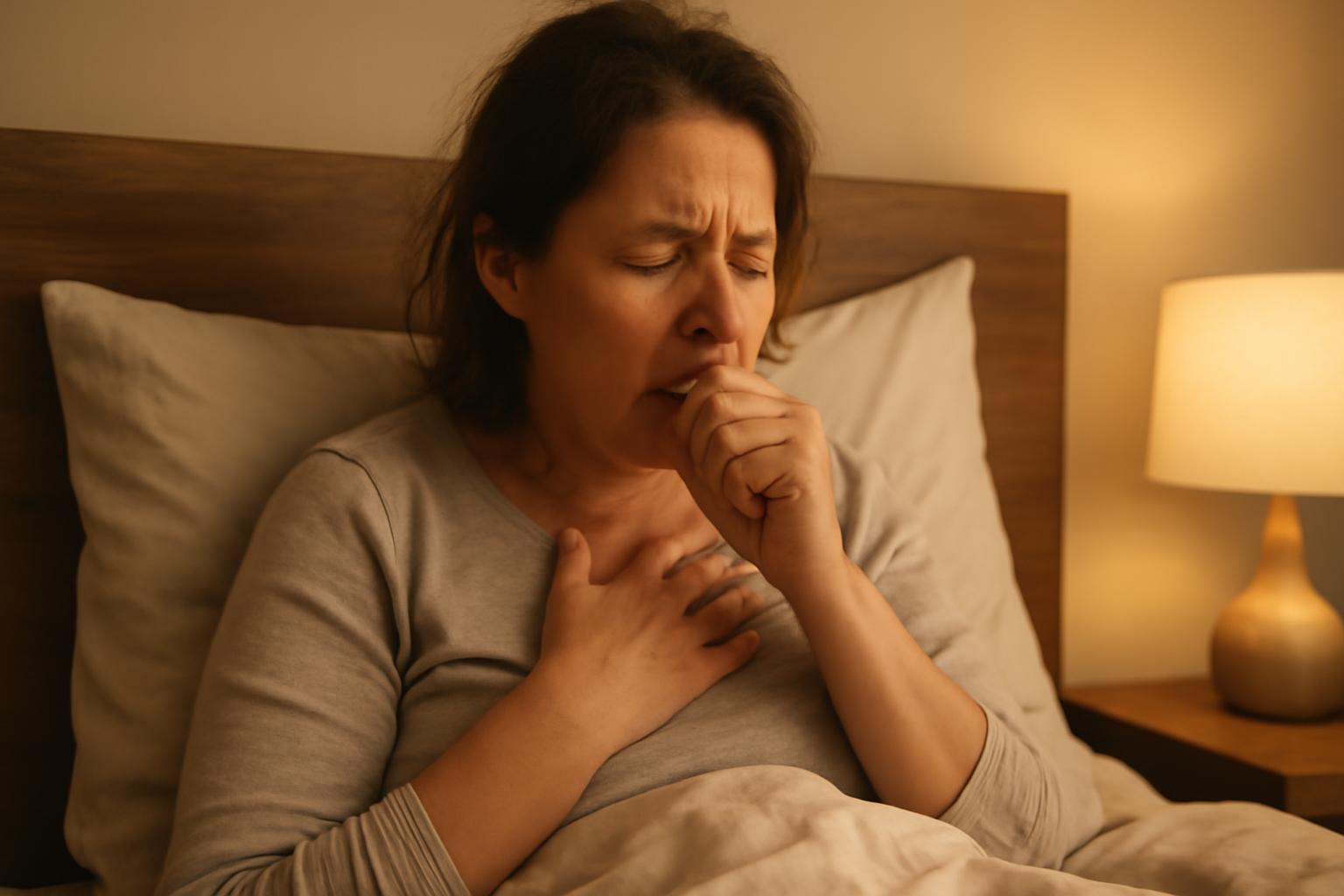
Waking up coughing, gagging, or feeling acid surge into your throat can be frightening. If you are searching for choking on acid reflux while sleeping what to do, the safest short answer is this:
- Sit fully upright right away
- Do not lie flat again until symptoms clearly settle
- Get urgent help now if breathing is severely impaired, chest pain is severe or persistent, you cannot swallow, or there is bleeding
For prevention, the most consistently supported non-drug steps are:
- sleeping on your left side
- elevating your upper body or the head of the bed by about 6 to 8 inches
- avoiding food for at least 2 to 3 hours before bed
Those measures are evidence-backed first steps, not guarantees. The research for positional changes is reasonably consistent, but some of the practical “what to do right now” advice comes mostly from clinician and health-system guidance rather than large trials. And not every nighttime choking sensation is “just reflux.” Repeated episodes, trouble swallowing, bleeding, chest pain, chronic hoarseness, or heavy daytime sleepiness can point to something more serious, including overlap with obstructive sleep apnea.
This guide is informational only, not medical advice. It summarizes what the available evidence most strongly supports, where the evidence is weaker, and when self-management should stop and medical evaluation should start.
Why Acid Reflux Causes Choking Sensations While Sleeping
The usual nighttime pattern starts with nocturnal reflux: stomach contents move backward into the esophagus and may reach high enough to irritate the throat. That can trigger coughing, gagging, regurgitation, or a sudden sensation that the airway has “closed.” A PMC review of nighttime GERD and summaries from Sleep Foundation and GoodRx all describe the same basic nighttime mechanics.
Three things make reflux more likely to feel dramatic during sleep.
1. Lying flat removes gravity’s help
When you are upright, gravity helps keep stomach contents down. When you lie flat, that protection is reduced. If the lower esophageal sphincter (LES) is weak or relaxes at the wrong time, acid can move upward more easily into the esophagus, especially after meals or alcohol and caffeine exposure. That mechanism is described across multiple sources, including the PMC review, Clinic for Digestive Surgery, and Sleep Foundation.
2. Reflux clears more slowly during sleep
Nighttime reflux is often worse not just because it happens, but because it lingers. During sleep, saliva production falls and swallowing becomes less frequent. Both usually help neutralize acid and wash it back down. When that cleanup system slows, acid may stay in contact with the esophagus and throat longer, which can intensify symptoms and irritation. That slower clearance is a recurring point in the PMC review, Verywell Health, and HealthCentral.
3. The airway may react defensively
The “choking” sensation is often a reflex response, not the same thing as food truly blocking the airway. Reflux that reaches the upper throat can trigger coughing, gagging, or a brief laryngospasm-like episode, in which the vocal cords tighten reflexively and breathing feels temporarily hard. GoodRx describes this as a possible response to regurgitation and throat irritation, and expert commentary quoted there notes that laryngospasm can make the episode feel extreme even when it passes quickly.
That distinction matters. A reflux episode can feel like suffocation without being the same as a solid object stuck in the airway. But the sensation is still real, disruptive, and worth taking seriously if it repeats.
How common are nighttime symptoms?
The cleanest prevalence figures in the evidence pack come from the PMC review on nighttime GERD: among people with weekly heartburn, roughly 70% to 75% also report nighttime heartburn, and about 40% report sleep disruption from it. Other sources describe waking from coughing or choking as a recognized nocturnal reflux pattern, but the exact percentages vary across studies and populations.
So the careful takeaway is:
- nighttime reflux is common in people with GERD
- sleep disruption from reflux is common
- coughing, choking, regurgitation, and throat symptoms are recognized nighttime patterns
- exact percentages differ by study group
It is not only a heartburn problem
Nighttime reflux can show up as:
- sour or bitter taste
- regurgitation
- chest burning
- cough
- hoarseness
- lump-in-the-throat feeling
- choking or gasping sensations
That broader symptom pattern is why some people do not identify reflux at first. Their main complaint is not “heartburn.” It is waking up coughing, feeling acid in the throat, or suddenly sitting bolt upright to breathe.
Reflux and sleep apnea can overlap
Several sources in the evidence pack describe a strong association between reflux and obstructive sleep apnea (OSA). One proposed reason is pressure: obstructed breathing creates large negative pressure swings in the chest, which may favor reflux. Shared risk factors, especially obesity, may also contribute. This link is noted in Sleep Foundation, the reflux-airway overview from the Pain and Sleep Center, and other summaries in the pack.
That does not mean every choking episode is apnea. It means waking up choking is not specific to GERD, and that matters when symptoms keep recurring.
Immediate Steps If You Wake Up Choking on Reflux
The evidence for an exact at-home “first-aid protocol” is limited. What follows are common, low-risk comfort measures suggested in clinician and health-system guidance, not proven emergency treatment. If you are in real respiratory distress, have severe chest pain, cannot swallow, or see blood, skip home management and seek urgent care.
Do this now
1. Sit fully upright immediately. This is the most consistently suggested first move. Gravity may help reduce ongoing reflux exposure and makes it less likely that more stomach contents will rise while you are flat. This advice appears across Clinic for Digestive Surgery and GoodRx.
2. Spit out regurgitated material if needed. If acid or food has come up into the mouth, clearing it out is more sensible than swallowing repeatedly while coughing.
3. Breathe slowly and try not to panic. That sounds simplistic, but it matters. A reflux-triggered cough or brief laryngospasm-like episode can feel much worse than it looks from the outside. Slow, controlled breathing as the spasm settles may help you regain control.
4. If you can swallow comfortably, take a few small sips of water. This is commonly suggested as a comfort step to rinse the throat or esophagus, but it is not a proven fix and should not be forced. If swallowing feels difficult, skip it.
5. Stay upright or clearly elevated until symptoms settle. Do not lie flat again right away. Many consumer and clinic sources suggest remaining propped up for roughly 30 to 60 minutes, but treat that as a practical rule of thumb, not a validated threshold.
A simple “right now” sequence
If symptoms are easing and you are breathing adequately, a reasonable sequence is:
- sit up
- clear out any regurgitated material
- take slow breaths
- try a small sip of water only if swallowing is easy
- stay upright or reclined with the torso elevated
- avoid going flat again immediately
Pay attention to the pattern
If the episode settles, notice what surrounded it:
- Did it happen after a late meal?
- Was dinner unusually large or greasy?
- Was there alcohol or caffeine in the evening?
- Did you wake with a sour taste or burning?
- Do you also snore, wake gasping without acid taste, or feel very sleepy during the day?
Those details help distinguish reflux from other causes and make a clinician visit much more useful.
Get urgent medical help now if:
- breathing is severely impaired
- chest pain is severe, new, or persistent
- you cannot swallow
- you vomit blood
- you pass black or red stools
Repeated nighttime choking should also prompt medical follow-up even if each episode settles on its own.
Best Sleep Position: Left Side to Reduce Reflux Exposure
If you want the position change with the most consistent support, start with sleeping on your left side.
This recommendation comes up repeatedly because the anatomy and the clinical data point in the same direction. On the left side, the stomach and esophagus are positioned in a way that tends to keep the esophagus above the stomach’s acid pool, reducing how much acid reaches upward and, in some people, how long it remains there. This is summarized in Harvard Health, Verywell Health, Sleep Foundation, and other sources in the pack.
What the evidence actually supports
The strongest accurate claim is not “left-side sleeping cures reflux.” It is narrower:
- left-side sleeping tends to reduce esophageal acid exposure
- it may help acid clear faster
- it is often better than right-side or flat-back sleeping for nighttime reflux symptoms
A small sleep study highlighted by Harvard Health included 57 people with chronic heartburn. The study found that participants on the left side did not necessarily have fewer reflux events, but they cleared acid faster than when on the right side or back. That is an important nuance. Even if events still occur, faster clearance may mean less irritation and fewer awakenings.
Why the left side tends to help
The common explanation across sources is anatomical:
- the stomach sits mostly on the left
- on the left side, the stomach tends to sit below the esophagus
- on the right side, stomach contents may sit in a way that makes upward reflux easier
That is why left-side sleeping is usually the first positional recommendation.
Positions more often associated with worse reflux
Right side This is the position most often described as worse than left-side sleeping for reflux exposure.
Back sleeping when flat Lying flat on the back removes gravity’s help and may prolong acid contact time.
Stomach sleeping This is usually not recommended for reflux. It can increase pressure on the abdomen and is rarely presented as a practical reflux-relief position.
The practical ranking
For many people with nighttime reflux, the most useful order is:
- Left side
- Left side plus upper-body elevation
- Avoid right side and lying flat
Keep expectations realistic
Positional therapy is helpful, but sleep is messy. People roll over. Shoulder pain, pregnancy, hip pain, snoring, obesity, and insomnia all affect what position you can actually maintain. So if left-side sleeping helps some but not completely, that is still useful information.
The best-supported way to think about it is: left-side sleeping may reduce exposure, not guarantee prevention.
Elevate Your Bed Head 6-8 Inches for Gravity Assistance
After left-side sleeping, the next most consistent recommendation is raising the head of the bed or upper torso by about 6 to 8 inches—roughly 15 to 20 centimeters.
This advice appears across Verywell Health, HealthCentral, Baylor Scott & White, GoodRx, and other sources in the pack.
Why elevation helps
The mechanism is straightforward: reflux is easier when you are fully flat. Elevating the upper body gives gravity more of a chance to keep stomach contents lower. It does not fix the LES, but it can reduce the mechanical advantage reflux gets when you lie down.
How high?
The most repeated target in the evidence pack is:
- 6 to 8 inches
- about 15 to 20 cm
Some sources mention a slightly broader range, but 6 to 8 inches is the most consistent practical target.
How to do it
The best-supported methods are:
- bed risers or blocks under the head of the bed
- a wedge that supports the upper torso
Both aim to create a real incline for the chest and trunk, not just lift the head.
Why regular pillow stacking is usually discouraged
Multiple sources warn that stacking pillows often raises only the head and neck, which can:
- bend you at the waist
- create neck strain
- slide out of place overnight
- fail to keep the torso truly elevated
That is why HealthCentral and Baylor Scott & White describe bed elevation or a torso-supporting wedge as more effective than just piling up flat pillows.
Wedge or risers?
Either can work if the torso is actually elevated. Bed risers create a whole-bed incline. A wedge can also work well if it supports the chest and upper body rather than just the head. The “best” option is usually the one you can tolerate consistently.
How long should you try it?
A reasonable practical trial is about 1 to 2 weeks, because reflux symptoms can vary from night to night depending on meals, alcohol, and stress. That is a common clinical suggestion, not a hard scientific threshold.
What to expect
Upper-body elevation is a symptom-reduction strategy, not a cure. If it helps partly, combine it with:
- left-side sleeping
- earlier dinners
- smaller evening meals
- personal trigger tracking
Those combinations are generally more convincing than any one adjustment alone.
Lifestyle Changes: Meal Timing and Trigger Avoidance
If you often wake up choking on reflux, evening habits matter almost as much as sleep position.
1. Finish eating 2 to 3 hours before bed
This is one of the most consistent recommendations across the evidence pack. Some sources say 2 to 3 hours; many lean toward 3 hours, especially for frequent nighttime symptoms. The practical version is:
- aim for at least 2 to 3 hours
- if nighttime symptoms are common, try to get closer to 3 hours
This recommendation appears across Verywell Health, Sleep Foundation, Baylor Scott & White, GoodRx, and other sources.
2. Eat smaller, earlier dinners
A large dinner can be a problem even if you technically stopped eating “on time.” If symptoms usually strike in the first few hours of sleep, dinner size matters.
Useful adjustments include:
- making lunch the larger meal
- cutting late-night snacks
- reducing dinner portions
- avoiding very heavy evening meals
3. Watch common trigger foods and drinks
Trigger foods vary by person, so no universal ban list works for everyone. But the most commonly mentioned triggers in the evidence pack include:
- fatty or greasy foods
- spicy foods
- caffeine
- alcohol
- chocolate
- mint or peppermint
- carbonated drinks
- acidic foods such as tomato products or citrus for some people
The best approach is not “ban everything forever.” It is to treat these as suspects and test them against your own symptoms.
4. Wear loose clothing in the evening
Tight waistbands, shapewear, or restrictive sleepwear can increase abdominal pressure and make reflux more likely. This is a simple change, but it shows up often enough in the evidence to be worth trying.
5. If weight is a factor, modest loss may help
Several sources note that excess abdominal weight can worsen reflux by increasing stomach pressure and affecting LES function. You do not need to frame this as an all-or-nothing project; even modest weight loss may improve symptoms in some people.
6. Stop smoking if you smoke
Smoking is repeatedly identified as a reflux risk factor and may worsen symptoms. It is not a quick fix, but it belongs on any evidence-based prevention list.
7. Track your own pattern
A short symptom diary can be more useful than a generic “GERD diet.” For a week or two, track:
- what you ate
- when you ate
- alcohol or caffeine intake
- what position you fell asleep in
- whether the bed was elevated
- whether you woke with sour taste, cough, burning, or choking
Often the trigger is not one food but a combination like large meal + alcohol + lying down too soon.
A practical nightly routine
If you want one clear prevention plan, this is the simplest evidence-backed version:
- finish dinner about 3 hours before bed
- keep dinner smaller
- avoid obvious evening triggers
- wear loose sleep clothes
- sleep on your left side
- keep your upper body elevated
That will not solve every case, but it is the most defensible non-drug starting point in the evidence pack.
GERD Choking vs. Sleep Apnea: Key Differences and Links
One of the hardest parts of waking up choking is figuring out what is actually causing it.
Reflux and sleep apnea can both wake you abruptly. Both can fragment sleep. Both can leave you tired the next day. And they can coexist.
A better question than “which one is it?” is often “which pattern fits best, and could both be present?”
| Pattern | Features that fit better |
|---|---|
| Reflux/regurgitation-dominant | Sour or bitter taste, heartburn, regurgitation after meals or when lying down, throat burning, symptoms after late food, alcohol, caffeine, or fatty meals |
| Throat-dominant or laryngospasm-like reflux | Sudden coughing, choking, hoarseness, throat clearing, lump-in-throat feeling, brief spasm-like sensation in the airway, sometimes without classic chest burning |
| Sleep apnea-dominant | Loud snoring, witnessed breathing pauses, gasping without sour taste, waking unrefreshed, morning headaches, marked daytime sleepiness, frequent need to nap |
Clues that favor reflux
- symptoms start soon after lying down
- sour or bitter taste
- regurgitation
- throat burn or chest burning
- episodes after large or late meals
- chronic cough or hoarseness along with heartburn
Clues that favor sleep apnea
- loud habitual snoring
- witnessed pauses in breathing
- choking or gasping without obvious acid taste
- waking unrefreshed despite enough time in bed
- major daytime sleepiness
That last point matters. NapHelp’s own sleep guidance notes that a new daily need to nap, falling asleep very easily, or needing long naps to function can be a sign of untreated sleep apnea rather than a sleep strategy. And if someone previously had sleep apnea and thinks it has “gone away,” symptom improvement alone does not prove cure; retesting may be needed. Those points come from NapHelp’s articles on when napping makes things worse and sleep apnea remission and retesting.
Why reflux and apnea are linked
Several medical sources in the evidence pack describe a strong reflux-OSA association. One proposed explanation is mechanical: obstructed breaths create larger pressure swings in the chest, which may encourage reflux. Shared contributors such as obesity may make both conditions more likely.
That means a bad cycle can happen:
- breathing obstruction fragments sleep
- pressure changes may favor reflux
- reflux irritates the throat and upper airway
- both problems lead to repeated awakenings
- daytime fatigue increases
When GI, ENT, or sleep testing makes the most sense
A practical way to think about next steps:
- GI evaluation is more logical if the story is mainly heartburn, regurgitation, sour taste, symptoms after meals, or known GERD
- ENT evaluation is reasonable if hoarseness, chronic throat clearing, voice changes, or laryngeal symptoms dominate
- Sleep evaluation matters if snoring, witnessed pauses, morning headaches, or heavy daytime sleepiness are part of the picture
The key point is simple: waking up choking is not specific to GERD.
Red Flags: When to Consult a Doctor for Nighttime Choking
Nighttime reflux deserves more attention than occasional daytime heartburn because reflux tends to clear more slowly during sleep. The PMC review emphasizes that nighttime reflux can bring longer acid exposure and more sleep disruption.
Seek prompt medical care if you have:
- persistent choking episodes despite changing sleep position and meal timing
- difficulty swallowing
- food seeming to stick
- unexplained weight loss
- chronic hoarseness
- vomiting blood
- black or red stools
- chest pain
- frequent awakenings from reflux, cough, or choking
- worsening throat symptoms such as chronic cough or lump sensation
These are recurring red flags across the evidence pack, including Clinic for Digestive Surgery, GoodRx, Ubie’s GERD sleep-position review, and the reflux-risk summary from the Digestive Institute of Arizona.
Why nighttime symptoms deserve attention
In people with regular heartburn, nighttime symptoms are common. In the PMC review, about 70% to 75% of those with weekly heartburn also had nighttime heartburn, and around 40% reported sleep disruption.
Nighttime symptoms are often treated more seriously because longer exposure may increase the risk of:
- esophageal inflammation
- chronic cough
- wheezing
- throat irritation
- aspiration-related complications in some situations
That does not mean every episode is dangerous. It means repeated nighttime choking is something to evaluate, not normalize.
What testing might be considered?
Depending on the pattern, a clinician may consider:
- endoscopy to look for inflammation or structural problems
- pH monitoring to measure reflux
- ENT evaluation when throat or voice symptoms dominate
- a sleep study when sleep apnea is suspected
If the story is classic reflux plus regurgitation and late meals, GI workup may be the obvious next step. If the story includes snoring and severe daytime sleepiness, sleep evaluation may matter just as much.
Go to emergency care now if:
- breathing is severely impaired
- chest pain is severe or persistent
- you cannot swallow
- there is significant bleeding
When reflux symptoms overlap with cardiac symptoms or sleep-disordered breathing, guessing is not a good strategy.
Limitations of Treatments and Realistic Expectations
The good news is that positional and timing changes are low-risk first steps. The less comfortable truth is that they do not solve every case.
Why lifestyle changes may help but not fully fix the problem
Lifestyle advice is usually where reflux self-management starts:
- avoid lying down after meals
- elevate the upper body at night
- reduce trigger exposure
- address weight if relevant
That is sensible, but symptoms can continue for several reasons.
1. Nonacid reflux can still disturb sleep. The PMC review notes that even when acid is suppressed, nonacid reflux may still cause arousals during sleep.
2. A mechanical or airway problem may be contributing. If sleep apnea or another structural issue is part of the picture, positional reflux strategies may only help partly.
3. Position changes reduce exposure more than root cause. Left-side sleeping and upper-body elevation may reduce acid contact time, but they do not “repair” a weak LES.
4. Triggers differ by person. One person reacts mainly to alcohol, another to a large meal, another to no obvious food pattern at all.
What about medications?
Medications such as antacids, H2 blockers, and proton pump inhibitors can help some people, especially for heartburn and acid-related symptoms. The PMC review describes evidence that PPIs can improve nighttime heartburn and related sleep disturbance in some patients.
But that should not be overstated. Medication evidence is stronger for heartburn control than for the specific complaint of waking up choking or gasping. Even with acid suppression:
- regurgitation may persist
- nonacid reflux may continue
- laryngospasm-like episodes may still occur
- apnea-related awakenings will not be fixed by acid suppression alone
So if you are still waking up choking despite medication, that does not automatically rule out reflux—but it does mean the situation deserves better evaluation.
The evidence itself has limits
The positional advice in this article is consistent, but not all of it comes from large definitive trials. Some of the best-cited position studies are small. The left-side heartburn study highlighted by Harvard involved only 57 participants. The practical “what to do right now” advice is even less robust and relies heavily on clinician and health-system guidance.
The fairest summary is:
- left-side sleeping is a reasonable evidence-backed first move
- upper-body elevation by about 6 to 8 inches is also well supported
- meal timing matters
- none of these comes with a guarantee
What counts as a fair home trial?
A reasonable self-test is:
- about 1 to 2 weeks
- left-side sleeping as much as you can maintain
- true upper-body elevation
- no food for 2 to 3 hours before bed
- less late alcohol, caffeine, and heavy food
- simple symptom tracking
That is a practical starting point, not a formal medical protocol. If you do it consistently and still wake up choking, coughing, or gasping, it is time to ask whether you need reflux evaluation, ENT assessment, or sleep-apnea testing.
A realistic bottom line
Try positional therapy and habit changes first because they are practical and commonly helpful. But if symptoms are frequent, severe, or mixed with snoring, daytime sleepiness, swallowing trouble, chest pain, bleeding, or weight loss, stop guessing and get evaluated.
This article is informational only. NapHelp’s Terms & Conditions note that site content is general information, not medical advice, and that people with sleep disorders, excessive daytime sleepiness, or other health concerns should consult a qualified healthcare provider.
Can acid reflux choking while sleeping be fatal?
Usually, no. Acid reflux itself is not commonly described as a cause of sudden death during sleep. The more accurate concern is that severe nighttime reflux can, in uncommon cases, contribute to complications such as aspiration, especially in vulnerable people. That risk framing is discussed in the Digestive Institute of Arizona review.
So the balanced takeaway is:
- a reflux-related choking episode is often frightening but not usually fatal
- repeated or severe nighttime events still deserve medical attention
- severe breathing trouble, persistent chest pain, inability to swallow, or bleeding are reasons to seek urgent care
How long before bed should I stop eating to avoid reflux?
The most consistent answer in the evidence pack is 2 to 3 hours, with many sources leaning toward 3 hours if symptoms are frequent or severe at night.
A practical rule is:
- occasional reflux: aim for at least 2 to 3 hours
- frequent nighttime choking or regurgitation: try a stricter 3-hour buffer
Dinner size still matters, so timing alone may not be enough if the evening meal is very large.
Is a wedge pillow or bed risers better for elevation?
Both can work if they elevate your upper torso, not just your head.
- Bed risers or blocks create a more uniform incline
- A wedge can also work well if it supports the chest and upper body
What is usually less effective is stacking ordinary pillows, because that tends to bend the neck and upper spine without truly elevating the torso. That point is made clearly in HealthCentral and echoed in other sources.
The best choice is the one that:
- gives you about 6 to 8 inches of elevation
- keeps the torso elevated
- is comfortable enough to use consistently
Does sleep apnea cause similar nighttime choking?
Yes. Sleep apnea can absolutely cause gasping or choking sensations at night, and it can look similar to reflux-related awakenings.
Clues that favor apnea include:
- loud snoring
- witnessed pauses in breathing
- waking unrefreshed
- marked daytime sleepiness
- a frequent new need to nap
Reflux and apnea can also occur together. If you have nighttime choking plus heavy daytime sleepiness, it makes sense to think beyond GERD alone and ask whether a sleep study is appropriate.
What if left-side sleeping doesn’t reduce my symptoms?
That does happen, and it does not automatically mean the advice was wrong. The evidence suggests left-side sleeping may improve acid exposure and clearance, but it may not eliminate every reflux event.
If left-side sleeping alone is not enough:
- add upper-body elevation
- stop eating 2 to 3 hours before bed
- reduce late alcohol, caffeine, and very heavy meals
- track patterns for 1 to 2 weeks
If symptoms still continue—especially choking, coughing, sour regurgitation, hoarseness, or gasping—ask a clinician about further evaluation. Persistent symptoms may reflect:
- more severe GERD
- nonacid reflux
- throat or laryngeal irritation
- sleep apnea or another breathing-related sleep problem
The goal is not to force one “perfect” position forever. It is to learn whether positional therapy helps enough—or whether the pattern needs a fuller medical workup.