
19 min read ·
The Hidden Eye Risks of Sleep Apnea and How to Spot Them Early
Floppy eyelid syndrome is the strongest link, while glaucoma evidence is mixed. Sudden, painless vision loss on waking is urgent, and CPAP leaks can dry eyes.
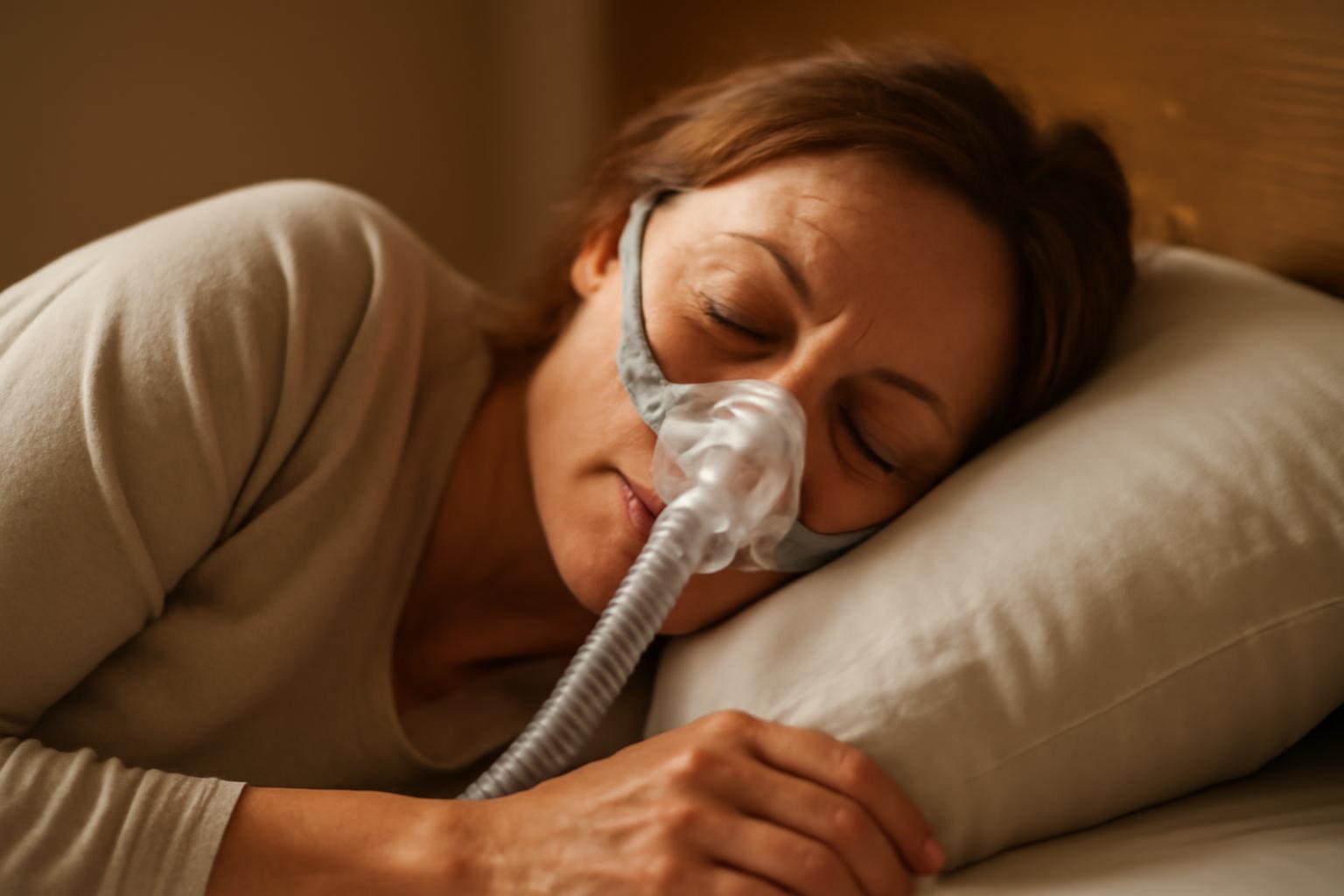
When most people think about sleep apnea, they think about snoring, choking awake, or dragging through the day half-asleep. What gets missed is the sleep apnea eyes connection: obstructive sleep apnea, or OSA, has been linked with eye-surface irritation, floppy eyelid syndrome, optic nerve problems, and possibly glaucoma-related damage.[1][2][4]
That does not mean sleep apnea directly causes every eye problem that appears alongside it. The safest reading of the evidence is more limited:
- the strongest eye link is with floppy eyelid syndrome
- the most concerning optic nerve link is with non-arteritic anterior ischemic optic neuropathy (NAION)
- the glaucoma relationship is real enough to monitor, but still debated
- dry, irritated eyes are common, especially when CPAP leaks upward toward the eyes[1][5][6]
A second caveat matters too: the research discussed here is primarily about obstructive sleep apnea, not central sleep apnea. Sleep apnea can be obstructive, central, or mixed, but most of the eye associations in the available evidence come from adult OSA populations.[2][3]
Because this is a health topic where source quality matters, it helps to be explicit about what kind of evidence we have. Much of the available material is an uneven mix of an American Academy of Ophthalmology review, eye-clinic summaries, optometry articles, and CPAP troubleshooting content rather than a single definitive guideline.[1][2][4][5][6][7] So the goal here is not to overpromise certainty. It is to explain what the evidence consistently suggests, where it is mixed, and what symptoms deserve attention.
What Is Sleep Apnea and Why Eyes Matter
Sleep apnea is a disorder in which breathing repeatedly slows or stops during sleep. The main form is obstructive sleep apnea, where the airway becomes physically blocked when throat tissues relax and narrow the passage. Less commonly, central sleep apnea reflects a problem in the brain’s control of breathing, and some people have mixed forms.[2]
Commonly cited figures in eye-care and sleep-health summaries put U.S. sleep apnea prevalence at roughly 18 to 22 million people, with about 80% undiagnosed.[1][2][3] Those numbers are widely repeated in the supplied sources, but they should be read as commonly cited estimates, not as a single current official count.
One of the biggest clues is excessive daytime sleepiness. NapHelp’s own sleep-apnea guidance notes that if you feel you need naps every day despite a full night in bed, that can be a sign of fragmented sleep from OSA, not a problem solved by better nap timing.[12] In that context, the nap is a clue, not a cure.
So why would a breathing disorder affect the eyes at all?
The main proposed pathways are:
- intermittent hypoxia: oxygen levels drop during apnea events, then rebound when breathing resumes[5][6]
- inflammation and vascular stress: repeated oxygen swings may stress blood vessels and delicate tissues[4][6][7]
- tear-film disruption: clinic-style summaries report slower tear replenishment or abnormal tear break-up findings in some patients with sleep apnea[1][2][3]
- eyelid changes: lid laxity and floppy eyelid syndrome are repeatedly linked with OSA[2][4][7]
- treatment-related irritation: CPAP can improve breathing but may dry the eyes if air leaks upward[1][5][6]
The eye is especially vulnerable because the cornea, eyelids, retina, and optic nerve all depend on stable oxygen delivery, blood flow, and surface moisture. That does not prove OSA is the sole cause of later eye disease. In many people, shared risk factors such as obesity, age, hypertension, diabetes, cardiovascular disease, and systemic inflammation may explain part of the overlap.[3][7]
Still, the pattern is strong enough that ophthalmologists sometimes spot the possibility of sleep apnea from the eyes first. The American Academy of Ophthalmology review makes exactly that point: eye findings can act as a “canary in the coal mine” for undiagnosed OSA.[4]
In practical terms, sleep apnea matters to eye health for two reasons:
- Sleep apnea can raise suspicion for eye problems worth monitoring.
- Eye findings can be the clue that leads to a sleep apnea diagnosis.
Floppy Eyelid Syndrome: The Strongest OSA Eye Link
Of all the eye findings discussed with sleep apnea, floppy eyelid syndrome (FES) is the most consistently emphasized.
FES involves loose, rubbery upper eyelids that evert unusually easily. That laxity can leave the eye surface exposed during sleep and contribute to chronic irritation. Typical symptoms include:
- morning redness
- burning or grittiness
- dryness
- discharge or crusting
- watery eyes
- blurred vision from surface irritation[4][7]
Why is FES such a big deal in sleep medicine? Because the overlap with OSA is unusually high in the available literature.
One controlled study cited in a Raleigh Ophthalmology summary reported that 90% of 102 patients with floppy eyelid syndrome had OSA.[2] Other eye-care sources in the evidence pack describe the overlap as over 90% or say that almost all FES patients have sleep apnea.[3][7] Those are striking numbers, but context matters: they describe the prevalence of OSA among patients with FES, not the prevalence of FES among everyone with OSA.
That distinction matters clinically. FES is a strong clue, not an automatic diagnosis.
Why are the two linked? The mechanism is still unsettled. Proposed explanations in the evidence include:
- shared risk factors such as obesity, age, and male sex[3][7]
- altered tissue elasticity[7]
- chronic inflammation and oxidative stress[6][7]
- mechanical stress from sleeping position or rubbing[7]
- repeated nocturnal hypoxia affecting connective tissue[5]
The American Academy of Ophthalmology review describes floppy eyelid syndrome as the top referral trigger among sleep-apnea-related eye findings.[4] That makes FES useful in both directions:
- An eye doctor who sees loose, easily everted lids and chronic morning irritation may suggest sleep apnea evaluation.
- A sleep clinician treating OSA may ask about waking with red, irritated eyes and refer for eye care.
Treatment is also bidirectional, but not perfectly so. Managing OSA may reduce ongoing stressors that worsen ocular surface irritation, and some sources suggest CPAP or other OSA treatment can improve some ocular effects over time.[4][5] But established eyelid laxity may persist, meaning the eyelids themselves may still need treatment such as lubrication, protective shields, or, in some cases, eyelid procedures.[4][7]
The practical takeaway is simple: if you wake with chronically irritated eyes and your upper lids feel unusually loose or can flip outward easily, that is worth mentioning to both an eye doctor and a sleep specialist.
Glaucoma and Optic Nerve Risks in Sleep Apnea
This is where readers need the most nuance.
There is a recurring association between OSA and glaucoma-related findings, but the overall strength and independence of that relationship remain unsettled.
Some optometry and eye-care sources say people with OSA are “approximately 10 times more likely” to develop glaucoma.[1] That sounds dramatic, but it should be understood as a claim from some reports and secondary summaries, not as a settled consensus estimate. The American Academy of Ophthalmology review gives a more cautious picture: in one study of roughly 156,000 patients, an initially observed increase in open-angle glaucoma risk disappeared after multivariable adjustment.[4]
At the same time, the AAO review also cites a 2012 study in which OSA patients had:
- higher intraocular pressure (IOP)
- worse visual field findings
- thinner retinal nerve fiber layers[4]
So the most accurate summary is not “sleep apnea causes glaucoma.” It is this:
- OSA repeatedly appears alongside glaucoma and glaucoma-like optic nerve findings
- some studies suggest elevated risk or more abnormal measurements
- other studies weaken that signal after adjustment for confounding factors
- regular eye monitoring is sensible even though causation is not settled[1][4][6]
The proposed mechanisms are biologically plausible. Repeated oxygen drops may reduce blood flow to the optic nerve and retina, while inflammation, oxidative stress, vascular dysregulation, and possibly IOP changes may contribute.[1][4][6][7] But plausible mechanisms are not the same as proof.
There is another wrinkle: CPAP does not simplify the picture into “good for the eyes” or “bad for the eyes.” Better oxygenation might reduce some OSA-related vascular stress, but the AAO review notes concern that CPAP may increase nocturnal IOP in some glaucoma patients.[4] That does not mean CPAP is harmful overall. It means that treated patients may still need eye follow-up.
The more urgent optic nerve issue is non-arteritic anterior ischemic optic neuropathy (NAION).
NAION is a sudden loss of blood flow to the optic nerve that causes sudden, painless vision loss, often first noticed on waking. In the evidence pack, the strongest support comes from the AAO review and eye-care summaries reporting that 70% to 80% of NAION patients have OSA in large studies or cohort-style summaries.[3][4][7] Again, that figure describes OSA frequency among NAION patients, not the reverse.
Why does this association matter so much?
- the event can be sudden
- the vision loss may be permanent
- waking with painless vision loss is a classic warning pattern
- managing OSA is often discussed as part of future risk reduction, even though it does not restore vision already lost[4][7]
The AAO review also notes concern about risk to the other eye after a first NAION event, reporting second-eye involvement in roughly 15% to 18% of patients.[4] That is one reason sleep apnea evaluation often enters the conversation after NAION is diagnosed.
What should readers do with all of this?
- If you have OSA, glaucoma screening is reasonable, especially if you have visual symptoms or other glaucoma risk factors.[1][6]
- If you have glaucoma and symptoms of OSA, tell both doctors. Loud snoring, witnessed apneas, morning headaches, and severe daytime sleepiness add important context.[2][3]
- If you wake with sudden, painless vision loss, treat it as urgent. That is not a “watch and wait” symptom.[3][4][6]
The bottom line is not inevitability. It is vigilance.
Dry Eyes and Other Common Ocular Effects
For many people, the most noticeable part of the sleep apnea eyes link is not a sight-threatening diagnosis. It is dry, irritated, uncomfortable eyes.
Several eye-care summaries in the evidence pack report that people with sleep apnea may have:
- slower tear replenishment or tear production[2][3]
- abnormal tear break-up findings[1]
- more ocular irritation[1][2][3]
- more lid laxity[1][2]
- more dryness on waking[4][7]
These claims mostly come from clinic and optometry summaries rather than a single formal guideline, so they are best interpreted as recurring clinical observations, not as a universally quantified risk for every patient.
The likely pathways are multiple rather than single-cause:
- repeated oxygen drops may stress tissues involved in tear stability[5][6]
- inflammation may worsen ocular surface irritation[6][7]
- loose eyelids may increase nighttime exposure[4][7]
- some patients may sleep with the eyes partially open[5]
- CPAP leaks can directly blow air across the eyes and worsen dryness[1][5][6]
That is why “dry eye in sleep apnea” is often not one thing. It may reflect a combination of:
- OSA-related tissue and lid changes
- surface exposure during sleep
- treatment-related airflow problems
Beyond dryness, the literature in the supplied evidence also links OSA with a broader list of eye conditions, though with less consistent support than for FES or NAION. Repeatedly mentioned associations include:
- keratoconus[2][3][7]
- papilledema[2][4][7]
- central serous chorioretinopathy (CSCR)[3][5]
- retinal vein occlusion (RVO)[3][4][5]
- glaucoma[1][4][6]
- NAION[3][4][7]
Here again, context matters.
For retinal vein occlusion, one source summarizes a range of 37% to 77% OSA prevalence across reports,[5] while another cites a study of 114 RVO patients in which sleep apnea was suspected in 74%.[3] Those are noteworthy numbers, but they come from different populations and study methods, so they should not be presented as a single settled estimate.
A newer angle involves optical coherence tomography angiography (OCT-A). A 2025 eye-care summary reports that recent OCT-A studies have found reduced vascular density in the optic nerve head and retina, particularly in moderate to severe OSA.[6] That fits the broader hypoxia-and-blood-flow theory. But this is best understood as an emerging imaging signal, not a standard screening finding everyone with OSA will have.
The key interpretive caution is the same throughout this article: association is not causation. People with sleep apnea often also have obesity, hypertension, diabetes, cardiovascular disease, and inflammation. Those same factors can independently raise the risk of eye disease.[3][6][7]
So when OSA and an eye condition appear together, several explanations may be true at once:
- OSA contributes directly
- shared risk factors explain part of the overlap
- both are true
From a patient perspective, the practical point is simpler than the academic one: if you have OSA and persistent eye discomfort, unexplained visual symptoms, or chronic morning irritation, it makes sense to evaluate the sleep and eye pieces together, not separately.
CPAP Side Effects: Dryness, Puffiness, and Fixes
CPAP is one of the most effective treatments for obstructive sleep apnea because it keeps the airway open and reduces repeated oxygen drops during sleep.[5][8][10] But locally, around the eyes, CPAP can create its own problems.
The best-supported CPAP eye problem in the evidence pack is dryness or irritation from mask leaks.
Eye-care and CPAP summaries repeatedly describe upward air leakage causing:
- dry eyes
- burning or gritty eyes
- morning redness
- watering from irritation
- conjunctivitis-like irritation in some cases[1][2][5][6][7]
The mechanism here is straightforward: if the mask seal is poor, pressurized air can blow toward the eyes and dry the ocular surface overnight.[1][5][6]
Puffiness is more complicated.
CPAP-focused consumer articles and user-reported content describe swollen or puffy eyelids after starting therapy, especially with leak problems or poorly fitting full-face masks.[8][9][10] Proposed explanations in those sources include:
- air leakage toward tissues near the eyes[8][10]
- mask pressure on the cheeks under the lower eyelids[9]
- dry air or allergen exposure[8][10]
- fluid retention or poor lymphatic drainage[8][10]
But the evidence is weaker here than for simple dryness. Puffiness seems common enough to troubleshoot, but the exact mechanism is less certain and more dependent on anecdotal or commercial sources.
Mask design can matter. Some CPAP troubleshooting sources suggest that nasal pillows may reduce upward leakage for some users,[8][10] while others note that mask choice is individual and depends on whether you breathe through your mouth, your leak pattern, and your comfort.[8][10] There is no single “best” mask for everyone with eye symptoms.
If CPAP is irritating your eyes, the most useful fixes are usually practical rather than dramatic.
1. Improve the mask seal
A small leak can make a big difference by morning. Ask your sleep clinic or equipment provider to review:
- mask size
- strap tension
- cushion wear
- sleeping position effects
- whether the mask rides too high on the cheeks[8][10]
A tighter mask is not automatically better. Over-tightening can distort the seal and increase local pressure.[9]
2. Consider a different mask style
Depending on your leak pattern and breathing needs, options may include:
- nasal pillows[8][10]
- a lower-profile nasal mask[8]
- a different full-face mask shape[10]
- mask liners to improve seal and reduce shifting[8][10]
3. Use humidification
Dry air can worsen both nasal and eye irritation. CPAP humidifiers are commonly recommended in troubleshooting material for that reason.[8][10]
4. Add ocular lubrication
Optometry sources suggest preservative-free artificial tears, and for nighttime symptoms, sometimes a thicker gel or ointment before bed.[1] This is especially relevant if you wake with gritty, burning eyes.
5. Try a cold compress for morning puffiness
If the main complaint is swelling rather than dryness, a cold compress is a common practical suggestion in CPAP troubleshooting sources.[8][10]
6. Do not change pressure settings on your own
Some CPAP users suspect their pressure is too high when leaks worsen. That may happen, but pressure changes should be clinician-guided, not improvised.[8][10]
7. Check for allergies, cleaning problems, or material sensitivity
Several CPAP sources note that allergens, inadequate cleaning, or sensitivity to mask materials can mimic or worsen “CPAP eye” complaints.[8][10]
The key tradeoff is important: CPAP can be systemically helpful while being locally irritating. Those two facts are not contradictory. The usual goal is to fix the mask interface, not abandon a treatment that may be helping the underlying OSA.
Facial Changes: Puffiness, Redness, and Dark Circles
Many people notice the sleep-apnea-and-eyes connection in the mirror before they ever hear a diagnosis.
Untreated OSA is often associated with a tired appearance, and a small study suggests some facial changes may be visible. A University of Michigan study summarized by Lofta examined 20 adults with moderate to severe OSA using 3D facial imaging before and after two months of CPAP therapy.[11] After treatment, researchers reported:
- a decrease in forehead tissue volume
- less redness under the eyes
- less redness in the cheeks[11]
The same summary says 22 blind raters more often judged the post-CPAP images as more alert, and many also rated them as more youthful or more attractive.[11]
Interesting? Yes. Definitive? No.
That study was small, involved moderate-to-severe OSA, and included subjective appearance ratings. So it supports the idea that untreated OSA may contribute to a puffy, inflamed, tired-looking face, but it should not be treated as proof of a universal “sleep apnea face.”
CPAP users also commonly report under-eye puffiness after starting treatment. Consumer CPAP sources and user forums describe:
- bags under the eyes after beginning therapy[8][9][10]
- puffiness that seems worse with full-face masks[9]
- swelling combined with dry or red eyes[8][9]
- improvement after changing mask type or seal strategy[8][10]
Those reports are useful for troubleshooting, but they remain anecdotal. They show that puffiness is a real complaint in practice; they do not tell us exactly how common it is or prove one mechanism.
What about dark circles?
The evidence in the supplied material is much weaker here, especially for adults. One source discusses dark circles, or venous pooling, in children with mild to moderate sleep apnea, often in the setting of swollen sinuses, allergies, blocked airways, and chronic tiredness.[13] That is pediatric material, not adult OSA evidence.
So the adult-facing interpretation should be cautious:
- untreated OSA may contribute to a tired-looking eye area
- puffiness and redness may fit the broader picture
- dark circles alone are not a reliable adult sign of OSA
In adults, dark circles are too nonspecific. They can reflect:
- allergies
- sinus congestion
- dehydration
- genetics
- skin thinning
- ordinary sleep deprivation
- normal variation
The useful middle ground is this:
- puffiness, redness, or a chronically tired eye area can fit OSA
- none of them diagnose OSA by themselves
- context matters: loud snoring, witnessed breathing pauses, morning headaches, excessive daytime sleepiness, and morning eye irritation make the pattern more meaningful
Recommendations: Eye Exams and Next Steps for OSA
If you have diagnosed or suspected sleep apnea, the best response is not panic. It is clear action based on symptom level.
Emergency: seek urgent eye care
Go urgently if you have:
- sudden, painless vision loss, especially on waking[3][4][6]
- any sudden major change in vision you cannot explain
This matters most because of the OSA-NAION association.
Prompt evaluation: book an eye exam and mention the sleep symptoms
Arrange an eye evaluation soon if you have:
- chronic morning redness, burning, grittiness, or dryness
- upper lids that feel loose or flip outward easily
- persistent eye irritation that started or worsened after CPAP
- unexplained blurry vision, recurrent irritation, or symptoms that keep returning
These patterns do not prove sleep apnea caused the problem, but they are strong enough to justify an eye exam and, if OSA is not yet diagnosed, a discussion with a sleep clinician.[2][4][6][7]
Routine monitoring: especially important if OSA is already diagnosed
If you already have OSA, tell your eye doctor. Do not assume it is irrelevant. Useful context includes:
- diagnosed or suspected OSA
- loud snoring
- witnessed gasping or pauses in breathing
- excessive daytime sleepiness
- CPAP use and any eye irritation from it[2][6]
For many people with OSA, especially those with visual symptoms or optic-nerve concerns, clinicians commonly recommend routine follow-up that may include:
- intraocular pressure checks[1]
- optic nerve evaluation[1][4]
- retinal examination
- OCT when clinically indicated
- OCT-A in selected cases, particularly when a clinician wants a closer look at retinal or optic-nerve blood-flow patterns[6]
That last point is worth stressing: OCT-A is not a standard must-have test for every patient with OSA. In the supplied evidence, it appears as an emerging or specialist-selected tool, not a universal routine screen.[6]
Address CPAP-related eye symptoms early
If CPAP is helping your breathing but irritating your eyes, do not stop treatment on your own. Instead:
- ask for a mask-fit review
- discuss humidification
- consider preservative-free tears or nighttime ointment if advised
- ask whether a different mask design might reduce upward leaks
- involve your eye doctor if symptoms persist[1][5][8][10]
Treat daytime sleepiness as a symptom, not a scheduling problem
Daily naps despite a full night in bed can be a sign of OSA-related fragmentation, not something solved by better nap technique.[12] If you are chronically sleepy, that is a reason to consider sleep-apnea evaluation, especially when it appears alongside snoring, gasping, morning headaches, or eye symptoms.
Support the basics
Lifestyle measures are not eye treatments by themselves, but they can support overall OSA care. The supplied evidence mentions:
- weight loss, when appropriate and clinician-guided[4][6]
- side sleeping for some people with positional OSA[6]
- retesting or follow-up if symptoms change, especially after major weight change or treatment difficulty[14]
The overall message is straightforward: thinking in terms of sleep apnea eyes makes it easier to catch problems early—whether that means a mask leak drying out your eyes, floppy lids pointing to undiagnosed OSA, or optic-nerve findings that need closer follow-up.
This article is informational only and not medical advice. If you have a sleep disorder, excessive daytime sleepiness, worsening eye irritation, eye pain, or any vision change, consult a qualified healthcare professional.[15]
FAQ
Does sleep apnea cause glaucoma?
Not conclusively.
The best-supported claim is that OSA is associated with glaucoma and glaucoma-like optic nerve findings, but the evidence is mixed. Some secondary sources describe patients with OSA as having a much higher glaucoma risk,[1] while the American Academy of Ophthalmology review cites at least one very large study in which the apparent increase in open-angle glaucoma risk weakened or disappeared after adjustment for other factors.[4]
So the careful answer is: sleep apnea may increase concern about glaucoma, but it is not accurate to say OSA directly causes glaucoma in every patient.
How to manage dry or puffy eyes from CPAP?
Start with the most likely problem: mask leak or poor mask fit.
Common steps include:
- checking mask fit and seal[5][8][10]
- asking about a different mask style, including nasal pillows for some users[8][10]
- using humidification[8][10]
- trying preservative-free tears or nighttime ointment if advised[1]
- using a cold compress for morning puffiness[8][10]
- asking a clinician before changing pressure settings[8][10]
Dry eye from upward leaks is well supported. Puffiness is also reported, but its exact mechanism is less certain.
Is floppy eyelid syndrome a sign of sleep apnea?
Often, yes.
FES is one of the strongest eye clues for possible OSA. A controlled study summarized by Raleigh Ophthalmology found that 90% of 102 FES patients had OSA,[2] and other sources in the evidence pack describe the overlap as over 90% or almost all.[3][7]
But it is still a clue, not proof. Not every person with FES has OSA, and not every person with OSA has FES.
Should I get an eye exam if I have sleep apnea?
Yes, especially if you have:
- dry eyes or chronic morning irritation
- CPAP-related eye symptoms
- visual symptoms
- known glaucoma risk factors
- optic nerve concerns
The evidence pack repeatedly recommends regular eye exams for people with OSA because of recurring associations with dry eye, floppy eyelid syndrome, glaucoma-related findings, and NAION.[1][2][4][6]
Can treating sleep apnea improve eye symptoms?
Sometimes, but not always.
Treating OSA may reduce oxygen swings and sleep fragmentation, and some sources suggest that OSA treatment can improve certain ocular effects over time.[4][5] A small study also found that two months of CPAP was associated with less under-eye and cheek redness and a less puffy facial appearance in adults with moderate-to-severe OSA.[11]
But CPAP can also create local dryness if the mask leaks, and established vision loss such as NAION is not reversed by treating sleep apnea.[7] The realistic goal is risk reduction, symptom control, and monitoring, not guaranteed recovery.
References
- Optometrists.org. Can Sleep Apnea Affect Your Eyes? https://www.optometrists.org/general-practice-optometry/guide-to-eye-conditions/guide-to-blurry-vision-and-headaches/blurry-vision-and-headaches/can-sleep-apnea-affect-your-eyes/
- Raleigh Ophthalmology. How Does Sleep Apnea Affect the Eyes? https://www.raleighop.com/how-does-sleep-apnea-affect-the-eyes
- Heartland Family Eyecare. Sleep Apnea & Your Eyes. https://www.heartlandfamilyeye.com/sleep-apnea-and-your-eyes-2021
- American Academy of Ophthalmology. Obstructive Sleep Apnea and the Eye: The Ophthalmologist’s Role. https://www.aao.org/eyenet/article/obstructive-sleep-apnea-eye-ophthalmologist-s-role
- Apria. The Link Between Sleep Apnea and Eye Health. https://www.apria.com/home-healthcare-insights/the-link-between-sleep-apnea-and-eye-health
- Coastal Vision. Sleep Apnea and Your Eyes: What You Need to Know. https://www.coastalvisionva.com/sleep-apnea-and-your-eyes-what-you-need-to-know
- Dr. Parth Shah. Eye Problems Associated with Sleep Apnea: What You Should Know. https://www.drparthshah.com.au/eye-problems-related-to-sleep-apnea
- Enticare ENT. Puffy Eyes From CPAP: Causes, Solutions & Prevention Tips. https://enticare.com/2024/12/30/puffy-eyes-from-cpap/
- Sleep Apnea Guide. Puffy Eyes from CPAP. https://www.sleep-apnea-guide.com/puffy-eyes-from-cpap.html
- Enticare ENT. Puffy Eyes From CPAP: Causes, Solutions, and How to Prevent It. https://enticare.com/2026/04/17/puffy-eyes-from-cpap-causes-solutions-and-how-to-prevent-it/
- Lofta. Does Sleep Apnea Change Your Face? How CPAP Therapy Can Improve Your Appearance. https://lofta.com/blogs/sleep-apnea/does-sleep-apnea-change-your-face-how-cpap-therapy-can-improve-your-appearance
- NapHelp. When Napping Makes Things Worse: Five Scenarios to Avoid. https://www.naphelp.com/posts/when-napping-hurts
- Chester Dental Care. Dark Circles Under the Eyes & Sleep Apnea Treatment. https://chesterdentalcareva.com/treatment/sleep-airway/symptoms/dark-circles-under-the-eyes
- NapHelp. Does Sleep Apnea Go Away? When It Can Improve—and Why Retesting Matters. https://www.naphelp.com/posts/does-sleep-apnea-go-away
- NapHelp. Terms & Conditions. https://www.naphelp.com/terms