
17 min read ·
Under-Eye Puffiness from Poor Sleep vs True Eye Bags: What NapHelp Research Reveals
Compare mornings and evenings to see whether the under-eye area is worse soon after waking and better by late afternoon or evening.
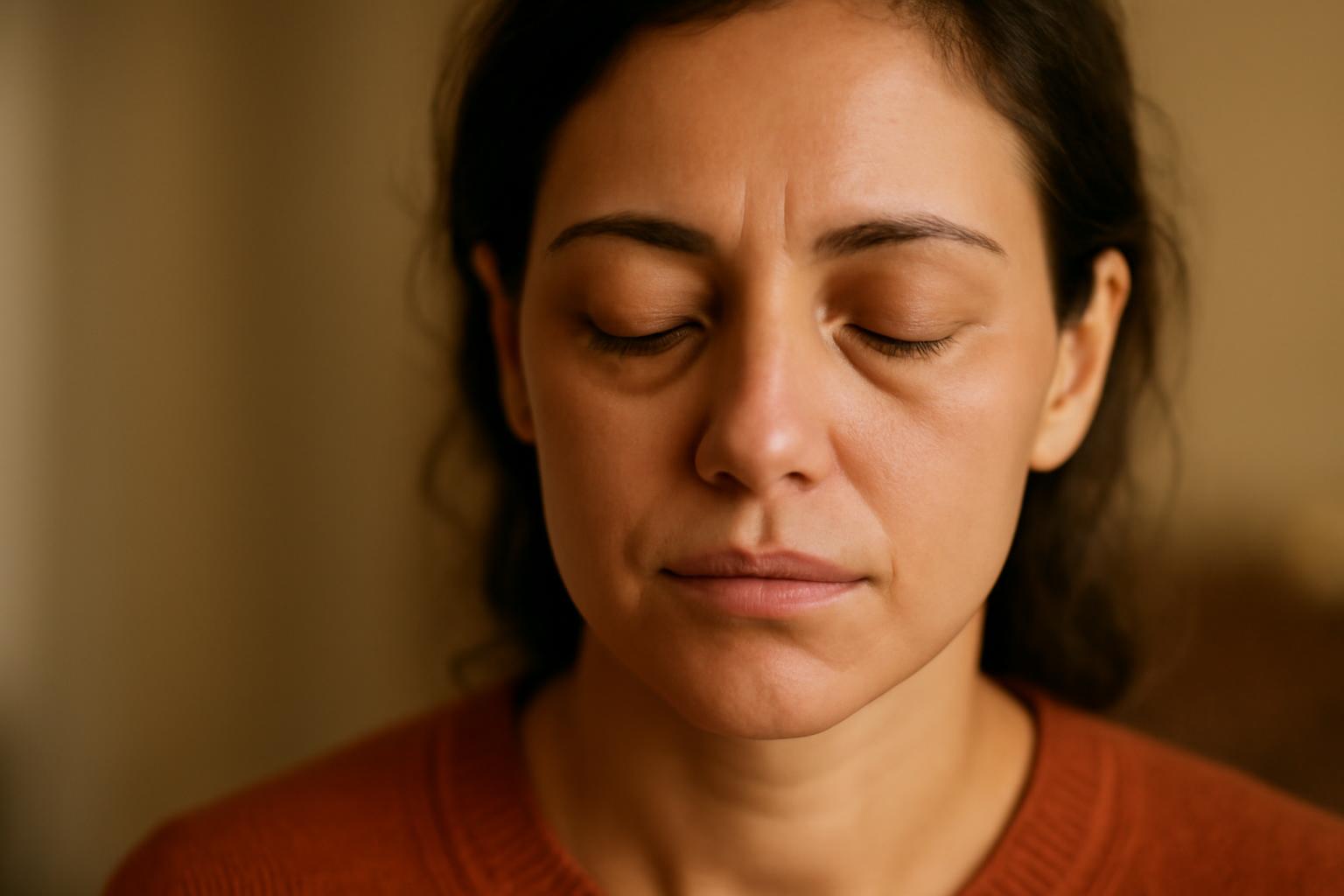
When people search for types of eye bags, they are often using one phrase for several different under-eye changes.
Sometimes the issue is temporary puffiness, especially after poor sleep, a salty meal, allergies, or a night spent lying flat. Other times it is more persistent fullness that tends to come with aging, genetics, and weakening support tissues around the eyes. And sometimes what looks like a “bag” is really shadowing, pigmentation, or swelling a little lower on the upper cheek.
There is no single, universally used consumer classification system for eye bags. Source agreement is strongest on a simpler distinction:
- temporary, fluid-related puffiness, which poor sleep can worsen
- more persistent fullness, often linked to aging and inherited anatomy
- look-alikes, such as shadowing or cheek-area swelling, that can be mistaken for bags
That broad split matters for NapHelp readers. NapHelp’s expertise here is the sleep and nap side of the question, not ophthalmology. So in this article, the sleep and nap guidance comes from NapHelp’s own coverage of nap timing and duration, while the medical information on under-eye puffiness is drawn from external medical references such as Mayo Clinic, Johns Hopkins Medicine, and the American Academy of Ophthalmology.
The practical question is not just “How do I get rid of eye bags?” It is:
Is this mainly temporary puffiness that poor sleep is making worse, or is it persistent fullness that sleep alone probably will not change much?
What Causes Under-Eye ‘Bags’ and Why Sleep Matters
Mayo Clinic describes bags under the eyes as mild swelling or puffiness under the eyes. Its explanation is broad and useful: with age, tissues and muscles around the eyes can weaken, fat that normally supports the eye can shift into the lower eyelid area, and fluid can also collect below the eyes. In other words, the same “baggy” look can come from structure, fluid, or both.
That is also why eye-bag advice often feels inconsistent. Some advice is really talking about fluid retention, while other advice is really talking about age-related or inherited fullness.
For sleep-focused readers, the key point is straightforward: lack of sleep can worsen under-eye puffiness, especially the kind tied to fluid retention. Multiple medical sources in the evidence pack note that poor sleep is a common aggravator, and that puffiness is often more noticeable in the morning.
That morning pattern makes sense because two things often overlap:
-
Fluid retention is often more noticeable on waking. Mayo Clinic specifically notes fluid retention upon waking as a factor that can worsen bags under the eyes.
-
Poor sleep can make that fluid-related puffiness more visible. Other medical references in the evidence pack describe poor sleep as making fluid settle beneath the eyes, where the skin is especially thin and delicate.
Several other factors can push puffiness in the same direction, including:
- high-salt meals
- allergies
- sleep position or prolonged lying down
- alcohol
- smoking
- genetics
- normal aging
Johns Hopkins Medicine specifically notes that high salt intake can lead to water retention and swelling, while allergies can worsen puffiness through congestion and inflammation.
The reassuring part is that most under-eye bags are cosmetic and usually harmless. Mayo Clinic and other medical references make that clear. But “usually harmless” does not mean “ignore every swollen eye area.” Medical review becomes more important if the swelling comes with symptoms such as:
- vision problems
- irritation
- headaches
- rash
- pain
- redness
- sudden onset
- one-sided swelling
- persistence despite reasonable self-care
So yes: sleep matters. But it usually matters as one contributor among several, not as the only explanation for every under-eye change.
Temporary Fluid Puffiness: The Sleep-Related Type
If your under-eye area looks worse after a poor night and then settles as the day goes on, the strongest sleep-related explanation is usually temporary fluid puffiness.
This is the pattern most people mean when they say they “look tired.”
Across the medical and eye-care sources in the evidence pack, fluid-related puffiness is commonly described as:
- more noticeable in the morning
- changeable from day to day
- often soft-looking rather than sharply defined
- often fairly symmetric
- more likely to improve when the trigger improves
Common triggers or contributors include:
- lack of sleep
- fluid retention
- a salty meal
- allergies
- alcohol
- prolonged lying down
- sleep position
Some lower-quality cosmetic and clinic sources also describe this type of puffiness as softer or more spongy in appearance, but that description should be treated as a rough observation, not a reliable at-home test.
For a sleep audience, the important part is the mechanism: poor sleep does not have to create a permanent bag to make the eye area look worse. If you are already prone to fluid pooling, a short night can make that swelling more visible the next morning.
This is also the type most likely to respond to ordinary habit changes:
- sleeping enough at night
- keeping sleep more consistent
- reducing salty evening meals
- managing allergies
- limiting alcohol near bedtime
- sleeping with the head slightly elevated
A realistic expectation matters. Even when puffiness is fluid-related, it may not be caused by sleep alone. Someone might sleep poorly and have allergies and eat a salty dinner and sleep flat. In that situation, fixing one input may help, but not eliminate the morning puffiness entirely.
There is also an important NapHelp-specific nuance: a nap can help your alertness without fixing the reason your face looks puffy.
NapHelp’s sleep coverage supports short naps mainly as a tool for daytime performance, not as a substitute for normal night sleep. That distinction matters because people often try to “patch over” a bad night with daytime sleep. Sometimes that helps in the short term, but it can also create new problems:
- naps longer than about 30 minutes are more likely to produce sleep inertia, the heavy groggy feeling after waking
- in chronic insomnia, napping can reduce sleep pressure and make nighttime sleep harder
- in obstructive sleep apnea, frequent naps can mask excessive daytime sleepiness rather than address why sleep is not restorative
So if your puffiness is sleep-related, the main solution is usually better nighttime sleep, not simply adding more daytime sleep.
Permanent Structural Bags: Fat Prolapse and Aging
The other broad pattern is more persistent under-eye fullness that does not behave like simple morning puffiness.
Mayo Clinic, Johns Hopkins Medicine, and the American Academy of Ophthalmology all describe a similar age-related process: over time, the tissues around the eyes weaken, the skin can loosen, and fat that normally sits around the eye can shift forward into the lower lid area. Genetics can make this more noticeable earlier or more prominently in some people.
This is the pattern many people mean by “true” under-eye bags.
Compared with temporary fluid puffiness, persistent structural bags are more often described as:
- present most or all of the day
- less responsive to sleep, hydration, or a low-salt day
- more tied to aging or family tendency
- more likely to create a fixed contour change
Some clinic and cosmetic sources describe these as firmer, more defined bulges that can create a shadow below the fullness. That language is common, but it should still be read as descriptive rather than diagnostic.
The practical distinction is simple:
- Sleep loss can worsen how prominent the area looks
- Sleep improvement usually will not erase structural fullness if age-related tissue change is the main driver
That is where many people get frustrated. They improve their sleep, drink more water, and watch sodium, but the under-eye fullness remains. That does not mean the habits are pointless. It usually means the fullness is not mainly a short-term fluid issue anymore.
A few grounded takeaways:
- aging is a common reason bags become more noticeable
- genetics can make them appear earlier or more strongly
- sleep alone is unlikely to reverse persistent structural bags
- mixed cases are common
That last point is worth emphasizing. Many people do not fit neatly into one bucket. A person may have baseline structural fullness from aging or anatomy, plus extra morning puffiness after poor sleep or a salty dinner. In that situation, better sleep may help the variable part without changing the baseline very much.
Distinguishing Fluid Puffiness from True Bags at Home
You cannot reliably diagnose the cause of under-eye fullness at home, and there is no strongly validated self-test that cleanly sorts every case into “fluid” or “fat.”
Still, some non-diagnostic patterns may help you decide whether to focus first on sleep and lifestyle, or whether it is time to get a clinician’s opinion.
The safest way to use these observations is as tracking information, not as proof.
| Observation | Pattern more often seen with fluid-related puffiness | Pattern more often seen with persistent fullness |
|---|---|---|
| Time of day | Often worse on waking and less obvious later | Often present most of the day |
| Change from day to day | More likely to fluctuate with sleep, salt, allergies, alcohol, and lying down | More likely to stay similar day after day |
| Response to better sleep | May look better after a solid night or better routine | Often changes little with sleep alone |
| Overall look | More diffuse, less fixed | More like a stable contour change |
A few ways to observe the pattern without turning it into self-diagnosis:
1. Compare mornings and evenings Take note of whether the under-eye area is clearly worse soon after waking and better by late afternoon or evening. If the appearance changes a lot with time of day, that supports some fluid involvement, though it does not prove that fluid is the only cause.
2. Track triggers, not just the mirror For a week or two, note whether puffiness is worse after:
- a short night of sleep
- a salty dinner
- alcohol
- active allergy symptoms
- sleeping flat
That kind of tracking can be useful when talking with a clinician, especially if the pattern is inconsistent.
3. Pay attention to stability If the fullness looks essentially the same regardless of sleep, salt, or time of day, the cause may be less about temporary fluid shifts and more about persistent anatomy or aging-related change.
What you should not do is treat these observations as a diagnosis. The evidence base in this package does not support strong home sorting tools. Even the softer-versus-firmer language found in some eye-care sources is best understood as a rough description, not a validated classification method.
That is especially important because mixed cases are common, and because other things can be mistaken for bags at first glance.
If the swelling is:
- persistent
- unclear
- one-sided
- sudden
- painful
- red
- associated with vision symptoms
- not improving despite sleep and lifestyle changes
then self-observation should give way to medical evaluation.
Other Variations: Malar Swelling and Hollows Mimicking Bags
One reason the phrase types of eye bags is confusing is that not every tired-looking under-eye area is a classic lower-eyelid bag.
The American Academy of Ophthalmology notes that what people call under-eye bags can involve several different visible features, including:
- loose skin
- pockets of fat
- pigmentation
- natural shadowing
That matters because sleep improvement mainly helps fluid-related puffiness, not every other reason the area may look tired.
Two commonly described look-alikes are worth mentioning briefly.
Malar swelling Some cosmetic and clinic sources describe a kind of swelling that sits more at the lower eyelid-upper cheek transition than in the classic lower-lid fat pad itself. It is often presented as a fluid-related problem, and those sources say it may fluctuate with factors such as:
- allergies
- salt intake
- alcohol
- sleep loss
- sleep position
Because it sits a little lower than people expect, it can be mislabeled as ordinary under-eye bags. For publication-quality caution, it is best to think of this not as a universally standardized category, but as a commonly described pattern of cheek-area puffiness mistaken for eye bags.
Hollows and shadowing Other sources note that a sunken groove or shadow under the eye can create the impression of a bag even when there is little true protrusion. Similarly, pigmentation or visible vessels can make the area look tired without much swelling at all.
That distinction matters in practice:
- If the main issue is fluid swelling, sleep, salt, allergy control, and head elevation may help.
- If the main issue is shadowing, pigmentation, or a hollow, better sleep may improve how tired you feel without changing the mirror much.
So while readers often want a tidy taxonomy, the more useful message is simpler:
- some under-eye changes are puffy
- some are persistent fullness
- some are shadows or color changes
- some are cheek-area swelling mistaken for bags
For a sleep article, that is enough detail to keep the guidance honest without pretending the categories are cleaner than the evidence supports.
How Optimizing Naps Reduces Sleep-Related Puffiness
This is the part of the topic where NapHelp has the clearest first-party authority.
NapHelp’s coverage is focused on nap timing, duration, caffeine timing, and preserving nighttime sleep, not on diagnosing eye anatomy. So the right question here is not “Can naps cure eye bags?” but:
Can good nap habits help when poor sleep is contributing to temporary puffiness?
The best evidence-supported answer is: sometimes, but only in a limited way.
For healthy adults with generally adequate nighttime sleep, NapHelp’s guidance favors short naps of about 10 to 20 minutes. According to NapHelp’s nap-length coverage, that window usually keeps you in lighter sleep and is associated with:
- quick recovery after waking
- less sleep inertia
- a temporary alertness boost
- less disruption to nighttime sleep pressure than longer naps
That makes short naps useful when you had a rough night and need to function in the afternoon. But it does not make them a substitute for repairing chronically poor sleep.
NapHelp’s guidance is especially clear about the downside of longer naps:
- 30 to 60 minutes is the range most likely to leave many people waking from deeper sleep, with more sleep inertia
- napping too late in the day can delay sleep onset that night
- in chronic insomnia, even a nap that feels helpful can reduce the sleep pressure you need at bedtime
A practical nap framework looks like this:
- Aim for 10 to 20 minutes for a standard afternoon reset
- Keep the nap before 3 p.m. if your usual bedtime is around 10 to 11 p.m.
- If caffeine works well for you, a caffeine nap can be useful: NapHelp describes taking 100 to 200 mg of caffeine right before a 20-minute nap, so the caffeine begins working as you wake
- Treat these numbers as starting points, not rigid laws, because individual sleep architecture varies
Where naps get misused is when they become a daily workaround for a bigger problem.
NapHelp explicitly warns that napping can make things worse in several scenarios:
Chronic insomnia Naps reduce sleep pressure. If you already struggle to fall asleep at night, daytime sleep may make the main problem harder to solve.
Chronic short sleep A daily long nap can let you limp along while preserving the night-sleep pattern that is causing the problem.
Obstructive sleep apnea NapHelp notes that excessive daytime sleepiness is a primary symptom of obstructive sleep apnea. In that context, frequent napping can become a way to work around the symptom instead of addressing the disrupted sleep behind it.
So can better napping reduce under-eye puffiness? Only indirectly.
A smart, short nap may help you feel less wrecked after a poor night. It may also help you avoid the spiraling fatigue that leads to more caffeine, later bedtime drift, and another short night. But if your eyes look puffy because your nighttime sleep is routinely inadequate, the main fix is still:
better nighttime sleep quality and duration
If you want the deeper sleep-science background, NapHelp’s guides on nap length and on when napping makes things worse are the most relevant follow-ups.
Lifestyle Changes for Fluid Puffiness Linked to Sleep Issues
When under-eye puffiness is mostly fluid-related, the most useful changes are usually simple and repetitive rather than glamorous.
Medical sources in the evidence pack consistently support a few practical basics.
1. Sleep enough at night The American Academy of Ophthalmology includes 7 to 9 hours of sleep among general home measures that can help reduce under-eye puffiness. If you are routinely sleeping far less than that, it makes sense to address the sleep debt before chasing more specialized solutions.
2. Elevate your head slightly during sleep AAO and other sources in the pack note that sleeping with the head slightly elevated may help reduce overnight fluid pooling around the eyes.
3. Be careful with salty evening meals Mayo Clinic notes fluid retention after a salty meal as a worsening factor, and Johns Hopkins explicitly says a high-salt diet can cause water retention and swelling. If your puffiness is worst after restaurant meals, takeout, or late-night salty snacks, that pattern is worth taking seriously.
4. Manage allergies Allergies are a recurring theme across the medical sources. They can contribute to puffiness through congestion, inflammation, and irritation. If your eye area worsens during allergy flares, sleep alone may not be the whole answer.
5. Limit alcohol, especially near bedtime Several sources in the evidence pack associate alcohol with next-morning puffiness. If you are trying to reduce fluid-related swelling, cutting back near bedtime is a sensible experiment.
6. Avoid smoking Mayo Clinic, Johns Hopkins, and AAO all list smoking as a contributor to under-eye concerns or aging around the eye area.
7. Use naps strategically, not as a chronic patch For healthy adults, a short nap can be a useful alertness tool. But if napping becomes necessary every day, or if you need long naps to feel remotely functional, the better question is why your nighttime sleep is not doing its job.
It also helps to separate two goals:
Looking less puffy tomorrow morning
The most relevant levers are often:
- enough sleep tonight
- less salt in the evening
- less alcohol near bedtime
- managing allergy triggers
- sleeping with slight head elevation
Reducing the pattern over time
The bigger levers are usually:
- more consistent sleep duration
- better overall sleep habits
- treating allergies if they are part of the picture
- stopping the repeated behaviors that trigger morning fluid retention
The point is not perfection. It is pattern control. If the puffiness is fluid-driven, consistent improvements in sleep and routine often help more than one-off “fixes.”
When Under-Eye Puffiness Signals Bigger Sleep or Health Issues
Most under-eye puffiness is cosmetic. But some situations deserve more than mirror analysis.
Mayo Clinic advises medical review if bags under the eyes are accompanied by:
- vision problems
- irritation
- headaches
- skin rash
Other medical sources in the evidence pack add caution around swelling that is:
- red
- painful
- sudden
- one-sided
- persistent
In those situations, the issue may be something other than routine cosmetic puffiness. Mayo Clinic and Johns Hopkins both note that clinicians may need to rule out other causes, including conditions such as allergy, infection, or thyroid-related problems.
For NapHelp readers, there is a second category of warning sign: the sleep pattern itself.
NapHelp’s coverage on problematic napping says to take daytime sleepiness seriously when:
- you feel you need naps regularly
- you need more than 30 minutes to feel restored
- you fall asleep very quickly when given the chance
- you wake from naps confused or disoriented
- daytime napping starts to feel like a new daily requirement
That does not prove sleep apnea, but NapHelp does emphasize that excessive daytime sleepiness is a primary symptom of obstructive sleep apnea. In other words, if you are searching for ways to hide tired-looking eyes while also fighting strong sleepiness every day, the bigger problem may not be cosmetic at all.
The same logic applies to chronic insomnia. If you cannot sleep well at night, using naps to blunt the fatigue may feel helpful in the moment while still making it harder to rebuild sleep pressure for bedtime.
So the safest bottom line is:
- temporary morning puffiness often fits a harmless fluid pattern
- persistent, symptomatic, or one-sided swelling deserves medical attention
- chronic daytime sleepiness deserves sleep-focused attention, not just better nap technique
And as with all NapHelp content, this article is general information, not medical advice. NapHelp’s own terms state that the site is informational only and that readers with a sleep disorder, excessive daytime sleepiness, or any health concern should consult a qualified healthcare provider.
Can lack of sleep cause eye bags?
Yes. Medical sources in the evidence pack say lack of sleep can worsen under-eye puffiness, especially the temporary fluid-related kind that is more visible in the morning. But poor sleep is not the only cause. Aging, genetics, allergies, smoking, and fluid retention after a salty meal can also contribute.
Does napping help or worsen under-eye puffiness?
It depends on why the area looks puffy and on how you nap. For healthy adults, NapHelp supports short naps of about 10 to 20 minutes as a way to improve alertness with less grogginess and less disruption to nighttime sleep. But longer naps, especially in people with chronic insomnia or possible sleep apnea, can work against the bigger goal by reducing sleep pressure or masking excessive daytime sleepiness.
How do I know if my eye bags are from fluid or fat?
You usually cannot know for certain at home. What you can do is watch the pattern. Puffiness that is clearly worse on waking and changes with sleep, salt, allergies, or alcohol suggests some fluid involvement. Fullness that stays about the same all day and changes little with sleep may be more persistent. But these are only clues, not a diagnosis, and mixed cases are common.
Is under-eye puffiness a sign of sleep apnea?
Not by itself. Under-eye puffiness is nonspecific and often harmless. The more important sleep-apnea clue in NapHelp’s evidence is excessive daytime sleepiness. If you need frequent naps, fall asleep very quickly, or cannot stay alert despite enough time in bed, the question is less about the eye area and more about whether your sleep quality needs medical evaluation.
When are eye bags not just cosmetic?
They stop being “just cosmetic” when they come with vision problems, irritation, headaches, rash, redness, pain, sudden onset, one-sided swelling, or when they persist despite reasonable sleep and lifestyle measures. Persistent daytime sleepiness is another reason to seek care, because the bigger problem may be a sleep disorder rather than a simple appearance concern.