
3 min read ·
Sleeping at a Desk: A Short Nap or a Sign of Excessive Sleepiness?
Plan a brief desk nap with head and neck support and time to wake up, and learn when repeatedly falling asleep at work needs medical attention.
Written by
Staff research and writing, reviewed against the sources listed at the foot of every article.
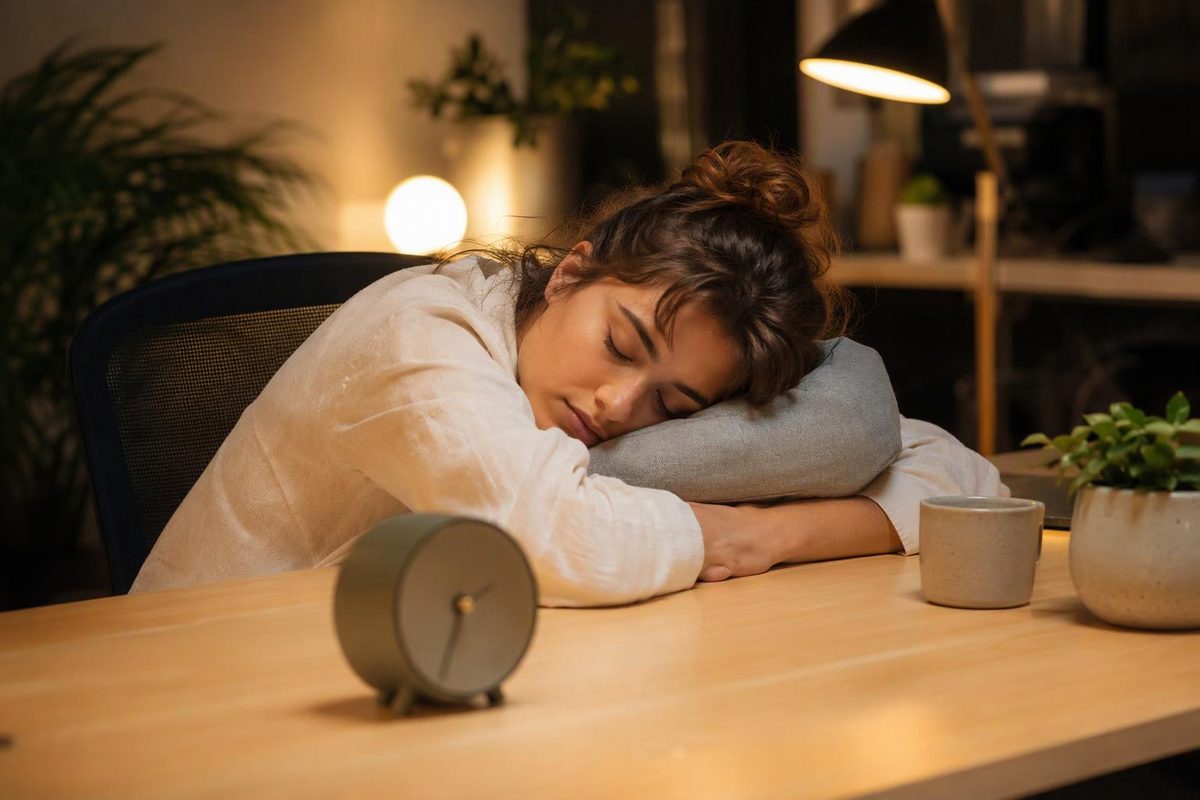
If you are choosing to nap at your desk, keep it brief, support your head and neck, and leave time to wake up before demanding work. If you repeatedly fall asleep there without intending to, treat that as a symptom—not just a reason to improve your nap setup.
A planned nap can temporarily improve alertness. It is not a substitute for enough nighttime sleep, and a desk is not necessarily a comfortable place to sleep.
A practical desk-nap routine
For an adult working a daytime schedule:
- Use an allowed break. Check workplace rules and choose a time when you are not responsible for driving, machinery, monitoring or another safety-critical task. Do not try to conceal sleep while remaining on duty.
- Prefer early afternoon. If naps make it harder to fall asleep at night, shorten them, move them earlier or skip them. NHLBI recommends limiting naps or taking them earlier in the afternoon when nighttime sleep is difficult. Healthy sleep guidance
- Set a 20-minute alarm when you settle down. Aim for roughly 10–20 minutes of sleep, not a long catch-up session. If you take time to drift off, that alarm may allow less actual sleep; do not keep extending it to reach a target. NIOSH recommends brief naps under 20 minutes for daytime workers, with an alarm set for 15–30 minutes. NIOSH nap-duration guidance
- Choose a supported position rather than folding over the keyboard. A stable chair with back and head support is a practical option if available. Keep your neck comfortable rather than sharply bent or twisted, and leave your nose and mouth unobstructed. If you cannot settle without pain or your head repeatedly drops forward, move to a more suitable rest space.
- Leave a waking-up buffer. The alarm should mark the end of the nap, not the moment you must be back on duty. Resume with low-stakes tasks rather than immediately driving, making consequential decisions or doing hazardous work. If you remain groggy, allow more recovery time.
The posture advice is a comfort-oriented application of general neck guidance, not a proven “best desk-nap position.” The NHS identifies awkward sleeping positions and prolonged desk posture as common contributors to neck pain. NHS neck-pain guidance
Why a short nap is the better starting point
In a laboratory study, 24 healthy young adults who were not regular nappers slept about five hours overnight, then took naps at 3 p.m. Researchers compared 5, 10, 20 and 30 minutes of actual sleep, plus a no-nap condition.
The 10-minute nap produced immediate improvements in sleepiness, fatigue and cognitive performance. Benefits after the 20-minute nap emerged later, while the 30-minute nap initially impaired alertness and performance before providing benefits. Brooks and Lack, 2006
That supports starting short when you need to return to work soon. It does not establish that every person needs exactly 10 minutes, or that sleeping upright at a desk gives the same results as a controlled laboratory nap.
Short naps also do not guarantee a grogginess-free awakening. Sleep inertia—the temporary decline in alertness and performance after waking—can affect reaction time, memory and thinking. Sleep deprivation can make it worse, including after a short nap. NIOSH advises allowing it to dissipate before critical tasks. Sleep-inertia guidance
For the duration tradeoff, see how long to power nap.
If you keep falling asleep at your desk
Feeling low on energy is different from actually nodding off. An isolated episode after a disrupted night may reflect sleep loss. Frequent unintended sleep, or sleepiness that interferes with work or daily life, warrants a healthcare appointment. You do not need to wait until it happens every day. NHS excessive-daytime-sleepiness guidance
Bring a sleep diary recording bedtime, wake time, overnight awakenings, naps and unintended dozing. Note medicines, alcohol and whether the problem persists when you have enough opportunity to sleep. Medicines and several health conditions can contribute; do not stop a prescribed medicine without discussing it with your clinician.
Mention loud snoring, witnessed breathing pauses or waking gasping. These are sleep-apnea symptoms, especially relevant when paired with daytime sleepiness; a clinician may recommend a sleep study. NHLBI sleep-apnea symptoms
If you are sleepy before the commute home, do not assume a desk nap or coffee has made driving safe. Arrange another way home or delay travel until you can stay alert. NHTSA warns that caffeine alone may leave seriously sleep-deprived people vulnerable to brief episodes of sleep, and that short naps offer only temporary benefits. Drowsy-driving guidance