
22 min read ·
Feeling Nauseous After a Bad Night's Sleep? Here's the Science and How to Fix It
Sip fluids slowly and try a small bland meal. Seek care for repeated vomiting, dehydration, black stools, severe pain or possible pregnancy.
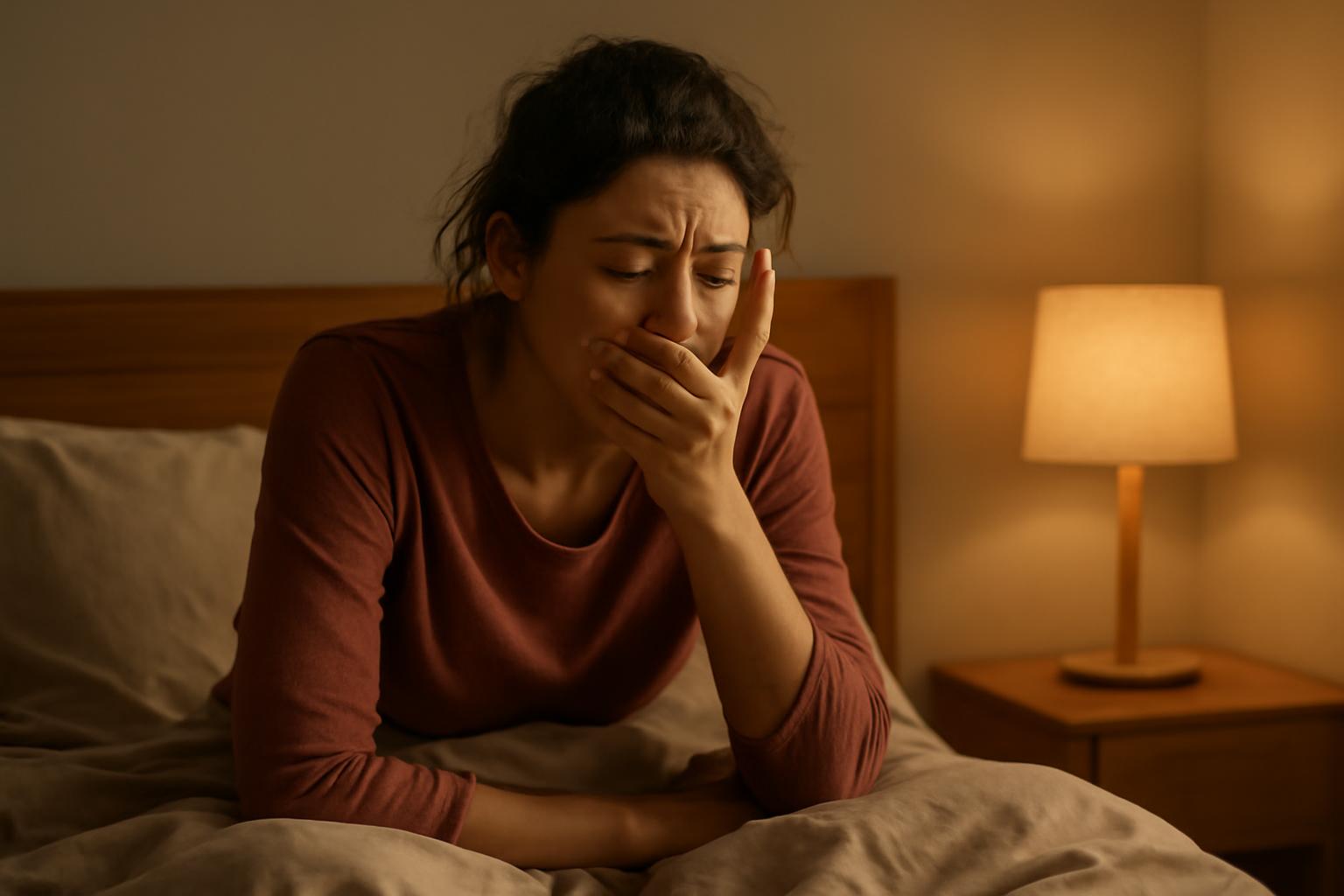
If you feel nauseous after a rough night, that pattern is plausible. The strongest support in the evidence base is for an association: sleep loss can be linked with nausea and other digestive symptoms, especially when it overlaps with stress, dehydration, reflux, headache or migraine, dizziness, motion sensitivity, or an irregular eating schedule.123
What the evidence does not support is a simple, one-cause rule. Poor sleep is often part of the picture, but it is rarely the only possible explanation. That is why the safest summary is this: lack of sleep may contribute to nausea or make it more noticeable, but persistent or severe nausea deserves a broader look.123
For most otherwise healthy adults, the practical first steps are basic: hydrate, eat lightly, reduce triggers, and get nighttime sleep back on track.12 If the nausea keeps returning, becomes severe, or comes with red flags like repeated vomiting, dehydration, black stools, severe pain, or possible pregnancy, it is time to seek medical care.127
Can Lack of Sleep Make You Feel Nauseous?
Yes—lack of sleep may make you feel nauseous, and several sources aimed at sleep health now describe that link directly.123 Sleep Foundation notes that nausea is a recognized symptom of sleep deprivation and disrupted sleep, while also emphasizing that researchers are still learning how the connection works.2
A few points are supported most clearly:
- Sleep loss is associated with nausea and other gastrointestinal symptoms.27
- The symptom often shows up more easily when other triggers are present.13
- Sleep loss should not be treated as the only explanation.1211
That last point matters. NapHelp’s own nausea-related post blurbs take the same cautious stance: lack of sleep can accompany or be linked with nausea, but it is not the only possible cause.11 That framing fits the broader evidence.
In practical terms, a bad night may make you feel worse by amplifying something else already in the background, such as:
- dehydration
- reflux or heartburn
- anxiety or acute stress
- migraine tendency
- dizziness or motion sensitivity
- too much caffeine, especially on an empty stomach
- irregular meals or late-night eating123
A useful clue is timing. Secondary sources in the evidence pack note that when nausea shows up the morning after poor sleep and improves after rest, that can suggest a sleep-related component.3 It does not prove that sleep loss is the whole cause, but it makes the link more plausible.
It also helps to distinguish acute from chronic sleep deprivation:
- Acute sleep loss: one or two nights of poor sleep
- Chronic sleep restriction: too little or poor-quality sleep over weeks or longer3
Both patterns can travel with nausea. Some sources say people may notice it after a single poor night; others suggest it becomes more noticeable after two or more bad nights in a row.356 That difference is best read as individual variation, not a firm threshold.
So if your question is, “Can I feel nauseous from lack of sleep?” the most accurate answer is: yes, that association is credible—but it is usually smarter to think in terms of contribution and trigger-stacking, not one direct cause.
Key Mechanisms Linking Sleep Loss to Nausea
There is no single mechanism that explains every case. The better-supported view is that several systems may be involved at once. Some pathways are more established than others, so it helps to separate the best-supported mechanisms from the more plausible but less direct ones.
1. Inflammatory signaling is one of the better-supported pathways
Among the strongest recurring explanations is inflammation. Sleep deprivation can increase activity in the immune system and promote production of pro-inflammatory cytokines, including IL-1, IL-6, and TNF.2 Sleep Foundation describes this as part of a cascade in which lack of sleep increases pro-inflammatory signaling, including in digestive tissues.2
This does not mean inflammation is the full explanation for everyone’s nausea. But it helps explain why sleep loss can produce a vague “whole-body off” feeling that includes digestive discomfort, appetite loss, or queasiness rather than a single sharply localized stomach problem.12
There is also an important nuance here. Mayo Clinic notes that lack of sleep may reduce some protective cytokines and other infection-fighting responses, even while other inflammatory signals rise.8 In other words, poor sleep can push the immune system out of balance in more than one direction.
2. Gut-brain axis disruption is also a core explanation
Another major framework is the gut-brain axis—the two-way communication between the digestive tract and the nervous system. Several sources in the pack describe sleep and digestion as closely linked through this system.135
When sleep is disrupted, that communication may become less coordinated. The proposed downstream effects include changes in:
- gastric motility — how quickly the stomach empties
- visceral sensitivity — how strongly normal digestive sensations are felt
- reflux tendency
- appetite signaling
- nausea perception156
This framework is useful because many people who feel sick after poor sleep do not have a stomach virus or food poisoning. Instead, the stomach may feel functionally “off”: slower, more sensitive, more acidic, or more reactive to normal smells and foods.13
3. Hormonal shifts are plausible and probably part of the picture
Poor sleep also affects hormones involved in stress, appetite, and digestion. Secondary summaries in the evidence pack repeatedly point to higher cortisol and adrenaline after sleep deprivation.136 Those changes can increase internal stress signaling and may worsen stomach discomfort.
Other hormone shifts are also discussed:
- melatonin may fall with disrupted sleep timing, and melatonin has roles beyond sleep, including effects on the GI tract3
- ghrelin may rise with short sleep, which can push cravings and irregular eating patterns3
- overall appetite regulation becomes less stable13
These shifts are best understood as conditions that can make nausea more likely, not as proof that a specific hormone directly caused it in any one person. They may contribute indirectly by encouraging late eating, caffeine overuse, reflux, or “wired and sick” stress physiology.
4. Autonomic nervous system imbalance is plausible, but less directly established
A more mechanistic explanation discussed in some secondary sources is autonomic nervous system disruption.56 The idea is that sleep restriction may tilt the body toward a more sympathetic or stress-heavy state and away from calmer parasympathetic digestion.
Proposed effects include:
- slower digestion
- altered gastric emptying
- increased acid-related discomfort
- more internal “fight-or-flight” sensation
- nausea that feels partly stomach-related and partly stress-related56
Some summaries also describe this as involving altered vagal signaling.36 Because these details come mainly from secondary syntheses rather than strong primary evidence in the pack, the safest wording is that autonomic imbalance is a plausible mechanism, not a settled one.
5. Reflux may become more noticeable after poor sleep
Reflux is one of the most practical overlap explanations. Sleep loss has been linked with worsened gastrointestinal symptoms, and several sources specifically mention GERD or reflux in the sleep-loss/nausea picture.123
That matters because reflux does not always feel like classic heartburn. It may show up as:
For some people, “nauseous from lack of sleep” may actually mean: poor sleep made reflux-related nausea easier to notice.
6. Vestibular sensitivity is a plausible secondary pathway
A less direct but still useful idea is vestibular sensitivity—the motion-sickness, dizziness, and balance side of the story. Some secondary sources say sleep deprivation can impair balance or make dizziness more noticeable, which can compound nausea.167
That can fit real-life descriptions like:
- “I feel carsick when I’m exhausted.”
- “Screens make me feel sick after no sleep.”
- “I’m tired, dizzy, and nauseous at the same time.”
This mechanism is not as well established as inflammation or the gut-brain axis, but it is a reasonable explanation for people whose nausea after poor sleep feels strongly tied to movement, light, or dizziness.
The big picture
The cleanest summary is a stacking effect. Sleep loss may increase inflammatory signaling, destabilize stress hormones, disturb gut-brain communication, worsen reflux, and lower your tolerance for dizziness or sensory overload—all at once.1236
That is why the symptom varies so much from person to person. One person gets heartburn and sour stomach. Another gets appetite loss. Another gets headache, dizziness, and queasiness with almost no stomach pain at all.
Symptoms of Nausea from Sleep Deprivation
This heading is shorthand. The better-supported claim is that sleep loss can accompany nausea and other GI symptoms, not that poor sleep is always the sole cause.127
Common descriptions in the evidence pack include:
- queasy stomach
- reduced appetite
- gagging or a gaggy feeling
- sensitivity to smells
- sensitivity to movement
- worse tolerance for coffee or rich food
- low-grade urge to vomit without actually vomiting12
Other symptoms may travel with it:
- heartburn or reflux
- bloating
- upper-abdominal discomfort
- headache
- dizziness or lightheadedness
- brain fog
- general weakness123
CDC/NIOSH also lists a broader gastrointestinal cluster that can occur with sleep deprivation, including:
- abdominal pain
- gas
- diarrhea
- constipation
- nausea
- vomiting7
That does not mean everyone who misses sleep gets all of these symptoms. It means digestive upset is one recognized way sleep deprivation can show up.
What sleep-related nausea may feel like in real life
Reported patterns in the source set include:
- Morning queasiness after a bad night, especially if you woke stressed, dehydrated, or ate late13
- Nausea plus headache, which can fit a migraine-trigger pattern1
- Nausea plus heartburn, especially after alcohol, spicy food, or late eating13
- Nausea plus dizziness, often worse with movement or screens16
- Nausea with no appetite, where even a normal breakfast feels unappealing13
These are best read as common presentations, not diagnostic categories.
Who may be more vulnerable?
Secondary sources suggest the symptom may be more noticeable in some groups, including:
- shift workers
- people with anxiety
- people with obstructive sleep apnea
- pregnant people
- students and teens during acute sleep restriction
- people with migraine, reflux, IBS, or motion sensitivity36
Because the evidence here is mixed and often indirect, it is safest to say these groups may have more pathways through which poor sleep could magnify nausea, not that they will definitely develop it.
A clue worth paying attention to
If nausea reliably follows poor sleep and improves after better rest, that pattern is useful. But if it starts happening even when you sleep reasonably well, gets stronger, or keeps recurring, it is time to widen the lens. Sleep may still matter—but it may not be the main driver.
Quick Relief for Sleep-Related Nausea
These measures are best understood as general, low-risk nausea care plus recovery from sleep loss. They are not treatments proven specifically for nausea caused by poor sleep.126
Start with gentle hydration
Dehydration can amplify nausea, especially after poor sleep, alcohol, caffeine, sweating, or mouth breathing overnight. Sip fluids rather than chugging them.12
Reasonable options include:
- water
- diluted electrolyte drink
- oral rehydration solution if you have also been vomiting or sweating a lot
- weak tea, if it feels soothing1
Some general advice in the source set suggests roughly 8 to 10 glasses of water a day as a baseline, while noting that actual needs vary.2 The practical point is to rehydrate steadily, not force large amounts at once.
Eat small, bland foods first
If your stomach feels touchy, start with simple, low-fat foods such as:
Small portions are usually easier to tolerate than a heavy meal, especially if reflux, stress, or slower digestion are part of the problem.
Avoid the triggers most likely to backfire
When you are both sleep-deprived and nauseated, your tolerance can be lower than usual. Common aggravators include:
- fatty foods
- spicy foods
- strong odors
- excess caffeine
- alcohol
- sensory overload
- hot, stuffy environments12
If coffee makes the nausea worse, do not force it just because you are tired. Caffeine can help alertness, but it can also worsen acid, jitters, and empty-stomach queasiness.19
Ginger may help, but think of it as general nausea support
Ginger has evidence for nausea in general, and several sources in the pack mention it as a reasonable option.16 But the evidence is not specific to sleep-loss nausea. So it is fair to say ginger may help some people as tea, chews, capsules, or other forms—just not that it is a proven fix for this exact scenario.
Fresh air, reduced stimulation, and distraction can help
Sleep Foundation-style nausea advice in the source set includes practical environmental steps such as:
- getting fresh air
- reducing strong smells
- lowering stimulation
- using light distraction if it settles you2
These can be especially helpful when nausea overlaps with dizziness, headache, smell sensitivity, or motion sensitivity.
Slow breathing is low risk and may settle the “wired and sick” feeling
Controlled deep breathing is another general nausea measure, not a sleep-loss-specific treatment. One source cites evidence that deep breathing reduced postoperative nausea in a different setting, which is why it is often suggested as a low-risk strategy.5
A common version is the 4-7-8 pattern:
- inhale through the nose for 4 seconds
- hold for 7 seconds
- exhale slowly for 8 seconds
- repeat a few times4
The likely benefit is not magic. It may simply reduce stress reactivity and make the autonomic “on edge” feeling less intense.
Use position if reflux seems involved
If nausea comes with heartburn, sour taste, or burping:
- keep your head elevated
- avoid lying flat after eating
- try resting on your left side if that feels better4
Again, this is general reflux-oriented symptom care, not proof that poor sleep itself is the whole cause.
Be careful with over-the-counter remedies
Some people reach for bismuth subsalicylate or similar OTC options. These may help in some situations, but they are not appropriate for everyone. The source set specifically notes caution in situations such as pregnancy, aspirin allergy, bleeding risk, or medication interactions.1
If you are unsure, it is smarter to ask a pharmacist or clinician than to assume any “stomach medicine” is harmless.
Rest helps—but napping is not a proven nausea treatment
Rest is sensible. A nap, however, is not an established remedy for nausea from sleep loss. It may reduce sleepiness, but it can also make nighttime recovery harder if used badly.910
Be especially cautious with naps if you have:
- chronic insomnia
- daily unexplained daytime sleepiness
- suspected sleep apnea
- a habit of late-day naps910
If you are otherwise a healthy sleeper and absolutely need a nap just to function, NapHelp’s short-sleep guidance favors either 10 to 20 minutes or about 90 minutes, generally before 3 p.m., and advises avoiding the 30- to 60-minute range that commonly causes sleep inertia.10 That is an alertness strategy, not a nausea treatment.
Preventing Nausea by Improving Sleep Hygiene
If this keeps happening, symptom relief is only half the job. Prevention matters more.
Aim for enough sleep consistently
For most adults, the general target is 7 to 9 hours of good sleep per night.8 One better night can help, but recurring nausea after short sleep usually points to a pattern worth fixing, not a one-off inconvenience.
Consistency matters too. Going from 5 hours one night to 9 the next to 6 the next often leaves the body less stable than a steadier schedule.
Build a routine that protects sleep quality
Core sleep-hygiene steps supported across the source set include:
- going to bed and waking up at about the same time each day
- having a wind-down routine
- reducing screens before bed
- limiting caffeine late in the day
- avoiding alcohol close to bedtime
- avoiding large late meals if reflux is a problem
- keeping the room dark, quiet, and comfortable
- exercising earlier rather than intensely right before bed28
None of these habits guarantees nausea will disappear. They simply reduce the number of ways poor sleep and digestive irritation can reinforce each other.
Track the pattern like a detective
A brief log can make the pattern much clearer. Write down:
- bedtime and wake time
- estimated sleep duration
- naps
- caffeine timing
- alcohol
- late meals
- stress level
- headache or migraine symptoms
- reflux symptoms
- when nausea starts and ends12
That helps separate “nausea after short sleep” from “nausea after late spicy dinners, coffee on an empty stomach, and 5 hours of sleep.”
Nap wisely if you are a healthy adult—not as a default fix
For healthy adults with otherwise adequate night sleep, strategic naps can sometimes help alertness. NapHelp’s short-sleep guidance emphasizes:
- 10–20 minutes: quick recovery, lower risk of grogginess
- 90 minutes: may work better if you truly need a full cycle
- before 3 p.m.: helps protect nighttime sleep pressure10
NapHelp also notes that a caffeine nap—caffeine right before a brief nap—can improve alertness for some people.10 But that is still an alertness tactic, not a treatment for nausea, and it is a poor fit if caffeine upsets your stomach or worsens anxiety.
Know when napping is making things worse
NapHelp’s guidance on when napping backfires is especially relevant if poor sleep is becoming chronic. It advises caution with naps in people with:
- chronic insomnia
- daily unexplained sleepiness
- suspected sleep apnea
- depression with long naps
- a habit of late naps9
The underlying logic is simple: naps can reduce sleep pressure and make nighttime sleep harder, or they can blur the signal that a bigger problem—such as apnea—is going untreated.9
Protect circadian timing, not just total minutes
Chronobiology matters. A short nap in early afternoon may be manageable; the same nap late in the day can delay sleep onset and help create the next short night.10
The broad prevention message is straightforward: if poor sleep keeps being followed by nausea, do not just manage the stomach—fix the sleep pattern that keeps recreating the problem.
Sleep Disorders That May Underlie Nausea and Poor Sleep
Sometimes “I didn’t sleep well” really means “I may have a sleep disorder.”
Obstructive sleep apnea
Obstructive sleep apnea (OSA) fragments sleep through repeated breathing interruptions. Secondary sources in the pack connect OSA with nausea indirectly through poor sleep, morning headaches, reflux overlap, and excessive daytime sleepiness.3
Possible clues include:
- loud snoring
- gasping or choking during sleep
- waking unrefreshed
- morning headaches
- dry mouth
- needing naps despite enough time in bed
- falling asleep very quickly when given the chance39
NapHelp’s napping guidance makes an important point here: daily nap need can be a symptom, not a solution, especially when sleep apnea is on the table.9
Insomnia
With insomnia, the problem is often not just short sleep but a mismatch between bedtime, arousal, and sleep pressure. NapHelp notes that daytime napping can reduce adenosine buildup—the sleep pressure that helps you fall asleep at night—which is why CBT-I generally restricts naps.9
That matters for nausea because the cycle can become self-reinforcing:
- you sleep badly
- you feel sick and exhausted
- you nap to cope
- you sleep worse again that night
- the next morning feels even worse
Signs your naps may be a warning sign
A few clues suggest the problem is bigger than ordinary tiredness:
- you fall asleep in under 5 minutes consistently
- you need more than 30 minutes of napping to feel remotely functional
- naps are unrefreshing
- you wake confused or disoriented
- daily nap need is new
- you spend enough time in bed but still feel exhausted9
Those patterns fit significant sleep debt, a sleep disorder, or both.
Treating the sleep problem may improve the nausea
One case report described a 29-year-old woman with chronic nausea whose symptoms improved after CBT-I and correction of delayed sleep timing.3 A single case does not prove a general rule, but it does support an important clinical idea: sometimes the better question is not “What stomach remedy should I try?” but “Why is my sleep broken?”
Do not assume apnea is gone just because symptoms changed
If snoring or daytime sleepiness has improved, that is encouraging—but symptoms alone do not reliably prove that sleep apnea has resolved. NapHelp’s sleep-apnea guidance elsewhere on the site explicitly says that apparent improvement may still require retesting rather than guesswork.11
If apnea has been raised before, formal reassessment is more useful than self-diagnosis.
Broader Health Impacts of Sleep Deprivation Beyond Nausea
Nausea is only one possible signal from a sleep-deprived body.
Immune effects
Mayo Clinic notes that lack of sleep can make people more likely to get sick after virus exposure and can slow recovery if they do get sick.8 It also notes that poor sleep can lower levels of protective cytokines, antibodies, and infection-fighting cells.8
That broader immune disruption helps explain why sleep deprivation often feels like a whole-body stressor, not just fatigue.
Cognitive effects
Sleep deprivation reliably impairs:
The Conversation summary in the evidence pack is useful here because it makes a practical point: there is no real substitute for sleep. Caffeine may help attention, but it does not fully restore more complex cognition, and overnight naps in the studied range did not erase the deficit either.12
Mood and cardiometabolic health
Long-term lack of sleep is linked in the evidence pack with:
These are long-run associations, not a claim that one bad week of sleep causes major disease. The main takeaway is that chronic sleep restriction has effects far beyond feeling tired.
Gastrointestinal health
The most defensible GI conclusion is moderate, not extreme: poor sleep is associated with worse symptoms in digestive conditions such as GERD and IBS, and with broader GI symptom clusters.27
What the evidence does not justify is treating sleep loss as the stand-alone explanation for most chronic nausea. Poor sleep may worsen symptoms and coexist with digestive disorders; it is rarely the whole story.
How common is insufficient sleep?
Insufficient sleep is common. Several summaries in the evidence pack cite NIH/NHLBI material estimating that nearly 1 in 3 Americans do not get enough sleep.13 Even if nausea itself is not well quantified, short sleep is common enough that it is worth considering whenever queasiness reliably follows bad nights.
When to See a Doctor for Nausea and Sleep Issues
Sleep-related nausea is often mild and temporary. But some patterns should not be brushed off.
Get medical advice sooner if you have red flags
Seek care if nausea is:
- persistent
- recurrent
- accompanied by repeated vomiting
- accompanied by vomiting blood
- accompanied by black stools
- paired with significant abdominal pain
- causing dehydration
- associated with weight loss
- severe for more than 24 hours
- lingering for days to weeks even after sleep improves126
Other warning signs include:
- severe vertigo
- hearing changes or ear fullness with dizziness
- possible pregnancy
- fainting
- chest pain
- neurological symptoms
- inability to keep fluids down16
Consider what else may need to be ruled out
A clinician may think beyond sleep loss and consider problems such as:
- GERD
- migraine
- vestibular disorders
- pregnancy
- medication side effects
- thyroid problems
- anxiety disorders
- insomnia
- obstructive sleep apnea136
This is especially important if nausea is chronic, getting worse, or happening even when your sleep is not especially bad.
Bring a short sleep diary
A sleep-and-symptom diary can make an appointment much more useful. Include:
- sleep duration
- bedtime and wake time
- naps
- snoring or gasping, if known
- alcohol and caffeine
- meals
- reflux
- headaches
- nausea timing
- vomiting, if any12
That pattern can help a clinician decide whether the problem sounds more like reflux, migraine, insomnia, apnea, anxiety, or something unrelated to sleep.
Ask about the right next step
Depending on the pattern, the next step might be:
- a trial of reflux management
- migraine evaluation
- pregnancy testing
- thyroid or medication review
- CBT-I for insomnia
- sleep apnea testing123
NapHelp’s own terms are explicit that the site is for general information only and not medical advice, and that people with sleep disorders, excessive daytime sleepiness, or other health concerns should consult a qualified healthcare provider.14 That is the right standard here too.
If nausea shows up once in a while after an unusually bad night, self-care may be enough. If it keeps returning, treat it as a clue—not just an inconvenience.
FAQ
Can one night of poor sleep cause nausea?
Possibly. Some secondary sources in the evidence pack say a single poor night can be enough for some people, while others suggest the effect is more noticeable after two or more bad nights.356 The most careful answer is that one night may be enough, especially when combined with dehydration, stress, migraine tendency, reflux, or dizziness.
Does sleep apnea contribute to nausea?
It may. Sleep apnea fragments sleep and overlaps with issues such as morning headaches, reflux, and daytime sleepiness, all of which can make nausea more likely or more noticeable.39 If nausea comes with loud snoring, gasping, dry mouth, morning headaches, or daily nap need despite enough time in bed, apnea is worth discussing with a clinician.
Should I nap to relieve nausea from sleep deprivation?
Usually not as your main strategy. Naps may improve sleepiness for some healthy adults, but they are not a proven treatment for nausea from poor sleep.91012 They can also backfire if you have insomnia, suspected sleep apnea, or late-day napping habits. If you must nap, keep it short and early.
How much sleep do adults need to avoid these symptoms?
For most adults, the general target is 7 to 9 hours a night.8 Sleeping well below that range makes fatigue and cognitive problems more likely, and may make symptoms like nausea more likely in susceptible people too.2
Can ginger help nausea from lack of sleep?
Possibly. Ginger has evidence for nausea in general and is commonly suggested in the source set as a low-risk option if you tolerate it.16 But it has not been shown specifically to fix nausea caused by sleep loss, so it is best treated as a reasonable experiment—not a guaranteed solution.
-
Nausea From Lack of Sleep: Causes, Symptoms, and How to Feel Better — Sleep and Sinus Centers, May 22, 2026. ↩↩↩↩↩↩↩↩↩↩↩↩↩↩↩↩↩↩↩↩↩↩↩↩↩↩↩↩↩↩↩↩↩↩↩↩↩↩↩↩↩
-
Can a Lack of Sleep Cause Nausea? — Sleep Foundation, 2026. ↩↩↩↩↩↩↩↩↩↩↩↩↩↩↩↩↩↩↩↩↩↩↩↩↩↩↩↩↩↩↩↩
-
Can Sleep Deprivation Cause Nausea? Exploring How Poor Sleep Affects Your Digestive System — The Sleep Clinic MD, June 20, 2025. ↩↩↩↩↩↩↩↩↩↩↩↩↩↩↩↩↩↩↩↩↩↩↩↩↩↩↩↩↩↩
-
How to Sleep When Nauseous — Superpower, March 24, 2026, updated June 4, 2026. ↩↩
-
Can Lack of Sleep Cause Nausea? — Superpower, March 24, 2026, updated July 13, 2026. ↩↩↩↩↩↩↩
-
Sleep deprivation — CDC/NIOSH archived training page, reviewed April 1, 2020. ↩↩↩↩↩↩↩↩↩↩↩↩↩↩↩↩↩
-
Lack of sleep: Can it make you sick? — Mayo Clinic, Jan. 24, 2025. ↩↩↩↩↩↩
-
The hydration, bland-food, odor-avoidance, and sleep-hygiene advice summarized here is drawn primarily from Sleep Foundation and Sleep and Sinus Centers, which present these as general nausea or sleep-recovery measures rather than sleep-loss-specific treatments. ↩↩↩↩↩↩↩
-
When Napping Makes Things Worse: Five Scenarios to Avoid — NapHelp, July 10, 2026. ↩↩↩↩↩↩↩↩↩↩↩
-
Nap Length: Why 10, 20, and 90 Minutes Are the Only Numbers That Matter — NapHelp, July 5, 2026. ↩↩↩↩↩↩↩
-
NapHelp posts listing and blurbs for “Can Lack of Sleep Cause Nausea?” and “Can Sleep Deprivation Cause Nausea?” — NapHelp, July 14, 2026. ↩↩↩
-
Can coffee or a nap make up for sleep deprivation? A psychologist explains why there’s no substitute for shut-eye — The Conversation, 2023. ↩↩↩
-
Multiple summaries in the evidence pack quote NIH/NHLBI material as estimating that nearly 1 in 3 Americans do not get enough sleep. ↩
-
Terms & Conditions — NapHelp. The site states its content is informational only and not medical advice, and advises consulting a qualified healthcare provider for sleep disorders, excessive daytime sleepiness, or other health concerns. ↩