
5 min read ·
Take a Short Post-Workout Nap Without Disrupting Bedtime
Learn when a post-workout nap can help alertness, how long to sleep, and why feeling recovered does not necessarily mean faster muscle repair or growth.
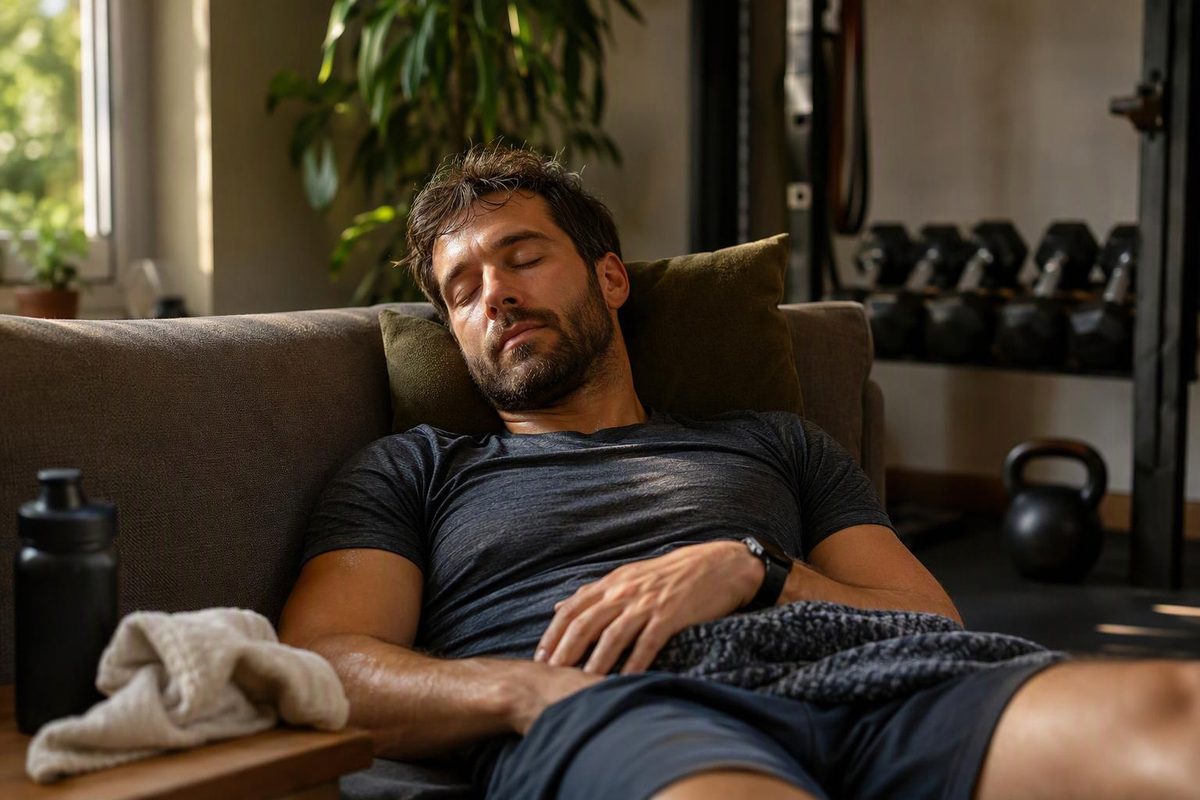
Napping after a workout is reasonable if you feel sleepy, but it is not a required recovery step. Start with about 10–20 minutes of sleep, preferably in the early afternoon if you sleep at night. Cool down first, and leave time to wake fully before driving or doing anything that demands quick reactions. NIOSH guidance supports brief naps for daytime alertness; it is not a workout-specific prescription.
The clearest potential benefit is feeling more alert or less fatigued. The sports studies below do not establish that sleeping immediately after exercise speeds muscle repair or increases muscle growth.
Choose how you feel, when you would nap, and whether naps disrupt your nighttime sleep; get a nap-or-skip decision.
Post-Workout Nap Decision
A Short Nap Is Reasonable
For sleepiness in the early afternoon, with no nighttime sleep disruption, cool down first and try a brief nap. It may help alertness; faster muscle repair is not established.
| Plan | Starting Point |
|---|---|
| Actual sleep | About 10–20 minutes |
| Rest window | 20–30 minutes |
| Waking buffer | About 15–30 minutes; longer if groggy |
Sources: NIOSH brief-nap and waking-buffer guidance; Mayo Clinic nap timing and insomnia guidance; Mass General Brigham exercise-related dizziness guidance. This is an alertness plan, not a proven muscle-recovery prescription.
Cool Down Before Trying to Sleep
Rather than stopping intense exercise abruptly and heading straight to bed, gradually reduce your activity. The American Heart Association suggests slowing your walking pace for 5–10 minutes to let your heart rate decrease. Abrupt stopping can cause lightheadedness as heart rate and blood pressure drop.
Then attend to thirst, food needs, and comfort. A nap should not replace fluids or adequate nutrition. If you feel faint or dizzy, treat that as a symptom to assess—not simply a cue to sleep.
The sports reviews below do not identify an optimal interval between finishing a workout and starting a nap. Complete your cool-down and settle comfortably before trying to sleep; there is no evidence here for an exact waiting time.
Start With 10–20 Minutes of Sleep
Aim for roughly 10–20 minutes of actual sleep. If you need time to drift off, set an alarm for a 20–30-minute rest window rather than automatically allowing 30 minutes asleep. NIOSH recommends a brief nap of less than 20 minutes for people working a daytime schedule, with an alarm set for 15–30 minutes.
That is a starting point for alertness, not a proven optimum for muscle recovery. For the broader tradeoffs, see our nap length guide.
| Part of the Nap | Starting Plan | Limitation |
|---|---|---|
| Actual sleep | About 10–20 minutes | Not a muscle-recovery optimum |
| Rest window | 20–30 minutes | Includes time to drift off |
| After waking | About 15–30 minutes | Longer if still groggy |
A nap can temporarily leave you groggy—a state called sleep inertia. Short naps reduce that risk but do not eliminate it, especially after substantial sleep loss. Do not schedule your alarm for the exact moment you must drive or start another demanding activity.
Allow about 15–30 minutes after waking as an initial buffer, and longer if you are still groggy. That interval is not a guarantee of readiness. NIOSH notes that grogginess may clear within 15–30 minutes after a short nap, but severe sleep deprivation can bring deeper sleep sooner and prolong it.
Let Your Sleep Schedule Choose the Timing
For someone who sleeps at night, early afternoon is the simplest default. Mayo Clinic advises early-afternoon naps and notes that napping after 3 p.m. can make nighttime sleep harder, although your schedule and sleep needs matter.
| Workout Timing | Nap Decision |
|---|---|
| Morning | No immediate nap is necessary. If sleepiness develops later, consider a short early-afternoon nap. |
| Lunchtime | A brief nap afterward may fit if you have time to cool down and wake fully before your next commitment. |
| Evening | Usually skip the separate nap and preserve your normal bedtime. |
The workout’s finish time does not, by itself, determine when you should sleep. If you remain alert after a morning session, there is no need to force a nap. If you finish training late in the day, adding a separate sleep period can work against your normal bedtime.
These clock-time recommendations are for people who sleep at night. They do not establish an equivalent cutoff for someone sleeping during the day or working shifts.
Sports Research Supports Alertness More Than Muscle Repair
A 2023 meta-analysis pooled 22 trials involving 291 men aged 18–35 who were athletes or physically active adults. Afternoon naps improved pooled cognitive and physical performance and reduced perceived fatigue. Benefits were generally greater with 30-to-under-60-minute naps and more than an hour between waking and testing.
Those findings do not establish that a nap immediately after your workout accelerates muscle repair. Much of the research tests exercise performance after a nap. The trials were small, results varied considerably, and the review found publication bias. Its findings cannot simply be assumed to apply equally to women or older adults.
A separate systematic review of 35 studies involving 489 participants found improvements in perceived recovery and fatigue after normal nighttime sleep, but no statistically significant pooled improvement in muscle soreness. Evidence certainty was low or very low for most outcomes. The soreness result remains uncertain—it does not prove naps have no effect.
A nap may therefore help you feel recovered, but that is not the same as demonstrating faster tissue recovery. These reviews do not provide a reliable figure for how much an immediate post-workout nap might speed muscle repair or increase muscle growth.
Longer Performance Naps Need More Waking Time
If you are considering a longer nap before a second training session, the performance research favors allowing more than an hour afterward before testing yourself. That is different from the initial 15–30-minute waking buffer suggested for a brief daytime nap.
The longer-nap findings are not a reason everyone needs an hour-long post-gym sleep. They concern performance under the studied conditions, not a universal prescription for recovery after exercise.
Skip Naps That Worsen Nighttime Sleep
If naps make insomnia worse, shorten or skip them rather than treating them as obligatory recovery. Mayo Clinic notes that napping can worsen existing difficulty falling or staying asleep, particularly when naps are long or frequent.
If you are receiving insomnia treatment, discuss naps with your clinician. See also when napping hurts.
Persistent Sleepiness or Dizziness Needs a Different Response
If you regularly need sleep just to function, or your need for naps suddenly increases, arrange a healthcare review. Loud snoring, witnessed breathing pauses, or gasping alongside daytime sleepiness can indicate sleep apnea and may warrant a sleep study. NHLBI lists these symptoms.
If “tired” actually means faint, dizzy, or unwell, do not try to sleep through it. Sit or lie down to avoid falling and seek medical advice. Chest pain or slurred speech with exercise-related lightheadedness can indicate an emergency; seek emergency help rather than taking a nap. Mass General Brigham’s sports-medicine guidance explains this distinction.