
6 min read ·
A Headache After a Nap Is Not Always Caused by the Nap
A post-nap headache may reflect migraine, missed caffeine, jaw or neck strain, or sleep apnea. Use the symptom pattern to choose your next step.
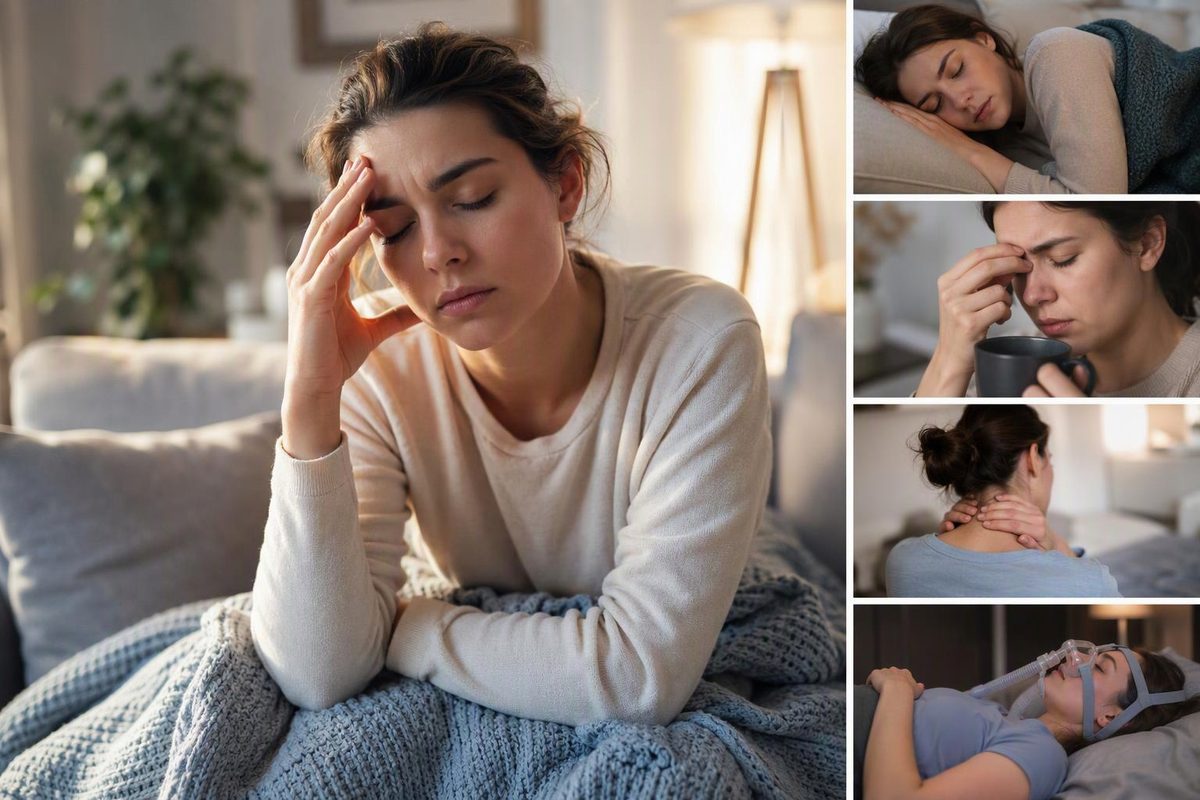
A mild headache after one nap is usually reasonable to monitor if you otherwise feel well. Get fully awake, drink if you are thirsty, eat if the nap delayed a meal, and use your usual headache treatment if it is safe for you. If it happens again, record when the pain begins and what comes with it.
Do not assume that waking from “deep sleep” caused the pain. Deep sleep can contribute to post-nap grogginess, or sleep inertia, but headache has several other possible explanations. The pain pattern and accompanying symptoms are more useful clues than the nap alone.
The nap may not be the cause
Migraine can make people sleepy, while sleep can sometimes relieve an attack. That makes cause and effect difficult to separate.
In a six-week study, 97 adults with episodic migraine used headache and sleep diaries and wore activity monitors. Naps were more common on the second day of a headache than on headache-free days, and the average nap started after the average headache onset. Napping was associated with an estimated 1.1 additional headache days per month, but the confidence interval ranged from 1.4 fewer to 3.6 more days, so the result was compatible with no difference. Naps also were not associated with worse sleep that night. The researchers interpreted napping as a possible response to prolonged migraine rather than proof that naps triggered attacks (Sleep, 2022).
A separate four-week study of 20 women with chronic migraine and 20 controls found that greater headache severity was associated with longer naps. Longer naps were also associated with lower nighttime sleep efficiency, but this observational study could not establish which factor caused another (Behavioral Sleep Medicine, 2022).
In short, “I noticed the headache when I woke” does not necessarily mean “the nap produced the headache.”
Match the headache to the most useful clue
Throbbing pain, nausea, or sensitivity to light and sound
This pattern fits migraine better than ordinary post-nap grogginess. Migraine commonly involves moderate to severe throbbing pain, often on one side, with nausea or sensitivity to light, noise, or smells (NINDS).
Changes in sleep timing may matter if you are susceptible to migraine. Poor sleep, oversleeping and irregular sleep have all been reported in connection with attacks, while sleep can also ease one; the relationship is not one-directional (review in Brain Sciences). A consistent sleep schedule is therefore more useful than searching for a universal “safe” nap length.
If long or irregular naps repeatedly precede your headaches, you could test a 10–20 minute nap at a consistent time. Treat this as a personal pattern test, not a proven migraine treatment.
A sore jaw, tender temples, or sensitive teeth
Clenching or grinding during sleep is one possibility, particularly if the headache comes with jaw stiffness, facial pain, tooth damage or a partner hearing grinding. Frequent bruxism can strain the teeth and jaws and is associated with headaches and jaw pain (Cleveland Clinic).
A headache alone cannot diagnose bruxism. In a small study of 42 adults referred for polysomnography, objectively measured sleep bruxism was not associated with primary headache; the study also had very low statistical power (Journal of Oral & Facial Pain and Headache, 2024). Persistent jaw or tooth symptoms are better assessed by a dentist or clinician than treated with an automatically purchased mouth guard.
Neck pain after sleeping on a couch or chair
An awkward position may contribute when pain starts in the neck or back of the head and changes with movement. Try a neutral position, avoid sleeping with your chin sharply tucked, and note whether a different pillow or nap location changes the pattern.
Persistent neck pain, arm weakness or numbness, or pain after an injury needs medical assessment.
A delayed meal, too little fluid, or a disrupted caffeine routine
The nap may simply overlap with another trigger. Drinking water is sensible if you are thirsty or have had little fluid, but hydration is not a universal headache cure. Dehydration may cause or worsen headache, while trials of extra water for migraine or tension-type headache have produced limited and mixed results (Current Pain and Headache Reports, 2021).
Caffeine withdrawal is plausible when a nap is part of a larger schedule change—such as sleeping through your usual morning coffee—not merely because you slept for 20 minutes. Symptoms generally begin 12–24 hours after abruptly stopping or substantially reducing habitual caffeine and peak around 20–51 hours (NCBI Bookshelf). Keep your intake and timing reasonably consistent rather than repeatedly adding caffeine whenever a headache appears, since late caffeine can disrupt nighttime sleep.
Snoring, gasping, dry mouth, or strong daytime sleepiness
Headaches after both naps and overnight sleep deserve attention when they occur with loud snoring, witnessed breathing pauses, gasping, dry mouth or excessive daytime sleepiness. These are recognized features of sleep apnea (Mayo Clinic).
The International Classification of Headache Disorders describes sleep-apnea headache as an awakening headache that is usually bilateral and lasts less than four hours. Its detailed criteria may include pressing pain without nausea, light sensitivity or sound sensitivity—but an awakening headache is nonspecific. Diagnosis requires confirmed sleep apnea and evidence connecting the headache to it (ICHD-3). A clinician can decide whether sleep testing is appropriate; symptoms alone cannot confirm apnea.
Headache repeatedly wakes you from sleep
This differs from noticing pain after an alarm wakes you. Hypnic headache is a rare disorder in which attacks develop only during sleep and cause awakening. Formal criteria require attacks on at least 10 days a month for more than three months, lasting 15 minutes to four hours after waking. It usually begins after age 50, although younger people can be affected.
Sleep apnea, nighttime hypertension, low blood sugar, medication overuse and intracranial disorders must be considered before making this diagnosis (ICHD-3). Recurrent headaches that interrupt sleep warrant medical evaluation.
What to do after a mild post-nap headache
- Get fully awake. Sit or stand gradually, open the curtains and avoid immediately going back to sleep.
- Check basic needs. Drink to thirst and eat if you skipped or substantially delayed a meal.
- Reduce obvious strain. Relax your jaw and gently move your neck if movement is comfortable.
- Use medication carefully. If you normally take an over-the-counter or prescribed headache medicine, follow its label and your clinician’s instructions. Discuss frequent reliance on pain relievers with a clinician.
- Change one nap variable. On another day, try 10–20 minutes of actual sleep and avoid napping close to bedtime. A consistent window based on your schedule is more practical than chasing a perfect sleep cycle; see how to time a nap.
- Keep a brief diary. Record when the pain began, nap start and end, headache features, previous night’s sleep, caffeine, meals, fluids, medicines, and any snoring or jaw symptoms. A journal can reveal patterns and give a clinician more useful information (NINDS).
When not to wait
Seek emergency help for a headache that starts suddenly and is extremely painful, or one accompanied by weakness or numbness, trouble speaking or walking, confusion, a seizure, loss of vision, or a very high temperature with a stiff neck. A severe headache after a recent head injury also needs urgent assessment.
Seek prompt medical advice for headaches that recur, worsen, come with vomiting or vision problems, or are triggered or worsened by coughing, bending or exertion (NHS).
Consider carbon monoxide exposure if a headache develops after sleeping in a particular room and other people in the building also have headache, dizziness, weakness, nausea, chest pain or confusion—especially near a fuel-burning furnace, fireplace, generator, stove or attached garage. Carbon monoxide is colorless and odorless and can cause sudden illness or death (CDC). Leave for fresh air and contact emergency services rather than returning to investigate the source yourself.
For recurring post-nap headaches without emergency features, bring your diary to a primary-care clinician. The useful question is not simply whether naps are “bad,” but whether the pattern points to migraine, a schedule-related trigger, jaw or neck strain, or a sleep disorder.