
3 min read ·
Does Napping Count as Sleep? What to Count and What It Means
Naps count toward total sleep, but they don’t guarantee full recovery. Learn what to log, how adult sleep guidance applies, and when to limit naps.
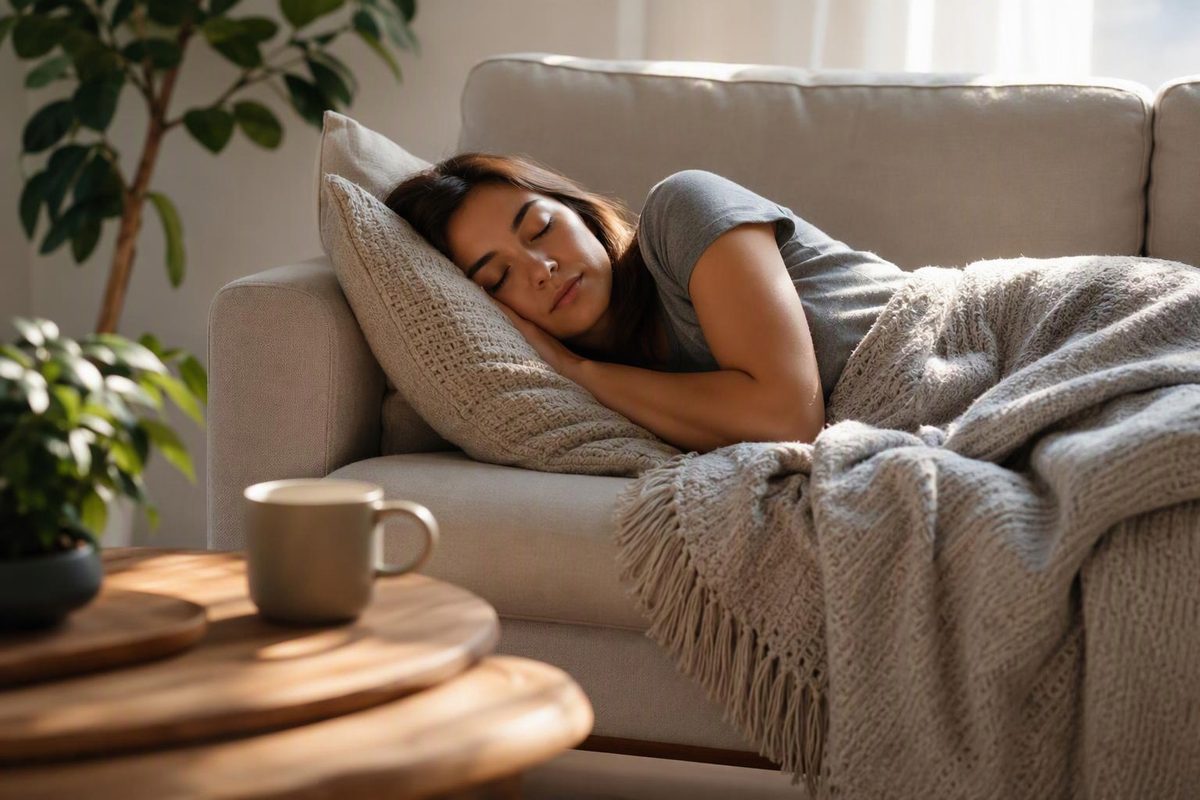
Yes—if you actually fall asleep, a nap counts toward your total sleep over 24 hours. Even light sleep is sleep. But adding nap minutes to your daily total does not prove you have met your sleep needs or replaced the benefits of adequate nighttime sleep. Naps can improve alertness without providing complete recovery from lost sleep. NHLBI guidance
The useful distinction is sleep time versus sleep adequacy: count the minutes you slept, but judge your routine by whether you also get enough regular, good-quality sleep and function well while awake.
What counts toward your sleep total?
For a simple daily total, add actual nighttime sleep and actual nap sleep—not all the time you spent lying down. Exclude time spent falling asleep or awake between sleep periods. A sleep diary can help: NHLBI’s diary records time in bed, time taken to fall asleep, nighttime awakenings, and nap times and lengths separately.
| What happened | What to count |
|---|---|
| You slept six hours overnight and 20 minutes during a nap | Six hours, 20 minutes of total sleep |
| You set aside 30 minutes but spent 10 minutes falling asleep | About 20 minutes, assuming you slept for the remainder |
| You rested with your eyes closed but stayed awake | Rest time, not sleep time |
If you are unsure whether you slept, record the nap as an estimate rather than claiming an exact duration. It can help to note both the time you set aside and how much you think you slept.
You do not need to reach deep sleep or REM for a nap to count. Sleep includes lighter non-REM stages, too. A review of nap physiology describes naps containing the same sleep stages found at night, with the mix depending on factors such as duration, age, timing and previous sleep loss. Short naps can improve immediate alertness even when they contain mainly lighter sleep.
Can a nap bring you up to the recommended amount?
It can raise your total, but the arithmetic is not a guarantee of equivalent recovery.
The American Academy of Sleep Medicine and Sleep Research Society recommend at least seven hours per night on a regular basis for healthy adults aged 18–60. Their consensus also emphasizes quality, timing, regularity and the absence of sleep disorders—not duration alone. Joint consensus statement
For example:
- Six hours overnight plus a 20-minute nap: you still have less than seven hours of total sleep.
- Six hours overnight plus a one-hour nap: you have seven hours in total, but that does not establish that this routine gives you the same health and performance outcomes as adequate nightly sleep.
A nap is therefore better treated as a supplement than as permission to shorten every night. NHLBI notes that naps may offer a short-term boost in alertness and performance but do not supply all the benefits of nighttime sleep. Feeling refreshed after a nap is not proof that accumulated sleep loss has been fully corrected. Sleep need and sleep debt
For shift workers, the main sleep period may necessarily happen during daylight. NHLBI specifically recommends naps and more available sleep time as strategies for shift workers; the goal is enough protected sleep, not forcing every schedule into a nighttime-only pattern. Shift-work guidance
How to use a nap without sacrificing tonight’s sleep
For a healthy adult on a daytime schedule, a practical starting point is a short nap of up to 20 minutes in the early afternoon, while preserving enough time for your usual main sleep period. NHLBI advises adults to keep naps to no more than 20 minutes and to limit them or take them earlier if falling asleep at night is difficult. Healthy sleep habits
Longer is not automatically better. Deeper sleep can bring temporary grogginess on waking, known as sleep inertia. Naps also reduce the pressure to sleep, which can sometimes disturb later nighttime sleep. Nap research review For duration tradeoffs, see our nap length guide.
If you have insomnia, adjust naps around your nighttime response and any clinician-directed treatment plan rather than using them to chase a daily number.
If you regularly need naps despite adequate sleep opportunity, or remain unrefreshed, discuss it with a healthcare provider. NHLBI advises seeking help for persistent unrefreshing sleep. Daytime sleepiness accompanied by loud snoring, witnessed breathing pauses or gasping warrants assessment for possible sleep apnea—not simply a longer nap. NHLBI symptom guidance