
4 min read ·
The Best Sleep Inertia Remedy Is a Wake-Up Buffer
Sleep inertia has no proven instant cure. Allow at least 30 minutes, use light or caffeine when appropriate, and prevent it with shorter naps.
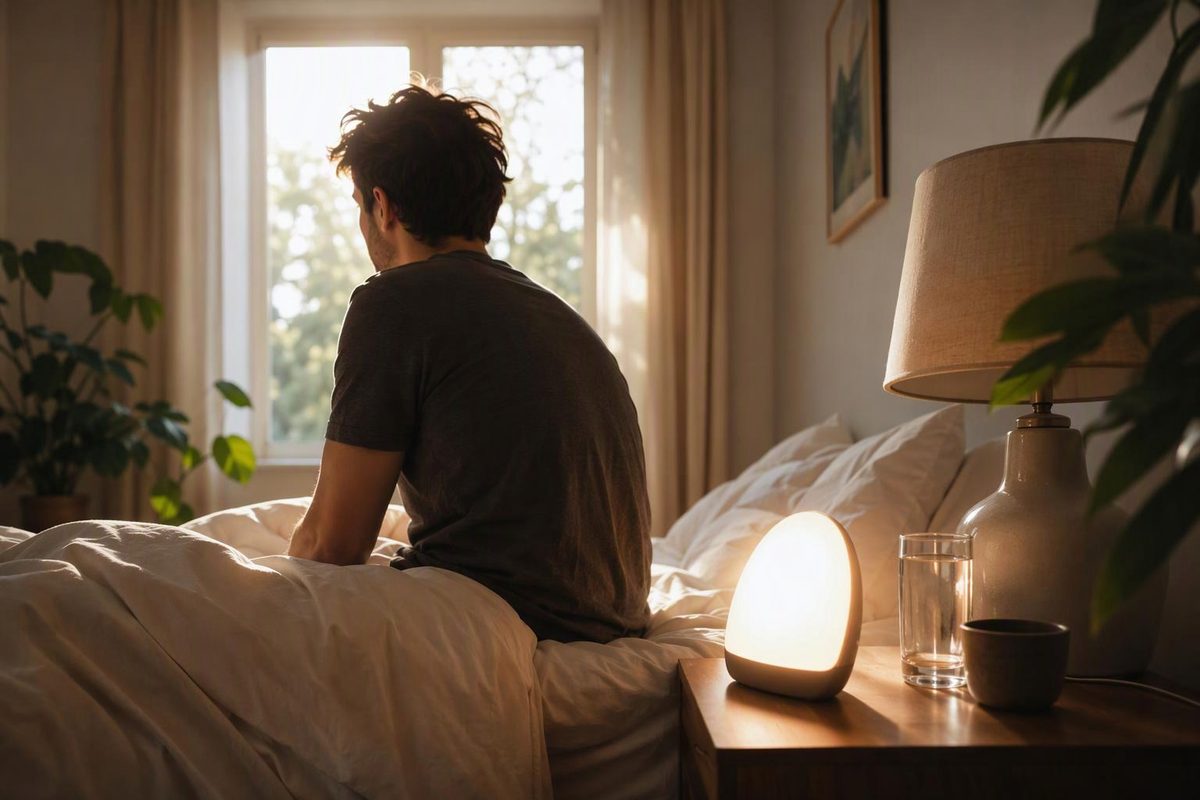
The most dependable sleep inertia remedy is time. After waking, allow at least 30 minutes before driving, making an important decision or doing hazardous work—and longer if you still feel impaired. Bright light may help you feel more alert, and caffeine can speed recovery for some people, but neither guarantees normal performance within the first few minutes.
Sleep inertia is the temporary grogginess, disorientation and cognitive slowing that can follow a nap or a full night’s sleep. It is usually strongest immediately after waking. Its duration varies, and prior sleep loss, waking during the biological night and waking from deeper sleep can make it worse (Hilditch, Dorrian and Banks, 2016).
A practical post-nap routine
1. Allow a wake-up buffer
Sit up, turn off the alarm and leave the sleep space, but do not treat being upright as proof that your judgment and reaction time are normal. Build recovery time into the nap schedule rather than relying on a trick that promises instant alertness.
NIOSH says sleep inertia can slow reaction time, short-term memory, reasoning and learning. Its guidance says the effects commonly last 30–60 minutes, although duration varies, and advises allowing them to dissipate before critical tasks (NIOSH). Start with at least 30 minutes after an ordinary daytime nap. Allow longer after sleep deprivation, a long nap or an awakening during the biological night.
If you wake during a driving break, do not resume merely because you washed your face or drank coffee. Wait until you are clearly alert. If sleepiness persists, you are not ready to drive.
2. Get into bright light
Open the curtains, go outdoors in daylight or move to a brightly lit room. Light may improve the feeling of alertness, but evidence that it immediately restores objective performance is limited.
In a controlled study of 10 healthy young adults, one minute of 2,000-lux light after a 20-minute early-afternoon nap reduced subjective sleepiness but did not produce the same performance benefit as caffeine taken before the nap (Hayashi, Masuda and Hori, 2003). A broader review also found post-waking light promising for subjective alertness but not established as a rapid performance fix (Hilditch, Dorrian and Banks, 2016).
That distinction matters: feeling brighter does not necessarily mean reaction time and decision-making have fully recovered.
3. Consider caffeine—if it will not disrupt later sleep
Caffeine is one of the better-studied countermeasures, but it is not instantaneous. NIOSH cites a study in which 100 mg taken on waking restored reaction time faster than placebo. It also describes the “caffeine nap”: taking caffeine immediately before a short nap so its alerting effect begins around the time you wake (NIOSH).
In the small daytime-nap study above, 200 mg before a 20-minute nap improved both subjective sleepiness and task performance for the following hour. That does not make 200 mg a necessary or suitable dose for everyone. Sensitivity, medications, pregnancy and medical conditions affect what is appropriate.
Count caffeine from coffee, tea, energy drinks, medications and other sources. The FDA says 400 mg per day is an amount not generally associated with negative effects for most adults, while emphasizing substantial individual variation. Too much can cause insomnia, anxiety, palpitations, nausea and other effects (FDA). Avoid a late dose if it is likely to delay that night’s sleep; losing more sleep can worsen inertia the next day.
4. Treat face washing and movement as supporting steps
Cool water on the face may make the transition feel easier. In the same 10-person study, face washing briefly reduced subjective sleepiness but did not improve measured performance. Evidence for showers or other temperature-based approaches is too limited to call them reliable remedies.
Getting up and walking may help prevent you from drifting back to sleep, but exercise is not a proven immediate treatment. A scientific review found plausible reasons it might help while concluding that direct evidence was still needed (Kovac and colleagues, 2020). Drink water if you are thirsty or dehydrated, but hydration has not been established as a specific sleep inertia treatment.
Prevention works better than rescue
For routine naps, aim for 10–20 minutes of actual sleep and set aside additional time to fall asleep. Keeping the sleep period short reduces the chance of waking from deeper sleep, which is associated with stronger inertia. See How Long to Power Nap Without Waking Groggy for practical timing.
Also:
- Put the nap well before an important meeting, commute or hazardous task.
- Avoid long naps when you must perform immediately afterward.
- Protect adequate nighttime sleep; sleep loss can intensify and prolong inertia.
- Expect more difficulty after being awakened during the biological night.
- If using a caffeine nap, keep the nap short and consider how close it is to bedtime.
When grogginess deserves medical attention
Occasional grogginess that clears after a nap is common. Seek medical assessment if waking is routinely extremely difficult, confusion or impairment lasts for hours, you sleep for long periods without feeling restored, or daytime sleepiness interferes with work, conversations or driving.
Severe difficulty waking and persistent unrefreshing sleep can occur with conditions such as idiopathic hypersomnia, although symptoms alone cannot diagnose it. Evaluation may involve a sleep history, sleep diary, actigraphy or formal sleep studies (Cleveland Clinic). Loud snoring, witnessed breathing pauses or gasping are additional reasons to ask a clinician about obstructive sleep apnea.
For ordinary post-nap grogginess, use this order: allow recovery time first, try bright light, add caffeine only when appropriate, and shorten the next nap.