
8 min read ·
Sleep Apnea Qualifies as Disability in Some Contexts
The answer turns on how the condition affects you and whether you seek an accommodation, Social Security benefits, medical leave or private insurance.
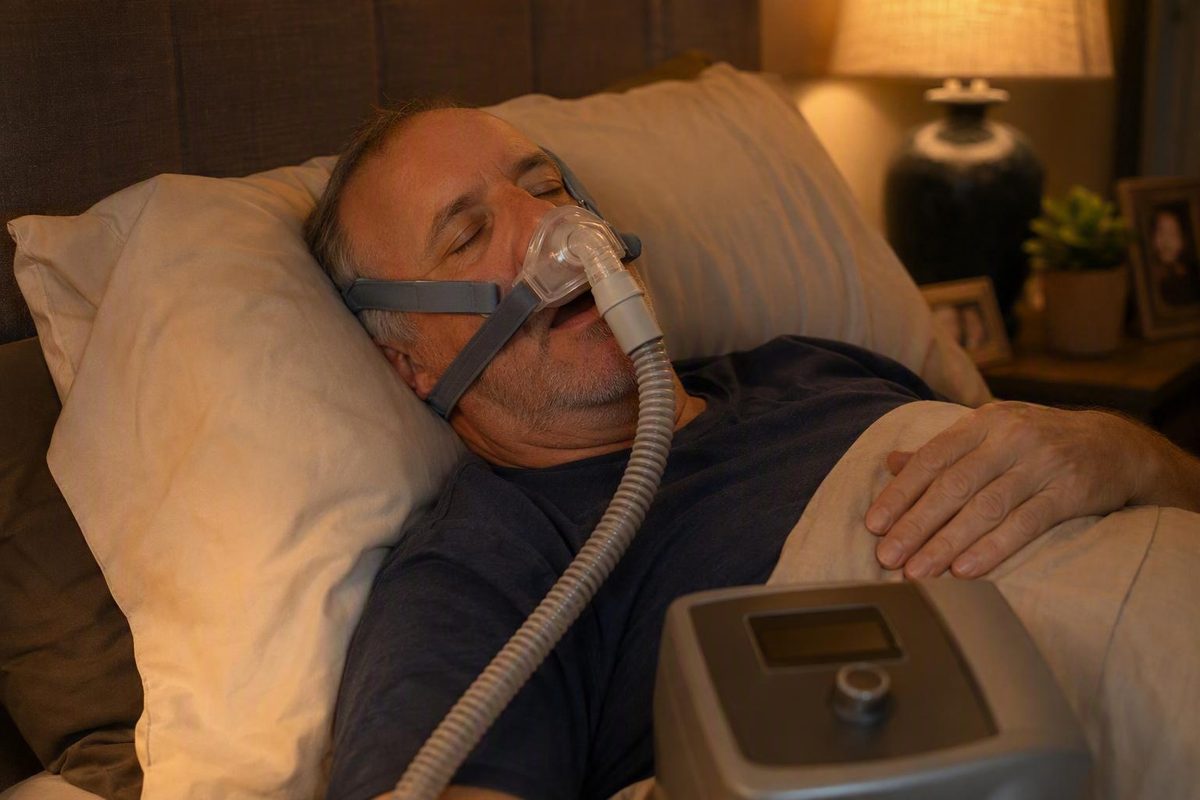
Sleep apnea can qualify as a disability in some situations, but a diagnosis does not make it a disability for every legal or benefit program. In the United States, the answer depends on what you are seeking—protection from discrimination, a workplace accommodation, Social Security disability benefits, medical leave, or payments under a private insurance policy—and on how the condition affects you individually.
That distinction matters. Sleep apnea may substantially limit sleeping, breathing, concentrating, or working for one person while being well controlled with treatment for another. Each law or program applies its own test.
This article provides general U.S. information, not medical or legal advice. State laws, employer policies, insurance contracts, and individual facts can change the answer.
The short answer by context
| If you mean… | Is sleep apnea automatically a disability? | What usually matters |
|---|---|---|
| ADA protection | No | Whether an impairment substantially limits a major life activity, there is a record of such an impairment, or the person is regarded as having one |
| A workplace accommodation | No | ADA coverage, a work-related limitation, the essential functions of the job, and whether an effective accommodation is reasonable |
| Social Security Disability Insurance (SSDI) | No | Medical evidence, severity, duration, work history, and whether the condition prevents substantial work under SSA rules |
| Supplemental Security Income (SSI) disability | No | SSA’s medical disability standard plus the program’s nonmedical eligibility rules |
| Family and Medical Leave Act (FMLA) leave | No | Employee and employer eligibility and whether the condition meets the FMLA serious-health-condition rules |
| Private short- or long-term disability insurance | No | The exact policy definition, waiting period, exclusions, evidence requirements, and functional limits |
A medical diagnosis and a legal disability are different questions
The National Heart, Lung, and Blood Institute defines sleep apnea as a condition in which breathing repeatedly stops and restarts during sleep. Obstructive sleep apnea occurs when the upper airway becomes blocked; central sleep apnea occurs when the brain does not send the signals needed for breathing. Possible effects include daytime sleepiness and problems with concentration, decision-making, or memory.
A clinician can diagnose sleep apnea, often with a sleep study, but that diagnosis alone does not decide whether a law or benefit program considers someone disabled. Legal and benefit decisions focus on the condition’s documented effects and the particular standard being applied.
Severity also varies. A person whose symptoms are controlled and who has no meaningful functional limits may have a different case from someone who remains unable to stay alert, concentrate reliably, or sustain work despite appropriate care. Other health conditions and treatment effects may also be relevant, but they need to be documented rather than assumed.
When sleep apnea may be covered by the ADA
The Americans with Disabilities Act is a civil-rights law, not a cash-benefit program. Under the official ADA overview, a person may be protected if they have an impairment that substantially limits one or more major life activities, have a record of such an impairment, or are regarded as having an impairment. Sleeping, breathing, concentrating, and working are among the listed major life activities.
This makes ADA coverage possible for sleep apnea, but it is not a diagnosis-based automatic rule. The effect on the individual matters. The ADA explains that “substantially limits” is interpreted broadly and is not intended to be a demanding standard, while also noting that not every condition meets it.
For employment, ADA protection and accommodation are related but distinct questions. A qualified employee generally must still be able to perform the job’s essential functions, with or without a reasonable accommodation. Depending on the person and the job, possibilities to discuss might include a modified schedule, leave for appointments, or another change that addresses a documented limitation. Those are examples for a conversation, not guaranteed solutions.
The Equal Employment Opportunity Commission’s accommodation guidance says a request does not have to be in writing or use the words “reasonable accommodation,” “ADA,” or “disability.” It can be a request for a work change for a reason related to a medical condition. The EEOC also emphasizes an individual review because there is no one-size-fits-all accommodation.
If you need a workplace change, focus on the practical connection:
- Identify the job task or schedule requirement affected.
- Describe the limitation without sharing unrelated medical details.
- Ask for a specific change or begin an interactive discussion about effective options.
- Be prepared to provide appropriate medical documentation if the disability or need is not obvious.
An employer’s obligations depend on the law that covers it, the job’s essential functions, and whether an accommodation would create undue hardship. State or local disability law may provide additional protection.
How Social Security evaluates sleep apnea
Social Security uses a stricter and different definition from the ADA. The SSA eligibility guide says its disability programs pay only for total disability, not partial or short-term disability. For an adult claim, SSA generally asks whether a medical condition prevents substantial gainful work, prevents a return to past work or adjustment to other work, and has lasted or is expected to last at least 12 consecutive months or result in death. SSDI also has work-history requirements.
SSA’s current respiratory guidance specifically addresses sleep-related breathing disorders. The SSA adult respiratory listings say complications of sleep apnea are evaluated under the affected body system—for example, chronic pulmonary hypertension, chronic heart failure, or qualifying disturbances in mood, cognition, or behavior. The guidance also says SSA will not purchase a polysomnography sleep study.
That does not mean a person must have one of those named complications to have a claim considered. SSA’s overview of the Listing of Impairments explains that not meeting a listing does not end the evaluation; the agency proceeds to later steps and applies other rules. Functional limits can still be relevant to whether a person can do past work or adjust to other work.
The practical point is that neither the label “sleep apnea” nor CPAP use by itself proves eligibility. The claim needs evidence showing severity, duration, treatment, and work-related effects under SSA’s rules. SSA states that medical evidence is the cornerstone of a disability determination.
Useful records may include:
- the diagnostic sleep-study report and the clinician’s diagnosis;
- treatment records, prescribed devices, and documented response to treatment;
- notes describing persistent daytime sleepiness, concentration problems, or other symptoms;
- records of relevant complications or coexisting conditions;
- a clear description of how often limitations occur and how long they last;
- information about job duties, attendance, errors, safety restrictions, or reduced stamina; and
- statements that are consistent across medical records, forms, and work history.
Evidence should describe what actually happens in your case. Do not stop CPAP or another prescribed treatment to make symptoms appear worse. Talk with the treating clinician about persistent symptoms or treatment problems.
Medical leave and private disability benefits use other rules
FMLA leave is not the same as being classified as disabled under the ADA or SSA. The U.S. Department of Labor’s FMLA certification guide explains that eligible employees of covered employers may receive job-protected leave for a serious health condition that makes them unable to work. A qualifying serious health condition generally involves inpatient care or continuing treatment, and an employer may request medical certification.
Someone may qualify for FMLA leave without qualifying for SSDI, or may have ADA rights without needing leave. The laws can overlap, but one approval does not automatically decide another program.
Employer-sponsored or individually purchased disability insurance is different again. The policy controls the meaning of disability. Some policies initially ask whether you can perform your own occupation and later apply an any-occupation test; others use different language. Check the plan document, deadlines, elimination period, required forms, and appeal process rather than assuming the Social Security or ADA definition applies.
A practical way to decide what to do next
Start with the outcome you need, then use the matching process:
- You need a change at work: Review the job limitation and contact the employer’s accommodation or human-resources channel. Ask for an interactive discussion and keep copies of the request and response.
- You need time away for treatment or incapacity: Check FMLA eligibility, state leave law, paid-sick-leave rules, and employer policies. Ask what certification and notice are required.
- You expect to be unable to sustain substantial work for at least a year: Review current SSA eligibility information and consider getting help from a qualified disability representative or legal-aid organization.
- You have private disability coverage: Request the complete policy and claim instructions, not just a benefits summary.
- You are unsure how severe the medical problem is: Discuss symptoms, treatment response, and safety concerns with a healthcare professional. A benefits application is not a substitute for medical care.
Do not ignore safety while sorting out eligibility
Sleep apnea can cause excessive daytime sleepiness. If you are fighting sleep behind the wheel, pull over safely and do not continue driving drowsy. The National Highway Traffic Safety Administration identifies drowsiness as a crash risk and specifically includes resources for drivers with sleep apnea.
Talk with a healthcare provider if you have repeated breathing pauses, gasping during sleep, loud snoring with daytime symptoms, or persistent sleepiness. Seek urgent medical help for severe breathing difficulty, chest pain, stroke-like symptoms, or any situation in which you cannot remain safely awake. Continue prescribed care unless the treating clinician changes it.
Bottom line
Sleep apnea is not automatically a disability, and it is not automatically excluded. It may meet the ADA definition when it substantially limits a major life activity; it may support workplace accommodations when an individualized work limitation is documented; and it may support Social Security benefits when the complete medical and vocational evidence meets SSA’s strict rules. The most useful next step is to identify the specific program, document real functional effects, and apply that program’s current standard.