
6 min read ·
Sleep Deprivation Links to Nausea Alongside Other Factors
After a bad night, mild queasiness may improve with fluids, gentle food and adequate rest. Repeated or worsening symptoms call for medical assessment.
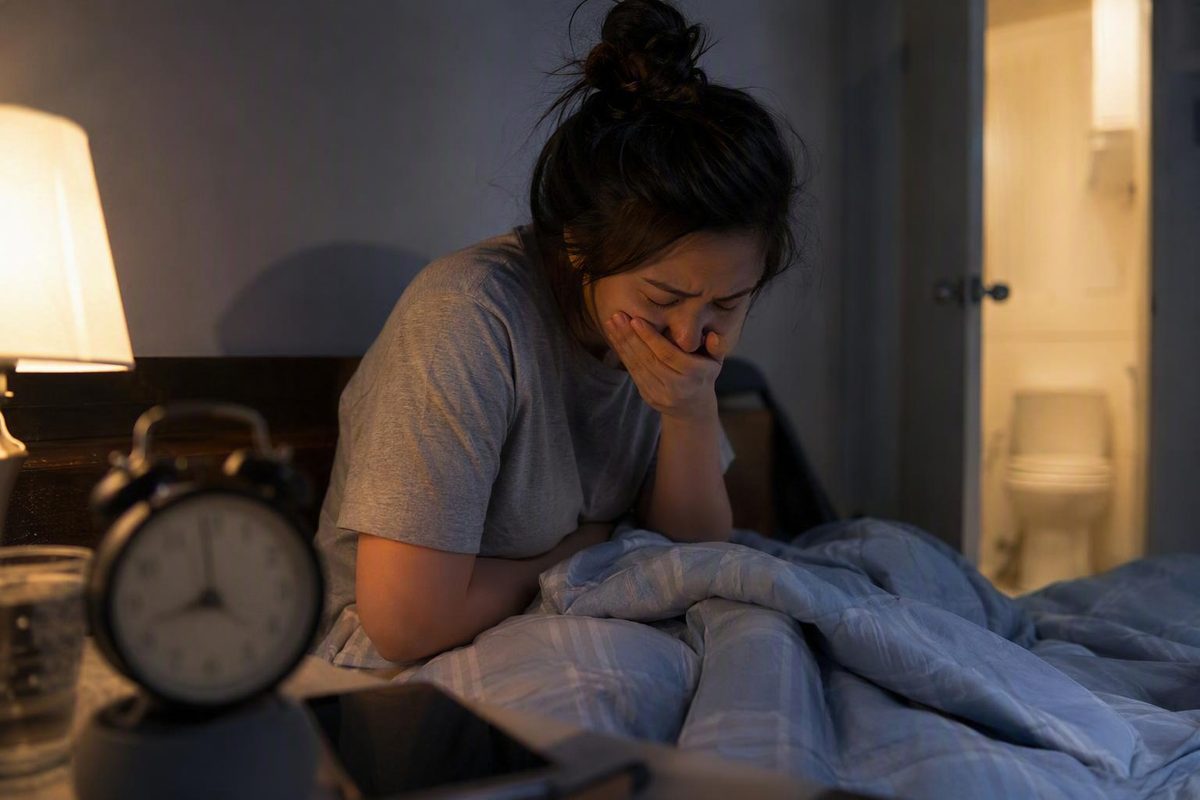
Yes. Sleep deprivation can be associated with nausea, and some people feel queasy after a very short or disrupted night. The safest interpretation, however, is that poor sleep is one possible contributor, not a diagnosis. Nausea has many causes, so a night of poor sleep should not automatically be blamed when symptoms are severe, persistent, or accompanied by warning signs.
This distinction matters because the evidence is stronger for an association between disturbed sleep and gastrointestinal symptoms than for a simple cause-and-effect rule. Sleep loss may make nausea more likely or make an existing problem feel worse, while an illness that causes nausea may also disrupt sleep.
What “sleep deprivation” means clinically
Sleep deprivation usually means not getting enough sleep. The broader term sleep deficiency also includes sleeping at the wrong biological time, getting poor-quality sleep, missing important sleep stages, or having an untreated sleep disorder. The National Institute of Child Health and Human Development explains these distinctions and notes that sleep disorders are different problems that may require clinical evaluation.
One short night can produce acute sleep loss. Repeatedly sleeping too little creates an ongoing sleep deficit. The number of hours that counts as “too little” varies by age and individual need, but the CDC’s sleep guidance recommends at least seven hours per day for adults ages 18–60, with different ranges for children, teens, and older adults. Duration is not the whole picture: frequent awakenings or sleep at an irregular circadian time can leave someone poorly rested even after enough time in bed.
What the evidence says about sleep loss and nausea
Official occupational-health guidance from the CDC’s National Institute for Occupational Safety and Health lists nausea and vomiting among the gastrointestinal symptoms whose risk can increase with sleep deprivation. That supports a plausible connection, but it does not mean sleep loss is the cause of every episode.
A population study of 3,228 adults published in Neurogastroenterology & Motility found that reported sleep disturbance was associated with several upper and lower gastrointestinal symptoms, including nausea. In the PubMed record for the study, waking during the night was associated with nausea even after adjustment for factors such as age, sex, lifestyle, mental health, and body mass index.
There are important limits:
- The study was observational and relied on self-reported symptoms, so it cannot prove that sleep disturbance caused nausea.
- The relationship can run in both directions: reflux, pain, infection, pregnancy, migraine, medication effects, and other conditions may cause nausea and disturb sleep.
- Individual response varies. Some people become nauseated after one bad night; others do not.
The most evidence-based answer is therefore: sleep deprivation can contribute to or coincide with nausea, but nausea should not be assumed to be “just from sleep.”
Why nausea may appear after poor sleep
There is no single proven mechanism for every person. Several processes may overlap:
Sleep and digestive symptoms interact
Sleep and the digestive system influence each other. Disturbed sleep is associated with reflux, abdominal discomfort, bowel changes, and nausea, while those symptoms can wake a person or prevent sleep. This two-way relationship makes it difficult to identify which came first from symptoms alone.
Circadian timing may matter
Eating, sleeping, and working at unusual biological times can combine sleep loss with circadian misalignment. Shift work, jet lag, late meals, skipped meals, and dehydration can occur together. In that situation, nausea may reflect the combined effects rather than sleep duration alone.
Other effects of sleep deficiency can amplify discomfort
Sleep deficiency commonly causes daytime sleepiness, reduced alertness, slower reaction time, and difficulty concentrating. The National Heart, Lung, and Blood Institute also describes changes in appetite regulation and immune function. Headache, stress, caffeine use, an empty stomach, or an existing migraine or reflux problem may accompany a bad night and make queasiness more noticeable.
These are reasonable clinical pathways, not a way to diagnose the cause at home. Claims that nausea always comes from one hormone, “toxins,” or a single gut imbalance go beyond the available evidence.
Symptoms to track with the nausea
The pattern around the symptom is more useful than the label “sleep-related nausea.” Note:
- how many hours you slept and whether you woke repeatedly;
- when nausea began and whether it improves after rest;
- vomiting, diarrhea, fever, abdominal pain, reflux, headache, dizziness, or sensitivity to light;
- recent meals, alcohol, caffeine, cannabis, supplements, and medication changes;
- possible pregnancy, motion exposure, sick contacts, or suspicious food;
- loud snoring, gasping during sleep, morning headaches, or overwhelming daytime sleepiness.
A short sleep-and-symptom diary can reveal whether nausea reliably follows insufficient sleep or occurs independently. CDC guidance notes that a sleep diary can include bedtimes, awakenings, naps, exercise, caffeine or alcohol, and medications. A pattern is useful information for a clinician, but it still does not prove causation.
What to do for mild nausea after a poor night
If the nausea is mild, there are no warning signs, and you can drink normally, focus on low-risk supportive care:
- Sip fluids. Small, frequent amounts may be easier to tolerate than drinking a large volume quickly.
- Try small, bland meals. Avoid forcing a heavy meal. Fatty, very spicy, or strongly scented foods may worsen nausea for some people.
- Avoid making the sleep problem worse. Large amounts of caffeine or alcohol can aggravate nausea and interfere with the next sleep period.
- Rest safely. Do not drive or operate equipment when severely sleepy. Sleep deficiency can impair attention and reaction time even when a person thinks they are functioning normally.
- Return to a consistent sleep opportunity. Aim for the age-appropriate amount of sleep in a cool, dark, quiet setting. A nap may help acute sleepiness, but it is not a treatment for persistent insomnia or another sleep disorder.
Do not start an anti-nausea medicine or sleep aid solely on the assumption that sleep caused the symptom. Medicines can have side effects and interactions, and some cause additional drowsiness. A pharmacist or clinician can advise based on age, pregnancy status, health conditions, and current medications.
When nausea may have another cause
The National Library of Medicine’s MedlinePlus guide lists many possible causes of nausea and vomiting, including gastroenteritis and other infections, food poisoning, pregnancy, migraine, motion sickness, medicines, reflux, ulcers, and intestinal obstruction.
Consider another cause especially when nausea:
- began before the poor sleep;
- occurs despite adequate sleep;
- follows a new medicine, supplement, substance, meal, or travel exposure;
- comes with fever, diarrhea, focal abdominal pain, urinary symptoms, or a migraine pattern;
- recurs often or is causing weight loss, dehydration, or missed daily activities.
Persistent poor sleep also deserves attention in its own right. Talk with a healthcare professional if you regularly cannot fall or stay asleep, routinely feel unrefreshed, fall asleep unintentionally, or have signs of sleep apnea such as loud snoring and witnessed pauses in breathing.
Red flags: when to get medical help
Seek urgent medical care rather than assuming the problem is sleep deprivation if there is blood or dark coffee-ground material in vomit, severe abdominal pain, a severe headache with a stiff neck, suspected poisoning, confusion, fainting, chest pain, trouble breathing, or signs of significant dehydration.
MedlinePlus advises contacting a healthcare provider promptly for vomiting lasting longer than 24 hours and for dehydration signs such as dry mouth, infrequent urination, or dark urine. Get advice sooner if you cannot keep fluids down, are pregnant, are caring for a child or frail older adult, or have a condition that raises the risk from dehydration.
The bottom line
Sleep deprivation can be linked with nausea, but the relationship is not specific enough to diagnose the cause. A mild episode after a bad night may improve with fluids, gentle food, and adequate rest. Repeated, worsening, or severe nausea—and any warning sign—calls for medical assessment so another cause is not missed.